The quiet power of a single 220W solar panel
Some technologies arrive in our lives with fanfare. Others s’installent doucement, comme une habitude nouvelle qu’on ne remarque qu’une fois bien ancrée. A 220W solar panel belongs to the second category. Modest in size, almost shy on a rooftop or against a garden shed, yet quietly capable of changing the way a small space breathes, lights up and lives off the grid.
Whether you’re dreaming of a cabin at the edge of a forest, a campervan on a windy Scottish cliff, or simply a city balcony that produces a little of its own electricity, a 220W panel sits in an interesting sweet spot: small enough to be manageable, big enough to be genuinely useful.
Let’s walk through what this panel can actually do, how it performs in the real world, and how it fits into small off-grid systems without turning your life into an electrical engineering exam.
What is a 220W solar panel, really?
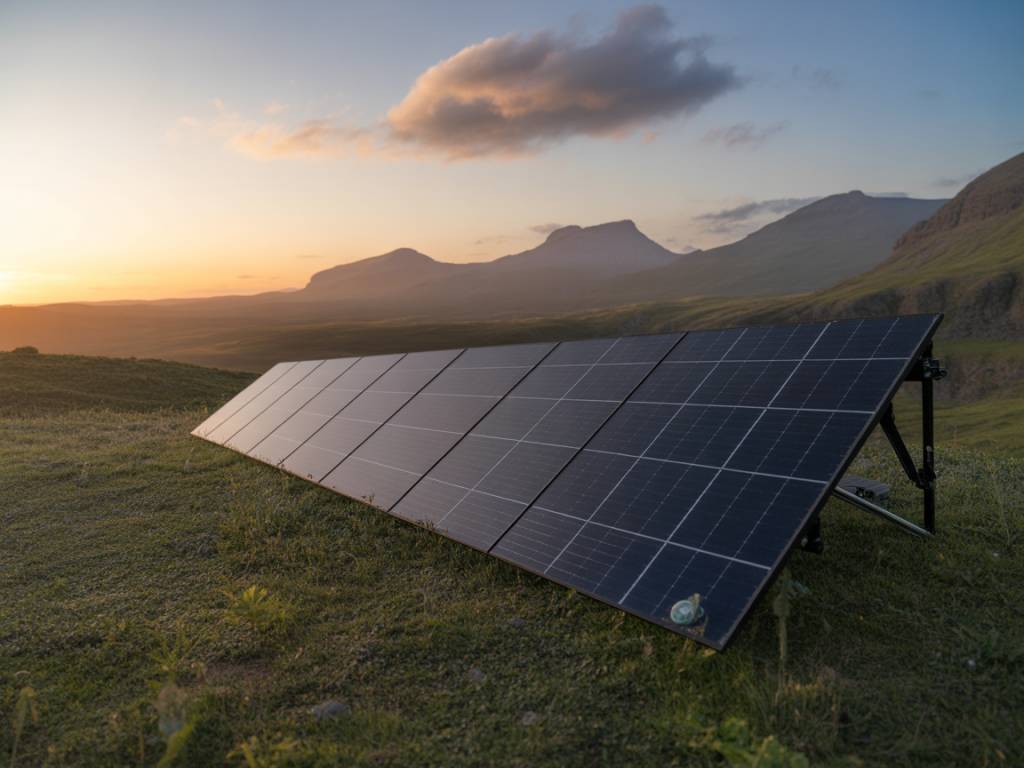
On the spec sheet, a 220W solar panel looks very precise and technical. In practice, think of it as a compact, backpack-friendly slice of rooftop solar. Typical characteristics:
- Rated power: 220W at “standard test conditions” (perfect lab sun, perfect temperature)
- Voltage at maximum power (Vmp): usually around 18–20V for “12V” style panels, or ~30–36V for higher-voltage modules
- Current at maximum power (Imp): typically 6–12A depending on design
- Size: often around 1–1.2m long and 0.6–0.8m wide
- Weight: roughly 10–15kg for rigid framed panels; less for flexible versions
On paper, 220W simply means: under ideal sun, the panel can produce 220 watts of power at a given moment. In the wild, on your shed roof in November, the truth is less glamorous — and more interesting.
Understanding real-world performance
Solar panels are like people: they have good days and bad days, and they dislike overheating. A 220W panel’s actual daily energy production depends on three main variables:
- Sun hours (how much strong sunlight you receive)
- Orientation and tilt
- System losses (cables, charge controller, battery, inverter)
In many parts of the UK or northern Europe, yearly averages fall roughly into this range:
- Winter: 1–2 “full sun hours” per day
- Mid-season (spring/autumn): 3–4 full sun hours per day
- Summer: 5–6+ full sun hours per day on good days
So what does that mean in energy?
- Winter: 220W × 1.5h ≈ 330Wh per day (on average) before losses
- Mid-season: 220W × 3.5h ≈ 770Wh per day
- Summer: 220W × 5.5h ≈ 1,210Wh per day
Now subtract real-world inefficiencies (up to 20–30% in small off-grid systems), and you might get, for example in summer:
- Around 850–950Wh of usable energy stored in your battery each sunny day
Is that a lot? That depends what you want to power. Let’s translate this into daily life.
What a 220W panel can power in a small off-grid setup
Imagine arriving at a tiny woodland cabin at dusk. You unlock the door, flick a switch, and warm LED lights lift the shadows. A laptop hums to life, the small 12V fridge continues its quiet work, and a phone begins to sip energy from a USB socket. All of this could be happening behind the scenes thanks to a single 220W panel and a well-sized battery.
To grasp its potential, it helps to think in watt-hours (Wh) rather than watts. Below are typical energy uses:
- LED lighting for a small cabin (4 × 5W for 5h): ~100Wh
- Phone charging (2 phones): ~20–30Wh
- Laptop use (one modern laptop, 60W for 3h): ~180Wh
- 12V compressor fridge (small, efficient, ~40W running, 30% duty cycle, 24h): ~290Wh
- Wi-Fi router or 4G hotspot (10W for 8h): ~80Wh
Total: ~670–700Wh per day.
On a good mid-season or summer day, a 220W panel can comfortably cover that. In winter, you’ll need to be more disciplined, perhaps turning off the fridge some nights or reducing laptop time.
Here are a few typical “lives” of a 220W panel:
- Vanlife setup: A 220W panel on a campervan roof can keep a leisure battery topped up for lights, a fridge, phones, and a laptop for a solo traveller or minimalist couple.
- Garden office: Power a laptop, monitor, modem, and LED lighting for a few hours each day in summer, with a sense of quiet independence from the main house.
- Off-grid cabin: Provide basic electric comforts for evenings and short stays, especially if paired with efficient appliances and a decent battery.
- Balcony or shed system: Run tools occasionally, keep bikes and garden lights charged, or feed a small DC system for experimentation and learning.
The magic appears when you begin to design your life around what the panel can offer, not what the grid can endlessly supply. That shift from “infinite” to “sufficient” is often where the real satisfaction lies.
Matching a 220W panel with the right battery
A panel is only half the story. Without somewhere to store the sun, your power disappears the moment a cloud passes. Choosing a battery for a 220W panel is mostly about balancing capacity with realism.
For small off-grid setups, typical choices are:
- 12V AGM/gel lead-acid battery (entry-level, cheaper upfront, heavier, dislikes deep discharge)
- 12V LiFePO₄ lithium battery (more expensive, lighter, tolerates deep discharge, lasts far longer)
Some sensible pairings for a 220W panel:
- 100Ah 12V battery (~1,200Wh usable with lithium, ~600Wh with lead-acid if you avoid deep discharge)
- 150Ah 12V battery (~1,800Wh lithium, ~900Wh lead-acid usable)
If you often have several days of poor weather, a slightly larger battery helps smooth the ride. But there is a subtle art here: oversizing the battery massively relative to a single 220W panel means it will recharge slowly, and you risk chronic undercharging, especially with lead-acid.
A good rule of thumb for small autonomous systems:
- A 220W panel pairs comfortably with 100–150Ah of 12V battery for light, careful use.
PWM vs MPPT: the charge controller decision
Between the panel and the battery sits the charge controller, an unassuming little box that quietly determines how efficiently your solar setup works.
There are two main types:
- PWM (Pulse Width Modulation): simpler, cheaper, but wastes potential if panel voltage is significantly higher than battery voltage.
- MPPT (Maximum Power Point Tracking): more expensive, but can harvest 15–30% more energy in many situations, especially in colder weather or with higher-voltage panels.
For a single 220W panel in a 12V system, an MPPT controller is often worth the investment, particularly if:
- You live in a climate with variable light conditions (clouds, low sun angles, partial shading).
- Your panel has a higher Vmp (e.g., 30–36V) and you’re charging a 12V battery.
In practical terms, this can mean the difference between a battery that just about copes… and one that quietly, reliably recovers every sunny afternoon.
Inverters, DC loads, and how to actually use the energy
Once the panel and battery are in place, the next question is simple: how do you plug things in?
You have two broad options:
- Stay in DC (12V): Use USB outlets, 12V lights, and dedicated 12V appliances (fridges, pumps, fans). This is efficient and simple.
- Use an inverter: Convert 12V DC to 230V AC so you can use regular household plugs and devices.
The inverter is tempting, but it’s not free: it has its own losses, and high-power appliances can quickly overwhelm what a 220W panel can realistically support. In a small off-grid system, a modest pure sine wave inverter (300–600W) is often plenty:
- Laptop chargers
- Small speakers
- Occasional use of a blender or low-power tools
It is usually wise to avoid using a 220W-panel system for:
- Electric kettles or toasters (often 1,500–2,000W)
- Electric heaters
- Large hairdryers, irons, or other heat-based appliances
These devices can drain your battery faster than the panel can replenish it, like boiling a kettle from a mountain stream using a teaspoon.
Where a 220W panel shines: use cases and scenarios
Think of a few everyday landscapes, and how a 220W panel quietly transforms them.
1. The woodland micro-cabin
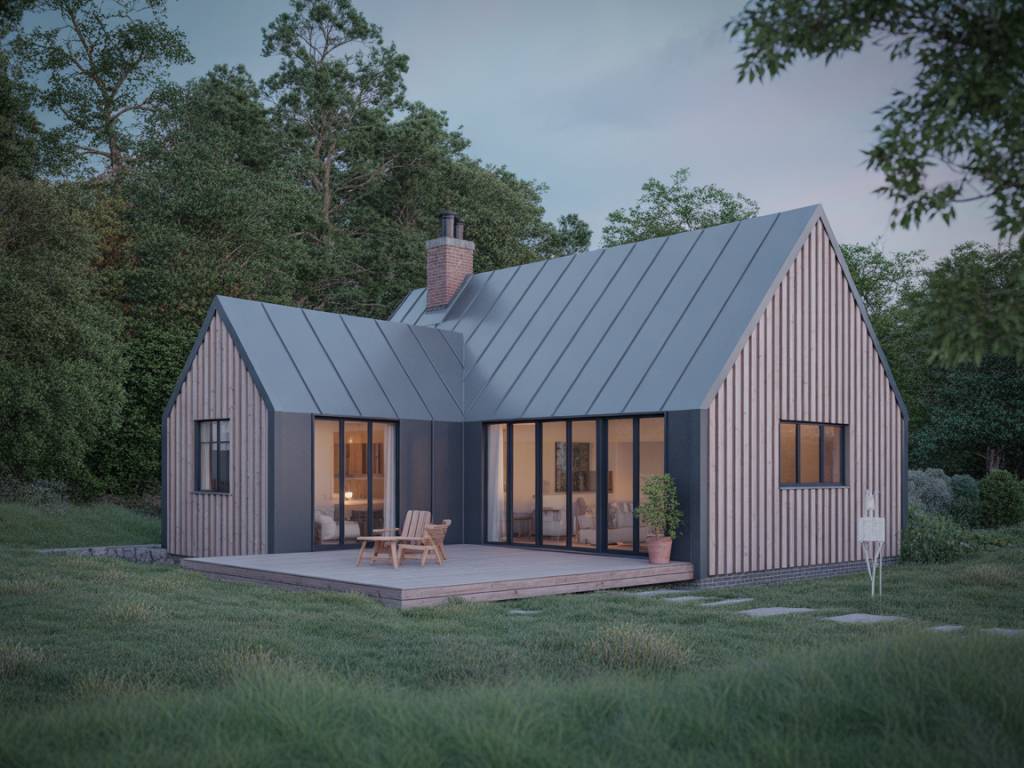
A small timber cabin, half-swallowed by ivy, with a 220W panel on its south-facing roof. Inside: a 100Ah lithium battery, an MPPT controller, 12V LED strip lighting, a compact DC fridge, and a couple of USB outlets.
On summer weekends, the system feels luxurious: cold drinks, gentle light in the evening, a charged laptop for writing, and enough spare energy to listen to music. In winter, it demands more intention. You become attuned to cloud cover, to your own usage. A simple analogue voltmeter on the wall says more about the day’s weather than any forecast app.
2. The van parked above the sea
A campervan in Cornwall or the Highlands, with a 220W panel bonded to its roof. At night, the waves below sound like someone slowly tearing sheets of paper. Inside: a 150Ah AGM battery, a fridge, a diesel heater fan, a pair of reading lights, and a 300W inverter for charging a laptop and camera batteries.
With careful usage, this setup can keep a solo traveller or couple off-grid indefinitely in sunny months. Work can be done from the laptop, photos edited, messages sent — all from energy that touched the panel a few hours earlier, as gulls wheeled overhead.
3. The city balcony experiment
In a dense urban street, a 220W panel fixed to a balcony rail feels almost subversive. It feeds a small battery box that powers a router, a string of evening lights, and the occasional laptop session. Neighbours might only notice the gentle glow of LEDs among the plants at dusk, unaware that the electricity in those tiny bulbs arrived that very afternoon, straight from the sky.
Here, the panel is not about full independence, but about a playful, practical gesture: a daily reminder that some part of your home’s rhythm is unhooked from the grid’s vast machinery.
Limitations and how to live comfortably within them
Every technology comes with edges. Knowing the edges of a 220W system is what turns frustration into quiet satisfaction.
- Seasonal variation: In winter at northern latitudes, you will produce far less energy. Planning for “summer luxury, winter simplicity” keeps expectations honest.
- Power-hungry appliances: Anything that heats (kettles, irons, ovens, electric heaters) is a poor match unless used very sparingly with a large battery and inverter.
- Shading and orientation: A chimney, tree branch or neighbouring building casting shade on even part of the panel can drastically reduce output. Careful placement matters.
- Limited growth: A single 220W panel is a wonderful entry point, but if your energy ambitions grow — washing machines, full-size fridges — you may soon want to add more panels.
The reward for accepting these constraints is a kind of clarity. Life with a 220W panel encourages you to ask, with each new appliance: “Do I really need this? And if so, can I find a more efficient version?”
Choosing a 220W panel and compatible components
If you’re starting from scratch, how do you choose the actual hardware? A few practical guidelines:
- Panel type: Monocrystalline panels are standard now — efficient and widely available. Look for reputable manufacturers and clear warranties.
- Voltage compatibility: – For a simple 12V system, a “12V” style panel (Vmp ~18–20V) plus an MPPT or PWM controller works. – For best performance with MPPT, a higher-voltage 220W panel (Vmp ~30–36V) charging a 12V battery can capture more energy in low light.
- Charge controller size: For 220W into 12V, a 20A MPPT controller is usually adequate and gives room for slight expansion.
- Cable sizing: Keep cables between panel, controller, and battery appropriately sized to reduce voltage drop (often 4–6mm² is fine for short runs in small setups).
- Mounting: – Rigid framed panels suit roofs, sheds, cabins. – Flexible or semi-flexible versions can be bonded to curved van roofs but may run hotter and have shorter lifespans.
- Battery choice: If budget allows, LiFePO₄ brings better performance and longevity. If using lead-acid, choose deep-cycle models and size the panel so the battery reaches full charge regularly.
Compatibility, in the end, is about a conversation between components: voltages that match or are correctly stepped down, currents that stay within safe limits, and an overall design that reflects your actual daily habits rather than an abstract wish list.
Is 220W enough for your off-grid dream?
Some people swear by huge arrays: kilowatts of panels, batteries that could power a small café. Others discover that with thoughtful design and modest expectations, a single 220W panel unlocks exactly the kind of freedom they were looking for.
Ask yourself a few questions:
- Will you be using this space mainly in summer, or year-round?
- Is your goal full independence from the grid, or simply reducing your reliance?
- Can you choose efficient devices — LED lights, DC fridge, low-power laptop — that match the system’s scale?
- Are you comfortable letting the weather influence your energy use a little?
If you feel a certain pleasure at the idea of boiling water on gas instead of electricity, of wearing a jumper instead of turning on an electric heater, of waiting for a bright day to do heavier tasks — then a 220W panel is not a compromise at all. It’s a gentle teacher.
In a world of endless sockets and invisible power stations, there is something quietly radical about standing in a small off-grid room at night, knowing that the light above you began its journey eight minutes ago in the heart of the sun, landed on a panel not much bigger than a bookshelf, and ended — finally — as a pool of warm light on your wooden floor.