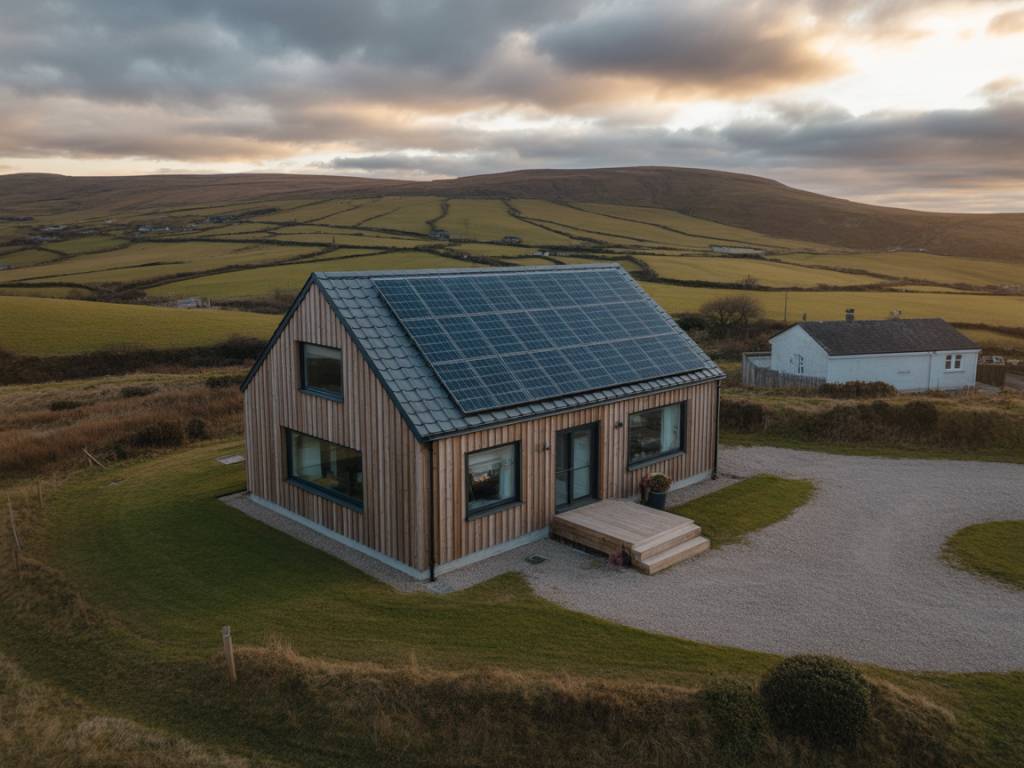
Kettle on, radiators warm, laptop charged — all before 8am, all powered by the wind that swept across the North Sea overnight and the solar panels quietly soaking up a pale Devon morning. Running a comfortable home on renewable energy only in the UK context is no longer an experiment reserved for off-grid idealists. It is a practical, increasingly affordable choice being made by homeowners from Leeds terraces to Scottish crofts. Here is how to do it without sacrificing comfort, reliability or the Sunday roast.
What Running a Home on Renewable Energy Only Really Means in the UK Context
Before diving into technology and costs, it is worth being precise. For most British households, « renewable-only » does not mean a wind turbine in the back garden and total disconnection from the grid. In practice, it means:
- All heating, hot water and appliances are powered by electricity rather than gas or oil.
- That electricity comes from a tariff backed by genuine renewable generation — wind, solar, hydro — verified through REGO certificates or the supplier’s own assets.
- Where possible, you generate some of your own power through rooftop solar PV or, in the right setting, a small wind turbine.
- The grid acts as your backup and balancing partner, not a fossil-fuel lifeline.
The goal is integration with a rapidly decarbonising system, not isolation from it. The UK grid already generates over 40% of its electricity from renewables in a typical year, and that share is rising fast. Your home can both benefit from and contribute to that transition.
Cut Demand First: The Foundation of a Renewable Home
The single most impactful step toward running a comfortable home on renewable energy only in the UK context has nothing to do with panels or heat pumps. It is making sure the home itself needs as little energy as possible. A leaky, draughty house will overwhelm any renewable system; a well-sealed one makes everything easier and cheaper.
Insulation: Turn Your Home into a Thermos
In a typical UK 3-bedroom semi-detached house, poor insulation is the biggest source of energy waste. Priorities, in order of impact and cost-effectiveness:
- Loft insulation to at least 270mm — can cut heat loss by up to 25% and costs as little as £300, often subsidised through the ECO4 scheme.
- Cavity wall insulation — suitable for most post-1920s homes, typical savings of 15–20% on heating bills.
- Solid wall insulation (internal or external) — for pre-1920s solid-brick properties, a bigger investment but transformative results.
- Underfloor insulation — especially valuable if you are moving to underfloor heating with a heat pump.
Draught-Proofing and Windows
Gaps around floorboards, letterboxes, unused chimneys and pipe penetrations can collectively account for as much heat loss as a small open window running continuously. Sealing these costs very little. Upgrading to double or triple glazing eliminates that persistent perimeter chill that no thermostat setting ever quite fixes, and dramatically reduces condensation in winter.
Check eligibility for ECO4, the Great British Insulation Scheme, or local authority flex funds before spending on technology — insulation work is often heavily subsidised or even free for eligible households.
Electricity Supply: Pairing Your Home with British Weather
Once your home’s demand is trimmed, you can design your renewable electricity mix around the rhythms of British weather — Atlantic winds, long summer days and those surprisingly productive pale-sky mornings.
Rooftop Solar PV
Solar panels perform better in the UK than most people expect. A south-facing 4 kWp system typically generates around 3,400 kWh per year — enough to cover the full annual electricity needs of an efficient small home. Even east- or west-facing roofs can generate 80–85% of that figure. Costs have fallen by over 70% in the past decade, and most systems pay back within 8–12 years through savings and export payments.
Smart Export Guarantee (SEG)
If you generate your own solar electricity, the Smart Export Guarantee requires licensed suppliers to pay you for every unit you export to the grid. Rates vary between 4p and 15p per kWh depending on the tariff. Over a year, this meaningfully shortens payback time and rewards homes that generate more than they consume during the day.
Green Electricity Tariffs
For the electricity you draw from the grid, choosing the right tariff matters. Suppliers like Octopus Energy, Good Energy and Ecotricity offer tariffs backed by 100% renewable generation. Some, like Octopus Agile or Flux, offer time-of-use pricing — meaning you can shift washing machines, dishwashers and battery charging to hours when the grid is richest in wind and solar, often overnight or on blustery days, paying as little as 7–10p per kWh.
Heat Without Fossil Fuels: The Heart of the Renewable Home
Heating is the biggest challenge when learning how to run a comfortable home on renewable energy only in the UK context. The British climate — damp, grey, persistently cool from October to April — demands a reliable, efficient heat source. Fortunately, the options have matured considerably.
Air Source Heat Pumps (ASHP)
The most widely installed choice in the UK. An ASHP extracts heat from outdoor air — even at temperatures as low as -15°C — and upgrades it to warm your home and hot water. A well-installed system achieves a Coefficient of Performance (COP) of 2.5 to 3.5, meaning every 1 kWh of electricity delivers 2.5–3.5 kWh of heat. Paired with the Boiler Upgrade Scheme (BUS) grant of £7,500, the upfront cost is now genuinely competitive with a new gas boiler installation.
Ground Source Heat Pumps (GSHP)
If you have outside space for ground loops or can accommodate a borehole, a GSHP delivers even greater efficiency — typically a COP of 3.5 to 4.5 — because ground temperatures remain stable year-round. Higher installation cost, but lower running costs over the lifetime of the system. The same £7,500 BUS grant applies.
Biomass Boilers and Stoves
For rural properties where low-temperature heating systems are harder to retrofit, a biomass boiler burning sustainably sourced wood pellets can be a practical renewable option. It integrates well with existing radiator systems and qualifies for Renewable Heat Incentive legacy payments in some cases. The trade-off is fuel storage space and more active maintenance than a heat pump.
Making Heat Pumps Comfortable: Three Details That Matter
- Low-temperature system design: Oversized radiators or underfloor heating allow the heat pump to run at 35–45°C flow temperature instead of the 60–70°C a gas boiler requires. This is where efficiency — and comfort — is won or lost.
- Consistent, steady operation: Heat pumps work best running gently and continuously, maintaining a stable background warmth rather than cycling on and off. Homes feel consistently comfortable rather than swinging between hot and cool.
- Smart controls: Weather compensation curves, room-by-room thermostatic valves and a good smart thermostat ensure the system responds intelligently to outdoor conditions without you having to think about it.
Hot Water, Cooking and Everyday Appliances
Hot Water
Your heat pump can handle domestic hot water via a well-insulated cylinder, typically heating a tank to 50–55°C once or twice a day. If you have solar PV, a solar diverter device (such as an iBoost or Eddi) automatically redirects surplus generation into the hot water cylinder rather than exporting it at a low rate. Your tank becomes, in effect, a thermal battery — storing cheap, green energy as heat for use throughout the day.
Induction Cooking
Switching from a gas hob to induction is one of the most underrated upgrades in a renewable home. Modern induction hobs boil water faster than gas, use 10–15% less energy, offer finer temperature control, and eliminate combustion pollutants from your kitchen air. Pair one with an A-rated electric oven and your kitchen runs entirely on renewable electricity — Sunday roasts, slow-simmered stews and all.
Other Appliances
An A-rated heat pump tumble dryer uses roughly a third of the energy of a conventional model. An EV charger at home, if you drive electric, can be scheduled to charge overnight on cheap, wind-rich tariff hours — and some vehicle-to-home (V2H) systems can even use the car battery to power the house during peak evening hours.
Storage and Smart Control: Making Renewables Feel Effortless
A home battery — typically 5 to 10 kWh for a UK household — stores solar generation during the day and releases it in the evening, dramatically reducing grid dependence. Combined with a smart tariff, a battery can charge cheaply overnight and discharge during expensive peak hours, cutting electricity bills by £300–£600 per year in many cases.
Smart home energy management systems (such as those offered by Octopus, GivEnergy or Solis) can coordinate your solar panels, battery, heat pump, hot water cylinder and EV charger automatically — optimising for cost, carbon intensity or self-sufficiency, depending on your priorities.
What a Realistic Renewable Home Setup Looks Like
Bringing it all together, a practical, comfortable renewable-only home in the UK might look like this:
- Well-insulated walls, loft and floor, double or triple glazing throughout.
- 4 kWp solar PV on the roof with a 5–10 kWh home battery.
- Air source heat pump with a low-temperature radiator or underfloor heating system.
- Hot water cylinder with a solar diverter.
- Induction hob and A-rated electric oven.
- 100% renewable electricity tariff with time-of-use pricing.
- Smart thermostat and energy management system tying it all together.
Such a setup is not only achievable for millions of UK homes — it is increasingly the most affordable way to heat and power a home over the long term, as gas prices remain volatile and electricity from renewables continues to fall. The British weather, so often treated as an obstacle, turns out to be a remarkably good partner: plenty of wind, more solar than you might expect, and a grid that is greener every year.