There is a particular kind of silence that only appears at dawn, just before the first light finds its way into a room. It’s in ce moment-là — when the house is still a little blue and uncertain — that we see how powerful light truly is. It decides whether a space feels like a refuge, a workshop, or a waiting room. And when we design that light with care, it also decides how gently we tread on the planet.
Sustainable lighting is not just about buying efficient bulbs. It’s about choreographing the dance between natural light and technology so that every room is bright enough, calm enough, and kind enough to both our eyes and our energy bills.
Light as the quiet design partner of your home
We often start with paint colours, furniture, maybe even textiles. Light rarely gets the first invitation to the design table, yet it is the element that reveals everything else. A beautifully crafted wooden table looks dull under a harsh cold beam. A modest second-hand sofa can look noble in the right late-afternoon sun.
Sustainable lighting design asks a simple question: how much of this can the sun do for us, and where does efficient technology need to take over?
When you begin to think this way, you notice patterns:
Once you observe these rhythms, you can start to design light that respects both your routines and the environment.
Principles of sustainable lighting: less, smarter, softer
Before we wander room by room, it helps to anchor ourselves in a few guiding principles. Think of them as the quiet rules behind every on/off switch.
None of this requires a full renovation. Often, it begins with moving a chair closer to a window, changing a lampshade, or adding a dimmer switch that makes an existing lamp suddenly feel… civilised.
Harnessing natural light without overheating or glare
Natural light is free, abundant, and astonishingly flattering. But it is not always a polite guest. It can glare, fade fabrics, and turn a room into a greenhouse if we let it. The art lies in taming it just enough.
Some simple strategies:
I remember staying in a small stone house in the south of France, where the kitchen sink was directly under a small, deep-set window. No fancy pendant, no downlight, just a band of clear daylight that made washing dishes feel somehow ceremonial. The lesson stayed with me: put the work where the light already is.
Choosing efficient tech: LEDs, colour temperature and controls
Once the sun clocks out, technology steps in. Choosing that technology thoughtfully is where most of the energy savings lie.
1. LEDs as the default
Incandescent bulbs now feel like antiques — warm, charming, and wildly inefficient. LEDs, when chosen well, use up to 80–90% less energy and last many times longer.
2. Colour temperature: setting the mood of each room
Not all “white” light is the same. The colour temperature, measured in Kelvin (K), influences how a room feels:
As a rule, keep similar colour temperatures within open-plan areas to avoid the “patchwork” effect where one corner feels like a café and the other like a dentist’s waiting room.
3. Smart controls, used thoughtfully
Smart bulbs and switches can be powerful tools — or expensive toys. To keep them on the right side of that line:
Think of smart tech as a way to make it easier to do the right thing by default rather than one more app to manage.
Living room: layering light for comfort and clarity
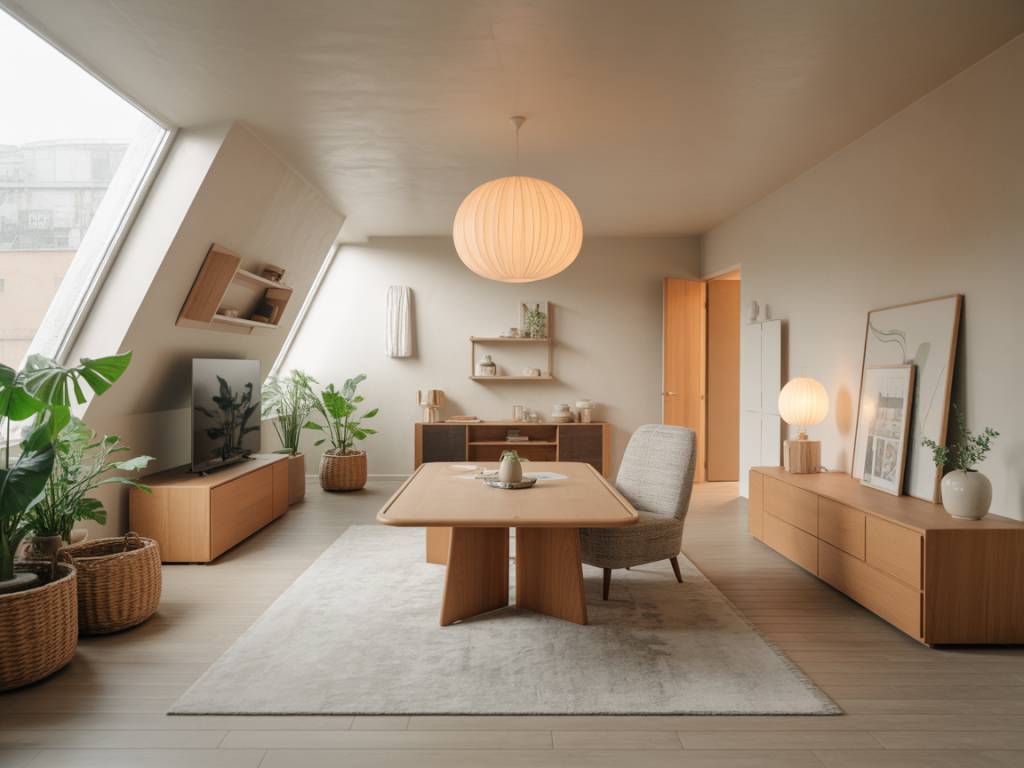
The living room is rarely used for just one activity. It is cinema, library, conversation pit, and sometimes, let’s be honest, laundry station. A single central pendant can’t carry all of that on its shoulders.
A sustainable yet flexible setup usually includes:
To save energy, avoid over-lighting the entire room when you only need light in a corner. A reading lamp consumes a fraction of what a fully illuminated living room would, and it often feels more intimate.
Kitchen: treating light as part of the “tool kit”
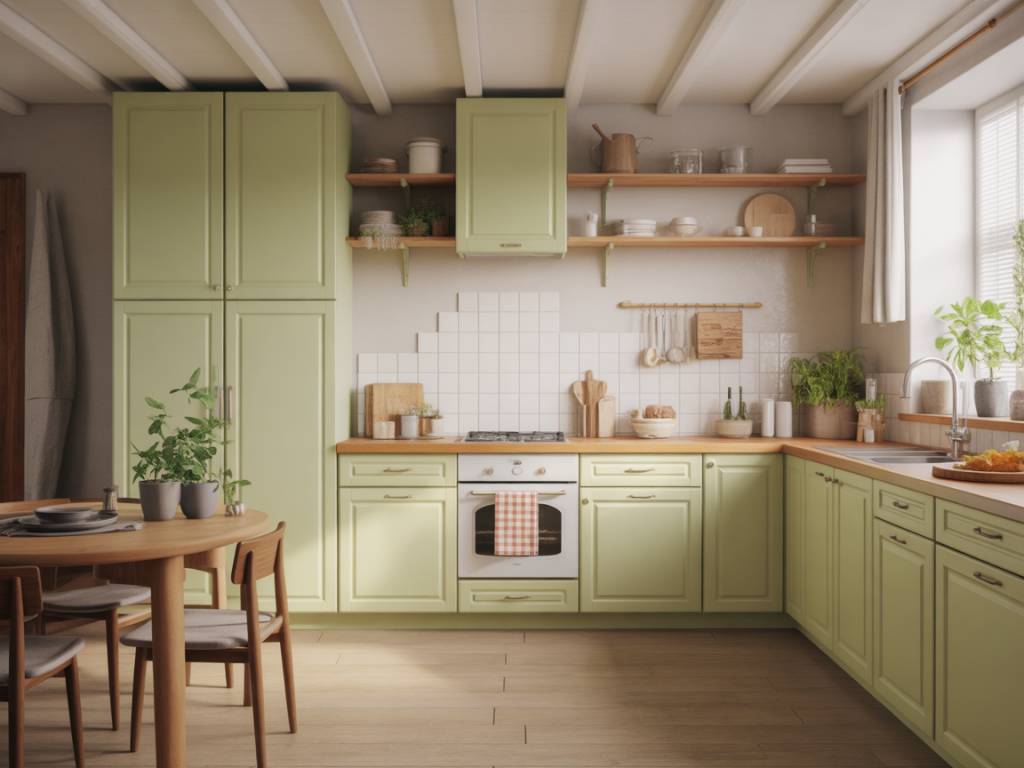
The kitchen is the workshop of the home. Chopping, cooking, reading recipes, socialising — all demand clear, shadow-free light. Yet it’s also one of the easiest rooms to make efficient.
An energy-efficient kitchen is less about one heroic fixture and more about targeted lighting in the right place, at the right brightness.
Bedroom: light that respects rest
Bedrooms are where technology should gently bow to biology. We prepare for sleep best when light cues resemble the natural world: bright by day, warm and dim in the evening, dark at night.
If you use smart lights, consider settings that automatically warm and dim in the hour before your usual bedtime — a quiet, digital sundown.
Bathroom: clarity, safety, and steam
The bathroom is an awkward mix of spa and laboratory. You need flattering light for faces, bright light for cleaning, and safe fixtures that can handle moisture.
A friend once installed a soft, low-level LED strip under the bathroom vanity, triggered by a motion sensor, purely for night-time visits. It sips electricity, and the half-light means no one is blasted awake at 3 a.m. A small luxury, yes, but also a subtle energy saver.
Home office: alertness without aggression
As more corners of our homes become workspaces, their lighting deserves more thought than a leftover desk lamp from a student flat.
Remember that screens themselves emit light. Sometimes the most sustainable choice is to lower the brightness of your devices and dim the surrounding lights slightly, aligning both to a comfortable middle ground.
Hallways, stairs and forgotten spaces
These are the zones most likely to be over-lit and underused. They are also where motion sensors and low-level lighting can quietly shine.
These small efficiencies add up. A staircase light that no one has to remember to switch off is a quiet daily victory for both safety and sustainability.
Materials, fixtures, and the life of objects
Sustainable lighting is also about what the fixture itself is made of and how long it will last in your home — aesthetically and physically.
If you already own perfectly functional fixtures, keeping them in service and simply updating the bulbs and controls is often the most sustainable choice of all.
Bringing it all together, one switch at a time
Designing sustainable lighting is less about grand gestures and more about small, thoughtful decisions repeated throughout a home: placing a chair nearer a window, adding a warm lamp where a harsh downlight once ruled, or replacing a forgotten 60W bulb in the hallway with a modest LED that silently does the same job for a fraction of the energy.
When natural light and efficient tech are allowed to collaborate instead of compete, each room starts to feel more like itself. Mornings become brighter without strain, evenings softer without waste. And your home — this quiet vessel of your days — begins to glow in a way that feels both generous and gentle.
In the end, sustainable lighting is an ongoing conversation between you, your habits, and the changing light outside your windows. It doesn’t demand perfection, only attention. The next time you reach for a switch, you might simply ask: could the sun handle this one, or can a smaller, softer, smarter light do the job just as well?