
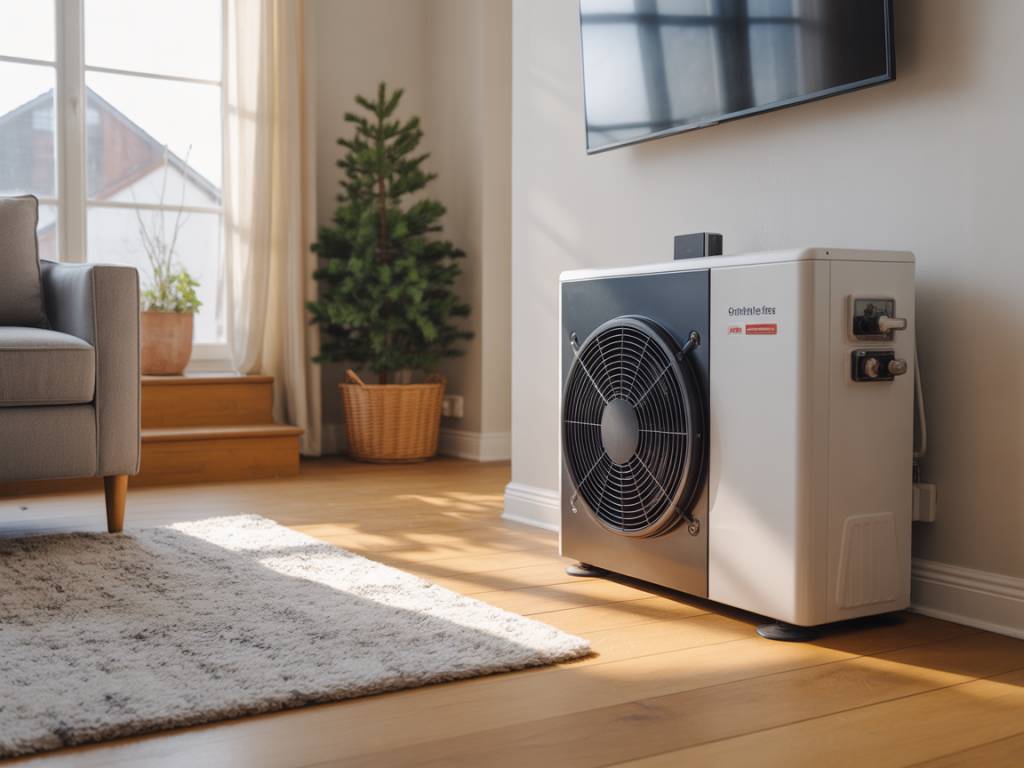
As energy bills remain stubbornly high and the UK edges towards its net-zero targets, more homeowners are questioning whether a traditional gas boiler is really the best tool for the job. Air-to-air heating systems — also known as air-to-air heat pumps — have quietly moved from niche curiosity to genuine contender, particularly for homes that have already invested in good insulation and energy efficiency measures. But they are not a universal solution. Understanding exactly where they excel and where they fall short is the key to making a smart decision for your property.
What is an air to air heating system and how does it work?
An air-to-air heat pump extracts heat from the outside air, amplifies it using a refrigerant cycle and a compressor, and then delivers warm air directly into your living space via internal fan units. Think of it as a refrigerator running in reverse — instead of expelling heat from your food to the room, it draws heat from the outside atmosphere and pushes it inside.
The system typically consists of:
- An outdoor unit (compressor and heat exchanger) fixed to an external wall or ground-mounted
- One or more indoor wall-mounted units that distribute conditioned air
- Refrigerant pipework and electrical connections linking the two
A key feature of most modern units is reversibility: the same system that warms your home in January can cool it in July. As UK summers grow increasingly uncomfortable, this dual functionality is shifting from a luxury to a practical necessity.
Air to air heating system pros and cons for energy-efficient UK homes at a glance
Before diving deeper, here is a clear overview of the core trade-offs that any UK homeowner should weigh up:
- Pros: high efficiency (COP of 3–4+), lower carbon emissions, fast response, no pipework required, summer cooling included
- Cons: no domestic hot water production, visible indoor units, air movement sensitivity, reduced efficiency in very cold snaps, planning considerations for outdoor units
The main advantages of an air to air heating system
Exceptional energy efficiency and lower running costs
This is where air-to-air systems make their strongest case. A standard electric panel heater converts 1 kWh of electricity into roughly 1 kWh of heat — a Coefficient of Performance (COP) of 1. A quality air-to-air heat pump, by contrast, typically achieves a COP of 3 to 4.5, meaning every unit of electricity you pay for delivers three to four-and-a-half units of heat into your home.
In practical terms for a UK household, this can mean:
- Heating costs 50–70% lower than direct electric heating or older storage heaters
- Running costs broadly comparable to — or better than — a modern condensing gas boiler, depending on your electricity tariff
- Significant savings when paired with rooftop solar PV and an off-peak smart tariff (such as Octopus Go or Economy 7)
For well-insulated homes with a low heating demand, the system can run at minimal power for long periods, maintaining a steady ambient temperature far more economically than a boiler cycling on and off.
Reduced carbon footprint as the grid decarbonises
Because air-to-air heat pumps run on electricity rather than burning gas or oil on site, their carbon intensity drops automatically as the UK grid becomes greener. Wind and solar already provide a substantial share of UK electricity, and that proportion is rising year on year. Switching from a gas boiler to an efficient heat pump can:
- Cut your home heating emissions by more than 50% in today’s grid conditions
- Eliminate on-site combustion — no flue, no carbon monoxide risk, no gas safety checks
- Align your home with future-proofed, low-carbon living, particularly when combined with solar panels or a green electricity tariff
Fast, responsive heating and built-in cooling
Unlike underfloor heating or water-based radiator systems that can take an hour or more to warm a cold room, air-to-air systems respond quickly. You feel the difference within minutes of switching on. In a well-insulated home, this responsiveness means you can run the system only when needed, rather than maintaining background heat all day.
The cooling function — often overlooked by UK buyers — is increasingly relevant. During the heatwaves of recent summers, indoor temperatures in poorly ventilated British homes have regularly exceeded 30°C. A reversible air-to-air unit can bring a bedroom down to a comfortable sleeping temperature without the noise or inefficiency of a portable air conditioner.
Simpler installation with minimal disruption
Air-to-air systems require no radiators, no underfloor pipework, and no large hot water cylinder. For many retrofit projects, this dramatically reduces installation complexity and cost compared to a full air-to-water heat pump system:
- No floors need to be lifted for pipework
- Installation typically takes one to two days for a standard single-zone system
- Ideal for loft conversions, garden offices, annexes, or extensions where extending wet pipework is impractical
- Can be used as a targeted upgrade — for example, a single unit serving a large open-plan living space — without replacing the rest of the heating system
The main disadvantages of an air to air heating system
No domestic hot water production
This is the single most important limitation to understand before committing. An air-to-air system heats air — it does not heat water for your taps, shower, or bath. You will still need a separate solution for domestic hot water, such as:
- An electric immersion cylinder
- A solar thermal system
- A separate air-to-water heat pump (which does handle hot water)
- A heat pump hot water cylinder (a standalone unit increasingly popular in the UK)
This means that unlike an air-to-water heat pump, an air-to-air system cannot fully replace a gas boiler as a single whole-house solution unless you have already addressed hot water independently.
Visible indoor units and aesthetic impact
Indoor units are wall-mounted, typically high on an interior wall, and measure roughly 80–100 cm wide. While manufacturers have made significant strides in sleek, minimal design, they remain a visible presence in a room. In carefully restored period properties — Victorian terraces, Georgian townhouses, listed buildings — this can feel like a visual compromise. Outdoor units also require a suitable external location, and in some urban settings or conservation areas, permitted development rights may not apply and planning permission may be required.
Comfort considerations around air movement
Because air-to-air systems distribute heat by moving air, not all occupants find the experience as comfortable as radiant heat from underfloor systems or traditional radiators. Common considerations include:
- A gentle but constant air movement, which some people associate with draughts
- Potential for uneven temperature distribution in very large or open-plan spaces
- Fan noise — typically 20–35 dB on a low setting, but worth checking manufacturer specifications
Modern units offer airflow direction control, quiet modes, and auto-fan settings that mitigate most of these issues, but it remains a different sensory experience from wet central heating.
Efficiency drop in extreme cold
Air-to-air heat pumps are designed to operate effectively down to around -15°C to -20°C for modern inverter-driven models. However, as outdoor temperatures fall below 0°C, efficiency does reduce. Occasional defrost cycles kick in to prevent ice build-up on the outdoor unit, temporarily altering performance. For the vast majority of UK locations — where temperatures rarely fall below -5°C for extended periods — this is a manageable factor rather than a dealbreaker, but it is worth accounting for in your heat loss calculations.
Is an air to air heating system right for your UK home?
The honest answer depends on your property and your priorities. Air-to-air heat pumps deliver their greatest value in homes that are already well-insulated, have modest heating loads, and where the occupants either have hot water covered separately or are happy to install a standalone solution. They are particularly compelling for:
- New builds and Passivhaus-standard properties with very low heat demand
- Extensions, garden rooms, and annexes
- Homeowners who want both heating and cooling from a single system
- Those pairing the system with solar PV to minimise running costs further
If your home is poorly insulated, or if you need a single system to cover both space heating and hot water, an air-to-water heat pump or a hybrid heat pump boiler may be a more practical fit. The good news is that the technology landscape in 2024 and beyond offers genuinely strong options across all these scenarios — and the direction of travel, both in terms of UK energy policy and grid decarbonisation, firmly favours heat pump technology in all its forms.