On some winter mornings here in the UK, the light feels more like a rumour than a fact. A pale disc behind clouds, a drizzle that can’t decide whether to stay or go. Hardly the stuff of glossy solar brochures with their endless blue skies.
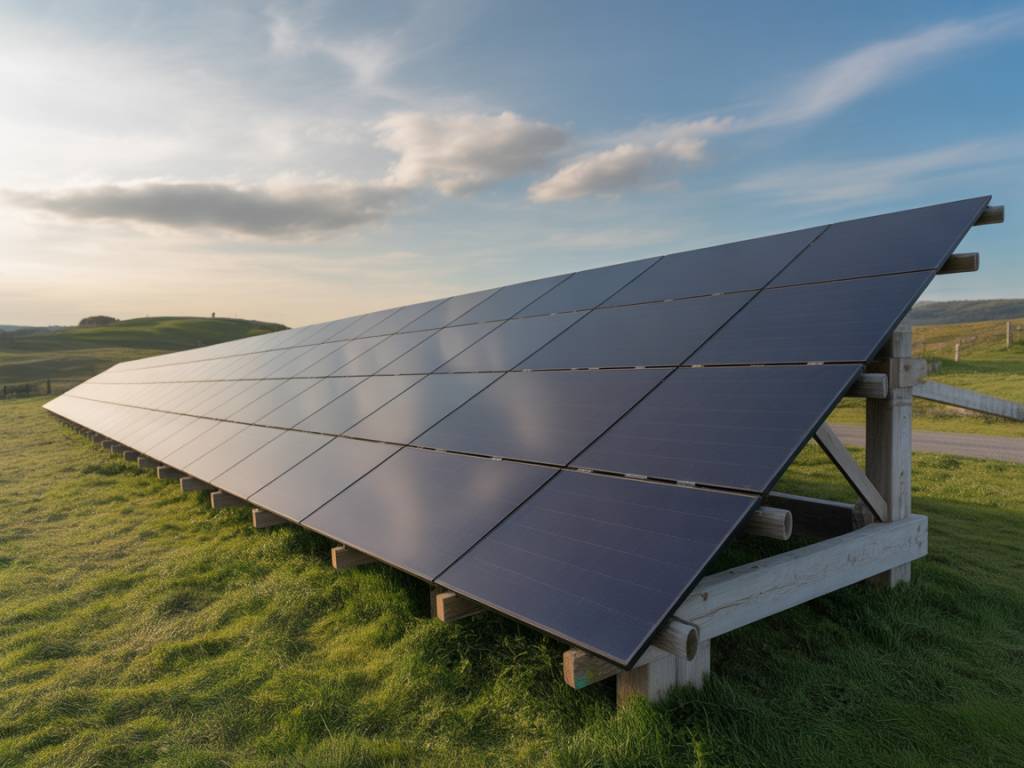
And pourtant, you walk past a quiet terrace in Leeds or a farmhouse on the edge of Dartmoor and see a roof neatly tiled with dark glass. The meter inside ticks softly, and somewhere in the background a kettle boils on free electricity pulled straight from that shy northern sun.
So which solar PV panels actually make sense for our stubbornly grey, often damp, sometimes stormy UK conditions? And how do you balance the holy trinity: efficiency, durability and payback time?
Does solar really work in the UK’s cloudy climate?
Let’s start with the lingering doubt: are we simply too far north for solar to be worthwhile?
In practice, the UK gets more than enough light for solar PV. Panels generate electricity from daylight, not just direct sun. Think of it as the difference between getting sunburnt (direct rays) and being able to read a book beside a window on a cloudy day (diffuse light). Your skin prefers the latter; your panels are fine with both.
The UK typically sees between 900 and 1,200 kWh of solar energy per square metre per year, depending on where you live. For comparison, Germany — a world leader in solar — is in the same ballpark. What changes in the UK is not the viability of solar, but the balance between:
- How efficiently your panels convert low, angled, often diffuse light
- How well they cope with rain, salt air, wind and the occasional storm
- How quickly the system pays you back under UK tariffs and electricity prices
That’s where the choice of panel really matters.
Key metrics that actually matter in the UK
If you spend more than ten minutes looking at panel datasheets, you’re hit by a blizzard of numbers. Some are marketing sparkle; some are quietly important. For UK homes, focus on these:
- Efficiency (%) – How much of the sunlight becomes electricity. Today’s good residential panels sit between 20–23%. Higher efficiency is helpful when roof space is limited.
- Power output (W) – The wattage of each panel, usually 380–440 W for modern residential modules. More watts per panel = fewer panels for the same system size.
- Temperature coefficient – How much performance drops as the panel heats up. In the UK, this still matters on those surprisingly hot summer days when black tiles and glass soak heat.
- Low-light performance – Not always given a headline score, but look for independent testing or manufacturer notes about performance under cloudy or diffuse light.
- Degradation rate – All panels slowly lose performance. The best now guarantee around 88–92% of original output after 25 years. Over decades, those few percent really add up.
- Product & performance warranty – A solid product warranty is 15–25 years. Performance warranties often stretch to 25–40 years with a guaranteed minimum output.
- Mechanical strength & corrosion resistance – Relevant if you live near the coast, on a hill or in a particularly windy part of the country (hello, Cornwall and the Scottish islands).
Notice what’s not on this list: “the absolute highest efficiency at any cost”. In our climate, balance beats bragging rights.
Monocrystalline, polycrystalline, thin-film: which suits the British roof?
Most UK homes now install monocrystalline panels: those sleek, almost black rectangles you see on newer installations. But it’s worth understanding the main types:
- Monocrystalline panels
High efficiency (20–23%), good performance in lower light, and relatively compact. Ideal for typical UK roofs where space is limited and aesthetics matter. They’re usually the best all-round choice. - Polycrystalline panels
Slightly lower efficiency (15–18%), with a bluish, speckled appearance. They used to be cheaper, but market prices have narrowed so much that most installers now default to mono unless you’re really squeezing the budget. - Thin-film panels
Flexible in form: they can integrate into roof tiles, facades or even be semi-transparent. They handle shading and high temperatures well but are typically less efficient, so you need more surface area. They make sense for certain specialist or architectural projects rather than a standard semi-detached.
For most UK homeowners, the “best” panel is a high-quality monocrystalline module that balances efficiency with cost, backed by a robust warranty and from a manufacturer that is likely to still exist in 20–30 years.
Top-performing solar PV panels for UK conditions
While your installer should always design around your specific roof, orientation and budget, some panel families consistently stand out for UK homes.
1. Premium high-efficiency: when roof space is tight
- SunPower Maxeon series
Among the highest efficiency residential panels on the market (up to ~22.8%). They perform particularly well in low light and have one of the lowest degradation rates, often guaranteeing around 92% output after 25 years. Their robust “back-contact” cell design also means fewer issues from microcracks and thermal stress — a quiet advantage when panels are sitting through years of British freeze–thaw cycles. - REC Alpha Pure
Very high efficiency, excellent low-light performance, and strong 25-year product and performance warranties. REC has a good reputation among UK installers for build quality and reliability. These panels often appear on roofs where owners are balancing aesthetics (sleek all-black options), efficiency and longevity.
These premium options tend to make financial sense if:
- Your roof area is limited, so you need to squeeze maximum watts into a small space
- You have an excellent, unshaded south or south-west facing roof and plan to stay in the property long-term
- You value long, comprehensive warranties as a form of quiet insurance policy
2. “Sweet spot” value: strong performance at more accessible prices
- LONGi Hi-MO series
LONGi has built a reputation on solid, efficient and well-priced monocrystalline panels. Their Hi-MO ranges typically offer 20–21.5% efficiency with strong low-light behaviour and competitive warranties. They’re common in UK residential installs for good reason: they hit that balance between cost and long-term output. - JA Solar DeepBlue / similar ranges
Another workhorse brand widely used in the UK. Efficiency is slightly lower than premium names but still perfectly respectable, and degradation rates are good. For many households, these land in the “good enough and well-priced” category that makes payback times shorter without feeling like a compromise. - Jinko Tiger series
Often seen in quotes where the installer is trying to maximise watts per pound spent. Their Tiger panels use modern cell technologies (like half-cut cells and multi-busbar designs) to improve shading tolerance and efficiency.
If you are trying to hit a reasonable budget while still installing something that will quietly work for decades, this middle band is usually where your best options live.
3. Aesthetic or integrated options for design-led homes
- All-black modules
Many manufacturers — including REC, LONGi and JA Solar — offer all-black versions that blend more harmoniously with slate or dark tiles. They can run fractionally hotter (black absorbs more heat), but in the UK that impact is typically marginal compared with the aesthetic gain for design-conscious homeowners. - Roof-integrated and solar tiles
Some systems replace tiles entirely, sitting flush with the roof. While beautiful, they can be more expensive and not always as efficient or as well ventilated as conventional, rail-mounted panels. In the UK’s damp climate, you’ll want to be very sure of the installer’s roofing competence, not just their electrical skills.
Durability: building for three decades of British weather
When you buy solar, you’re entering a quiet, 25-year relationship with your roof. In the UK, that means putting panels through:
- Persistent moisture and driving rain
- Frequent temperature swings
- Occasional snow loading in some regions
- Salt-laden air in coastal areas
- Increasingly frequent high-wind events
To navigate all this gracefully, look for:
- Good mechanical load ratings – Panels are tested for snow and wind loads. Higher numbers indicate stronger frames and glass, useful on exposed sites.
- Corrosion resistance certifications – Particularly important near the sea. Some panels carry extra testing for salt mist and ammonia corrosion.
- Sturdy frames & junction boxes – These small details affect how panels withstand years of cycles of expansion, contraction and moisture.
- A reputable installer – A superb panel installed poorly is worse than a decent panel installed well. Waterproofing, cable management and mounting all matter in a wet climate.
Spending a little more on durability can be an invisible form of self-care: less worry about storms, fewer call-outs, more evenings where your only concern is whether to make tea or open a bottle of wine with your “free” electricity.
Shading, orientation and the real-world UK roof
In a brochure, every roof faces due south with no chimneys, dormers or nearby trees. In Britain, we have more character than that.
- South-facing roofs – Will usually give you the best yield and fastest payback. But east–west arrays can be almost as effective and often better match household consumption profiles (morning and evening generation).
- Shading from chimneys or trees – Modern panels with half-cut cell designs and multiple busbars cope better when part of the panel is shaded. Adding power optimisers or microinverters can also reduce the impact of partial shading on overall array performance.
- Roof pitch – The “ideal” angle is often quoted around 30–40 degrees, but installers can design effective arrays on flatter or steeper roofs. What matters most is total annual yield rather than perfection in theory.
The lesson: the “best” panel can be undermined by poor system design. Ask installers to show you yield estimates and how different designs respond to your specific shading patterns across the year.
Payback time: numbers that matter on a rainy Tuesday
All the talk of efficiency and degradation eventually lands on a simple kitchen-table question: when does this pay for itself?
In the UK, typical payback times for a well-designed residential system in 2024–2025 are often in the range of 7 to 12 years, depending on:
- System cost and size (e.g. a typical 4–6 kWp system)
- Your own electricity tariff (and how high prices go over time)
- Self-consumption vs export (how much you use on-site vs sell back)
- Whether you add battery storage
- Your location (solar yield in Cornwall differs from Aberdeen)
Panels with higher efficiency, lower degradation and stronger warranties may cost more upfront but can produce significantly more electricity over 25–30 years. When you spread that over the lifetime of the system, the “more expensive” panel can deliver a lower cost per kWh generated.
– If you plan to move in a few years, you might emphasise lower upfront cost and decent, mainstream panels that still add resale value.
– If this is your “forever home”, high-quality modules with long, bankable warranties often make sense. It’s like paying more for a roof you never want to think about again.
The UK’s Smart Export Guarantee (SEG) means you’re paid for surplus electricity you export back to the grid. Rates vary by supplier, but even modest export payments help shorten payback — especially in summer when washing machines, dishwashers and EVs can be timed to chase the sun.
Balancing efficiency, durability and payback: how to choose
When you sit with quotes spread across the table, it can feel like comparing different languages. Here’s a simple way to frame the decision for UK conditions.
- Start with your roof, not the brochure
How much usable area do you actually have? Is it shaded? What is the pitch and orientation? A good installer will design from your constraints first, then recommend panels to fit. - Decide your priority: budget vs lifetime yield
If month-to-month affordability is critical, a well-built mid-range panel might be the sweet spot. If you’re comfortable investing more now for lower lifetime energy costs, premium panels can be surprisingly sensible over 25 years. - Check warranties with a sceptical eye
A 25–40 year performance warranty is only meaningful if the manufacturer is likely to exist for that long. Look for established brands with significant global presence and a track record through market cycles. - Ask specifically about low-light performance
We live under clouds. Panels with a strong reputation for output on grey days and in early/late light can narrow the gap between rated output and real-world British performance. - Invest in the whole system, not just the panel
High-quality inverters, tidy cabling, robust mounting hardware and good design all protect efficiency and durability. A beautifully designed array with mediocre panels will usually beat a poorly designed one with fancy modules.
In the end, the “best” solar PV panel for UK conditions is rarely the one with the most impressive spec sheet. It’s the one that, year after year, under cloud and drizzle and rare, glorious bursts of sunshine, quietly turns weather into watts – without demanding your attention.
Somewhere between your kettle, your lights and perhaps your EV, that electricity disappears into daily life. The panels fade into the background, a permanent fixture on the roof, like tiles or chimney pots, only more purposeful.
And every so often, when the rain pauses and the sky opens just a little, you might find yourself glancing up, feeling that odd, satisfying thought: on a day like this, in a country like ours, my house is running on light.