
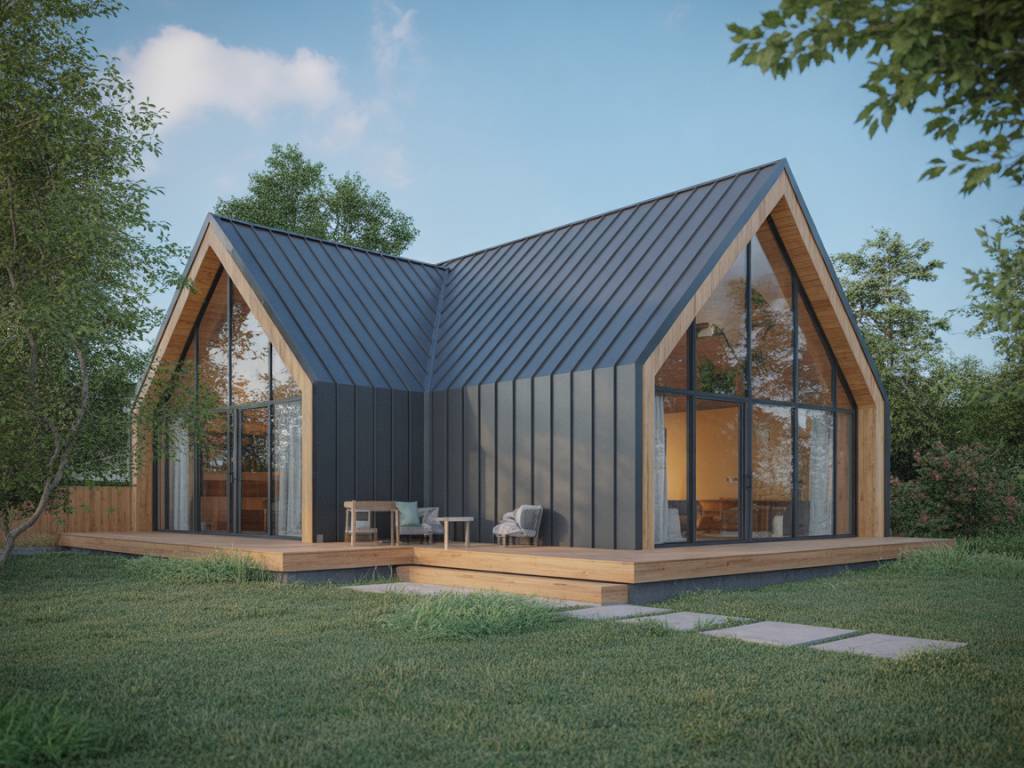
On some evenings, when the light slips gently off the brick façades of British terraces, I like to stand in front of homes mid-transformation. A skip on the drive, a temporary door taped in plastic, the muffled percussion of a nail gun from somewhere inside. It’s the quiet drama of a house becoming something more than it was that fascinates me.
If you’re planning a home extension, you’re in that in‑between moment too: the house you love is about to grow, and you have a rare chance to choose how it will inhabit the future. Not just in terms of space and style, but in terms of carbon, comfort and value.
Choosing green building materials isn’t about decorating with a guilty conscience; it’s about creating a place where your daily life, your energy bills and your environmental impact quietly align. Let’s walk through how to choose those materials with both the planet and your property value in mind.
Why your next square metre matters more than you think
Every extra brick, beam or pane of glass carries what we call embodied carbon — the greenhouse gases emitted to extract, manufacture, transport and install it. For a new extension, embodied carbon can account for a big share of its lifetime climate impact, often more than decades of heating.
In other words, the materials you choose now are like a one‑time carbon “vote” that will echo for the next 50 years or more.
At the same time, buyers are becoming more carbon‑literate. We’re seeing:
- Growing demand for energy‑efficient, low‑impact homes.
- Surveyors and lenders increasingly factoring EPC ratings and sustainability into valuations.
- Planning departments favouring designs that reduce energy demand and carbon.
So a green extension isn’t a niche statement anymore; it’s quickly becoming what a “good” home looks like — and that has very real implications for long‑term value.
Start with the envelope: structure and walls
The bones of your extension will lock in most of its embodied carbon. This is where you can make some of the biggest gains.
Low‑carbon structural options worth considering
1. Timber frame and engineered timber
On a damp autumn morning in the Highlands, I ran my hand along the warm grain of an exposed glulam beam in an off‑grid cabin. The structure felt alive — and it was, in a way: timber is a natural carbon store.
Using timber, especially from well‑managed forests, can significantly cut embodied carbon compared to steel or concrete.
- Timber frame: Fast to build, lightweight, excellent for high‑performance insulation. Ideal for side or rear extensions.
- Cross‑Laminated Timber (CLT): Big panels of layered wood that can replace concrete or steel in some designs.
- Glued‑laminated beams (glulam): Strong, slender beams that allow open spaces and feature ceilings.
Look for FSC or PEFC certification and ask your designer or builder to source from suppliers who publish Environmental Product Declarations (EPDs) so you can compare embodied carbon.
2. Low‑carbon concrete and smarter use
Sometimes, you can’t avoid concrete — for foundations, retaining walls, or where local ground conditions demand it. The aim is then to use less and make it lower carbon.
- Specify mixes with reduced Portland cement content (often blended with GGBS or fly ash).
- Use concrete only where structurally essential; combine with timber elsewhere.
- Design for longevity and repair, so you’re not re‑pouring slabs in 20 years.
Ask your engineer bluntly: “If this were your own house, where would you reduce concrete?” You’d be surprised how that simple question can shift the conversation.
Walls that breathe, insulate and age well
Walls are not just boundaries; they’re microclimates. The materials you choose here will affect how your extension feels on a July afternoon or a January dawn.
1. Brick and block, done better
For many UK homes, matching existing brickwork keeps planning simple and preserves street character. You can still make lower‑carbon choices:
- Use reclaimed bricks where possible, especially for visible façades.
- Select bricks from kilns that use renewable energy or have published low‑carbon ranges.
- Opt for high‑performance blockwork internally to reduce overall wall thickness while achieving good insulation.
Reclaimed brickwork, with its slightly uneven tones and softened edges, often adds a patina of age that new builds can’t fake — a quiet aesthetic bonus that buyers tend to notice, even if they can’t name it.
2. Natural wall systems: timber and bio‑based
If planning and context allow, you can move further into genuinely regenerative territory:
- Timber cladding from durable species like larch or cedar, left to silver gracefully.
- Wood fibre sheathing and insulation to create breathable wall build‑ups.
- Hempcrete or straw bale for those willing to embrace a more radical, deeply low‑carbon approach in suitable climates and contexts.
Pairing a timber frame with wood fibre insulation can give you a wall that not only insulates but also moderates humidity, reduces overheating and stores carbon for decades.
Insulation: the invisible powerhouse of comfort and value
If structure is the skeleton of your extension, insulation is the winter coat and summer shade — all in one. It doesn’t ask for attention, but you feel its presence every single day.
Why go beyond minimum standards?
Building regulations are a floor, not a ceiling. Exceeding them with good insulation:
- Lowers heating and cooling bills for years to come.
- Reduces the size and cost of heating systems required.
- Improves EPC ratings, which increasingly influence property value and mortgage options.
Low‑carbon insulation options
- Wood fibre boards: Breathable, great for walls and roofs, excellent for summer overheating control.
- Cellulose (recycled paper): Blown‑in insulation ideal for roofs and timber studs, made from waste paper.
- Sheep’s wool: Naturally fire‑resistant when treated, handles moisture well, pleasant to install.
- Cork: Renewable, resilient, and can also serve as acoustic and flooring material.
In more constrained scenarios, high‑performance PIR or phenolic boards can still play a role. If you go that route, pair them with renewable electricity and a well‑sealed building envelope to mitigate operational carbon.
Windows, light and the art of not overheating
A new extension is often an excuse to finally enjoy that morning light in the kitchen or to frame the garden like a living painting. But glass, generous as it looks, can quietly undermine both comfort and carbon if not chosen carefully.
Choosing low‑carbon, high‑performance glazing
- Specify double or triple glazing with low‑E coatings and warm edge spacers.
- Look for timber or timber‑aluminium composite frames over pure aluminium, which is carbon‑intensive.
- Use certified sustainable timber and finishes with low VOCs (volatile organic compounds).
Orientation matters. South‑facing glazing can work with the sun in winter but may need shading (deep reveals, pergolas, external blinds) to prevent summer overheating — a problem that is becoming harder to ignore in a warming climate.
Frame your view, but also frame your seasons.
Floors, finishes and the tactile side of sustainability
At home, we are mostly in contact with materials through our feet and our fingertips: floorboards under bare soles, the edge of a worktop under a resting hand. These are perfect places to choose green materials that tell a quiet story.
Floors that feel good and age gracefully
- Engineered timber flooring: Uses less hardwood than solid planks, stable over underfloor heating, can be sourced from FSC‑certified forests.
- Bamboo: Technically a grass, fast‑growing and hard‑wearing when well manufactured.
- Cork: Gentle underfoot, naturally insulating and acoustically soft — ideal for playrooms or home offices.
- Polished low‑cement concrete or lime‑based screeds: When used sparingly and paired with low‑carbon mixes, they can create a durable, minimalist finish that also works with underfloor heating.
Wall finishes and paints
- Choose mineral or clay‑based paints with low or zero VOCs for healthier indoor air.
- Consider lime plaster for breathable walls, especially with natural insulations.
- Use natural oils and waxes on timber rather than high‑solvent varnishes.
These choices don’t just reduce carbon; they shift the sensory experience of your extension — the way light diffuses off a clay wall, the way a waxed oak worktop mellows with age. Buyers notice this, even if they can’t articulate why your home “feels” different.
Roofs, green coverings and capturing the weather
The roof of your extension is often the most overlooked surface, yet it’s where you can quietly turn grey structure into green infrastructure.
Green roofs
- Extensive green roofs (shallow substrates with sedums and hardy grasses) add little structural load and are ideal for flat or low‑pitched roofs.
- They store rainwater, reduce runoff, support biodiversity and protect waterproofing layers — extending roof life.
- They provide additional insulation and reduce summer heat gain.
From an upstairs window, a green roof transforms what might have been a dull expanse of felt into a shifting patch of colour and texture — a small, private landscape you didn’t know you needed.
Solar‑ready or solar‑equipped roofs
- Design the roof orientation and pitch to be solar PV‑friendly, even if you don’t install panels immediately.
- Use solar tiles or integrated systems where planning or aesthetics are sensitive.
- When possible, run cable ducts and allow space in the consumer unit from the start to avoid retrofitting headaches.
Solar doesn’t just cut operational carbon; it can make your extension more attractive to future buyers who anticipate rising energy costs.
Where carbon and property value quietly align
It’s tempting to think of green materials as a noble indulgence, but in a growing number of markets they’re becoming a straightforward value play.
Energy efficiency as a selling point
- Lower running costs are increasingly prominent in property listings.
- High‑performance envelopes can support low‑carbon heating (heat pumps, for instance) that further lower bills.
- Better comfort — fewer drafts, less overheating, more stable temperatures — makes homes feel immediately “right” during viewings.
Durability and maintenance
- Quality timber windows, properly maintained, can outlast cheaper uPVC alternatives.
- Green roofs and high‑quality membranes extend roof life.
- Natural materials that patinate rather than peel often need less aggressive maintenance over time.
A buyer might not know the embodied carbon of your wood fibre insulation, but they will notice the absence of condensation on winter mornings, the soft acoustics of a cork‑floored room, the way a green roof softens the view from the bedroom.
How to talk to your architect and builder about green materials
Between inspiration and implementation stands a small crowd of professionals: architects, designers, structural engineers, builders, sometimes planners. Bringing them with you on the low‑carbon path is half the journey.
Start with clear intentions
- Say from the first meeting: “Reducing embodied and operational carbon is a priority, alongside comfort and long‑term value.”
- Ask your architect to explore at least one lower‑carbon structural option (such as timber frame) in the early design stage.
- Request that materials be compared not just on cost but on lifespan, maintenance, and embodied carbon where data exists.
Questions worth asking
- “Can we see EPDs for key materials like insulation, structure and finishes?”
- “Where can we substitute high‑carbon materials like concrete or aluminium without compromising performance?”
- “How can we design this extension so it could be adapted or partially deconstructed in future, rather than demolished?”
You don’t need to be an expert. You simply need to be the person in the room who keeps bringing the conversation back to carbon, comfort and value — and insisting they sit at the same table.
A home that tells a different story
In years to come, someone else might stand in your kitchen or step out through your new doors into the garden, and feel something they can’t entirely name — a sense of calm air, stable warmth, a certain softness underfoot and silence overhead.
They’ll see the visible things: the timber beams, the soft limewashed walls, the way evening light is caught and filtered rather than harshly reflected. They may not see the wood fibre, the reduced‑cement foundations, the careful orientation of glazing, or the wiring quietly waiting on the roof for future solar panels — but those choices will quietly shape how they live there, and how much they’re willing to pay to call it theirs.
When you choose green building materials for your extension, you’re not just extending your house; you’re extending the story of how homes can tread more lightly. Each brick reclaimed, each beam of certified timber, each breath of low‑VOC air is a small but tangible vote for a different kind of domestic future.
And one day, as dusk falls and the lights come on behind your new windows, someone walking past might look up and think: there’s a house that seems to sit comfortably in its skin — and in its century.