On certain evenings in a British winter, when the sky folds in early and the wind prowls around terraced streets, there’s a particular kind of light that glows behind curtains. It’s not just the warmth of a lamp or the soft hum of a kettle; it’s the quiet satisfaction of knowing that some of that electricity was generated on your neighbour’s roof, or by a community-owned turbine on the hill above town.
This is the promise of community energy in the UK: power that is not only low-carbon, but also local, democratic, and rooted in place. For homeowners, it offers a way to lower bills, reduce emissions and weave their own homes into a larger story of shared resilience.
So what exactly are community energy projects, how do they work in the UK, and how can you join – or even start – one where you live?
What is a community energy project?
In simple terms, a community energy project is an energy initiative owned or run by a group of local people for collective benefit. Instead of profits disappearing into distant shareholders, they are reinvested into the neighbourhood – funding insulation programmes, EV charge points, tree-planting schemes or fuel-poverty support.
In the UK, these projects usually focus on:
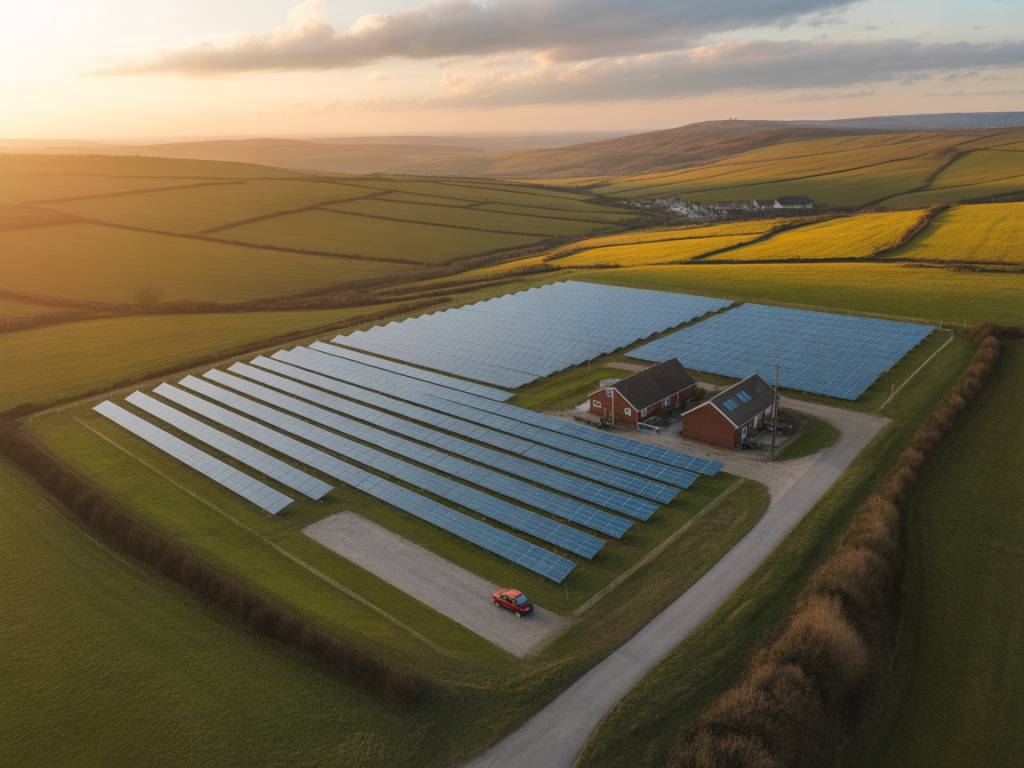
- Renewable generation: rooftop solar on homes or public buildings, solar farms on unused land, small-scale wind turbines, hydro schemes on rivers, even community-owned battery storage.
- Energy efficiency: bulk-buy insulation, draught-proofing campaigns, home energy advice, thermal imaging walks through the village on a frosty evening.
- Local supply and flexibility: schemes that help people shift use to cheaper, cleaner times of day, or pilot local “microgrids” that keep essential power flowing during outages.
Structurally, they’re often set up as Community Benefit Societies, cooperatives or Community Interest Companies (CICs), giving local people a formal stake and a say.
Why community energy matters for UK homeowners
For homeowners already thinking about insulation, heat pumps or solar panels, community energy is the missing social layer. It knits together individual choices into something more powerful and resilient.
It matters because:
- Energy prices are volatile. Shared local generation and smarter local use can buffer communities from the worst swings.
- The climate clock is ticking. Even the most efficient single home is just one data point; community projects scale up impact without demanding heroics from any one household.
- Loneliness is real. Odd as it may sound, talking kilowatt-hours at a village hall can be a surprisingly good way to meet your neighbours and feel part of something.
A community-owned solar array on a school roof might seem small in the face of global emissions, yet the ripples are real: lower bills for the school, learning opportunities for children, local investors earning modest but stable returns, and a physical reminder – gleaming above the playground – that change is possible.
The UK’s community energy landscape in a nutshell
Despite policy ups and downs, the UK has a quietly vibrant community energy sector. Organisations like Community Energy England, Community Energy Scotland and Community Energy Wales act as hubs, mapping groups and sharing advice.
A few evocative examples:
- Brixton Energy in London: pioneering shared solar on social housing blocks, with local residents owning shares in the panels above their heads.
- Bath & West Community Energy (BWCE): a patchwork of solar rooftops and fields across the West Country, funding local grants and supporting fuel-poor households.
- Hebden Bridge and the Calder Valley: a valley that has experimented with community hydro, solar and energy advice to build resilience after repeated flooding.
- Orkney and the Scottish islands: wind, community ownership and innovative grid solutions in some of the most weather-beaten yet energy-rich landscapes in Britain.
You don’t have to live in a postcard-perfect village to be part of this. Many projects span suburbs, towns and cities, weaving through estates, cul-de-sacs and converted warehouses with equal enthusiasm.
How homeowners can join an existing community energy project
If you prefer to join something already in motion, the path is often surprisingly straightforward. The real work is not technical; it’s simply taking the time to find your people.
Step 1: Find what already exists nearby
Begin with a gentle bit of detective work:
- Search for “community energy [your town/county]” and note any groups or projects.
- Check the member maps of Community Energy England/Scotland/Wales.
- Look at your council’s climate or sustainability pages – many list partner community energy groups.
- Ask at local hubs: the parish council, library, transition group, repair café or climate action group.
Often, you’ll discover that something is already quietly happening a bus ride away: solar on a leisure centre, a local energy co-op, a village sizing up a wind turbine.
Step 2: Decide how you’d like to be involved
Once you’ve found a project, homeowners tend to plug in through one or more of these routes:
- Become a member or investor
Many groups offer community share offers with modest, ethical returns (for example 3–5% per year, though this varies and is never guaranteed). You buy shares not just for income, but to lock your savings into something tangible and local. - Host solar on your roof
Some schemes install and own solar panels on suitable roofs (homes, farms, churches, schools). The host gets cheaper electricity; the community group earns income from the generation. Your home becomes part of a distributed, shared power plant. - Volunteer your skills
Community groups rarely lack passion; they lack time. Skills like basic bookkeeping, web design, copywriting, planning know-how, legal experience, teaching, or simply being good at making tea and listening – all are valuable. - Participate in demand-side projects
Some groups pilot smart-meter-based schemes that reward you for shifting use away from peak times, or organise collective switching to greener, fairer tariffs. As a homeowner, your washing machine and immersion heater become part of the local energy choreography.
In other words: you don’t need a background in engineering. If you can read a bill, talk to neighbours and turn up reliably, you’re already useful.
Step 3: Connect the project with your own home improvements
If you are renovating or greening your home, consider how it might dovetail with local efforts:
- Coordinate your solar installation with a community bulk-buy or advice scheme.
- Invite the group to use your home as a case study for open-house events, showing how a typical property can evolve.
- Pair your new heat pump or battery with time-of-use tariffs promoted by the community project, easing pressure on the grid when the kettle-hungry nation wakes and boils.
Your home becomes a quiet ambassador – proof that sustainable living can be both practical and beautiful, a place of thick curtains, soft light and sharply reduced emissions.
How to start a community energy project in your area
Sometimes, after one too many frustrating conversations about bills or after watching yet another storm tear through overhead lines, a thought emerges: “Why don’t we just do something ourselves?”
If there’s no project near you – or if what exists feels too distant – starting your own is entirely possible, even from an ordinary semi or cottage kitchen table.
Gather a core group
Community energy rarely begins with a business plan. It usually begins with a conversation.
- Invite a small group – perhaps neighbours, a local councillor, someone from a climate group – for tea and a chat about energy.
- Share stories: recent bills, draughty rooms, the sun you see lingering on a south-facing wall every afternoon.
- Ask simple questions: What could we change together? Where are the underused roofs, the windy ridges, the leaky homes?
A group of 4–8 committed people is enough to begin. Larger can come later; too many at the start can feel unwieldy.
Map your local “energy landscape”
Next, look around your area with fresh eyes, not as a collection of houses but as a living energy system:
- Which roofs are large, unshaded and south-facing? Schools, warehouses, sports halls, farm buildings?
- Is there a nearby river or weir that has historically powered mills?
- Is your area windy enough for a small turbine, perhaps on community-owned or sympathetic land?
- Where are the cold, leaky homes that most urgently need insulation help?
Many successful projects began with something modest and achievable – a few dozen kilowatts of solar on a school – and grew from there.
Choose a legal structure and get support
This is the part that can feel intimidating, but there is a well-trodden path.
- Most UK community energy projects choose a Community Benefit Society or Community Interest Company (CIC) model, allowing community share offers and locking in social purpose.
- Umbrella organisations such as Energy4All, Co-operative UK, or regional community energy hubs offer templates, guidance and mentoring.
- Speak early to your local council; many have climate officers who can point you towards grants, partnerships and suitable roofs.
Think of this stage as designing the skeleton that will allow your project to eventually walk, dance and carry weight.
Explore funding options
Funding a project is rarely about a single cheque; it’s more often a carefully layered stack.
- Feasibility grants: UK schemes (sometimes via the Rural Community Energy Fund or regional bodies) have supported early-stage studies for renewables and energy efficiency. Check current availability – these change over time.
- Community share offers: Once you have a clear plan and basic permissions, you can raise capital locally, offering shares to residents and supporters.
- Partnerships: Working with housing associations, schools or businesses can unlock roof space and co-investment.
- Loans or ethical finance: Organisations like ethical banks and specialist lenders sometimes support community energy on fair terms.
The financial story you tell should be as honest as the environmental one: no overpromising, clear about risk, transparent about returns and how surpluses will be used locally.
Talk to the grid, planners and neighbours
Any project that generates or stores energy at scale has to dance with existing systems:
- Grid connection: Engage early with the Distribution Network Operator (DNO) for your area. They’ll tell you what’s possible, what upgrades might be needed, and at what cost.
- Planning: Rooftop solar often slips under permitted development, but ground-mount solar, wind or hydro usually need formal planning. A clear, community-led narrative helps.
- Neighbours: Before drawings and forms, invest in conversations. Host drop-in sessions, share visuals, listen carefully to concerns about views, wildlife, noise or traffic.
Handled well, this stage turns potential opposition into active support. People are more inclined to accept change on the horizon when they have a say and share in the benefits.
Design the social fabric, not just the hardware
A community energy project is more than panels, inverters and spreadsheets. Its real strength lies in the culture that grows around it.
- Establish transparent governance: clear roles, open meetings, accessible documents.
- Create visible local benefits: perhaps a fund for insulating low-income homes, or free energy advice sessions run in the library.
- Celebrate milestones: the first kilowatt-hour generated, the first school talk, the first winter of noticeably lower bills.
This is where the aesthetic side of sustainable living can shine too. A small solar array combined with new planting, benches and a mural can turn a corner of a car park into a miniature civic space.
Blending community energy with off-grid and resilient living
For some, the attraction of renewable energy is partly about independence: a cottage at the end of a long lane, a barn conversion looking out over miles of heather, a desire to be less at the mercy of distant infrastructure.
Community energy and off-grid aspirations aren’t opposites; they are often cousins.
- In remote or storm-prone areas, microgrids and shared batteries can keep essential circuits alive even when the main grid falters.
- A cluster of homes each with modest solar and battery storage can agree to share surplus in emergencies, formal or informal.
- Community projects can coordinate bulk-buying of efficient appliances, heat pumps, stoves and insulation, making it easier for households to reduce demand and stretch their local generation further.
A well-insulated, thoughtfully designed home – thick walls, natural materials, careful orientation – sits beautifully within this picture, needing less energy in the first place and making every locally produced kilowatt-hour count.
Every home as part of a larger story
Imagine, for a moment, your own street under a low winter sun. Look up: some roofs are studded with panels, others not yet. Somewhere nearby, perhaps you can picture a school roof or a patch of municipal land that could host a small solar array. In the village hall, a meeting is starting; coffee steams in compostable cups, and someone is wrestling with a projector cable.
That small chaos of everyday logistics is where the real transition happens. Not in glossy brochures, but in shared spreadsheets, patient emails, and the gentle stubbornness of neighbours who decide that their place on the map deserves better than passive dependence.
As a homeowner in the UK, you sit at a powerful intersection: your roof, your bills, your vote, your relationships. Joining or starting a community energy project is one of the rare actions that touches all of these at once – reducing emissions, lowering costs, and quietly reshaping the way power, in every sense, is owned.
The technology is ready. The legal forms exist. The support networks are in place. What remains is often the most human step of all: deciding to knock on a door, send an email, or walk into that slightly draughty meeting room where a few people are already talking about kilowatts and wondering who else might care.
You, as it happens, might be exactly who they were waiting for.