It started, for me, on a drizzly afternoon in Rotterdam.
Down by the docks, where ships exhale rust and history, I walked past a cluster of colour-blocked containers stacked like oversized children’s toys. Only, they weren’t holding cargo anymore. They were holding people, light, music, plants. A row of windows had been carved into steel. Steam curled from a tiny kitchen. Someone had draped a woven rug over a railing, as if to say: yes, this is home now.
It was my first real encounter with container homes — and it felt less like a futuristic experiment than a quiet, practical act of rebellion: taking something built for perpetual movement and turning it into a still point in a restless world.
Why container homes are suddenly everywhere
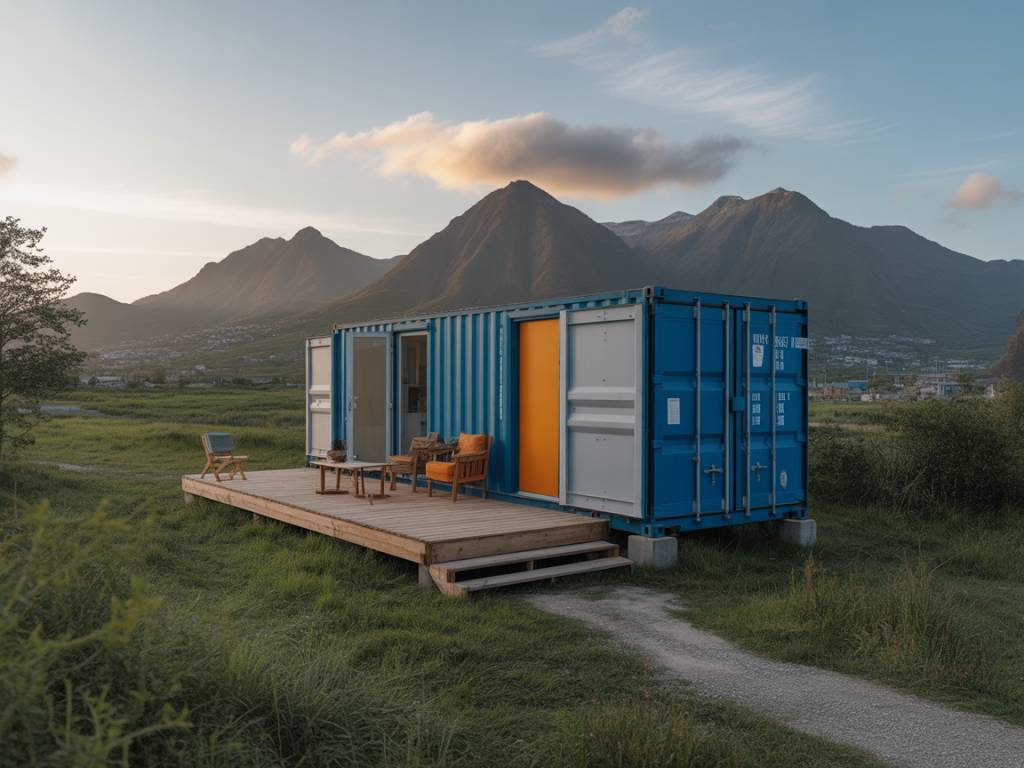
Over the past decade, shipping container homes have moved from fringe curiosity to credible housing option. You’ll find them as off-grid cabins on Scottish hillsides, student housing in Scandinavian cities, and weekend retreats tucked into corners of countryside plots.
It’s not hard to see why they resonate right now. Many of us are craving three things at once:
- a home we can actually afford
- a home that treads more lightly on the planet
- a home flexible enough to adapt as our lives change
Container homes sit precisely at this intersection. They’re not perfect — nothing is — but used thoughtfully, they can be a powerful tool in the move towards more sustainable, adaptable living.
From cargo box to cosy nest: a second life for steel
Every year, thousands of shipping containers reach the end of their “economic” life. Perhaps they’ve been dented, or regulations have changed, or it’s simply cheaper for companies to buy new ones than to ship empties back across oceans.
The result? A quiet global surplus of steel boxes, designed to withstand storms at sea and decades of rough handling. When we turn these into homes, we’re practising a particularly elegant form of reuse.
Instead of:
- melting them down (an energy-intensive process), or
- leaving them to rust at the edge of ports,
we’re upcycling a highly durable structure into long-term shelter.
This doesn’t automatically make a container home sustainable — the rest of the design matters enormously — but it gives you a starting point rooted in circular thinking rather than extraction.
The real cost picture: affordability beyond the headline
Stories often focus on the tantalising headline: “Build a home for the cost of a car.” Sometimes that’s true. Often, it’s… optimistic.
The raw container itself can be surprisingly affordable, especially if you’re working with a single unit. But the total cost of a container home typically includes:
- site preparation and foundations
- insulation and ventilation
- windows and doors (cutting into steel needs care)
- interior finishing and built-in furniture
- plumbing, electrics, heating or cooling
- permits, architectural plans, and sometimes structural reports
Where container homes can shine, financially, is in their predictability and modularity.
Because you’re working with standard dimensions — usually 20 or 40 feet in length — it’s easier to design in modules and phase your build. You might start with one insulated, fully finished container as a compact studio, then add a second module later as a bedroom wing or workspace.
I once visited a smallholding in rural Wales where a young couple had done exactly this. Their first container was a simple, beautifully crafted studio with a kitchenette and wood-burning stove. When their first child arrived, they craned in a second container perpendicular to the first, creating an L-shaped courtyard that caught the afternoon sun. No new “house move”, no wrenching break from the land they’d begun to love — just a quiet expansion.
Designing for light, air, and human comfort
The bare container, if we’re honest, is not naturally a hospitable place. Thin steel walls, narrow proportions, zero insulation. Left alone, it heats like an oven in summer and sweats with condensation in winter.
The magic — and the challenge — lies in the design.
To transform a container into a comfortable home, you need to think carefully about:
- Thermal envelope: Insulation is non-negotiable. Natural, low-impact materials like wood fibre, cork, sheep’s wool or recycled denim can be layered either inside or outside the steel shell. External insulation, protected by cladding, helps avoid cold bridges and condensation issues.
- Ventilation: A well-detailed ventilation system (even a simple, thoughtfully placed mechanical system with heat recovery) protects indoor air quality and keeps humidity in check.
- Orientation: Positioning the container to capture winter sun, avoid harsh summer glare, and channel prevailing breezes can significantly reduce energy needs.
- Openings: Cutting generous windows, skylights or even entire wall sections transforms the narrowness into something akin to a minimalist, linear loft.
Letting go of the “box” mentality helps. Once you accept that a container is a structural module rather than a sacred, untouchable shape, the design possibilities open up. Two containers spaced slightly apart with a glazed link can feel far more airy than a single expanded box. A cut-out section can create a sheltered terrace or covered entrance.
Green building from the inside out
If you’re attracted to container living because of its sustainability promise, the interior materials you choose are just as important as the reused steel outside.
Some of the most harmonious container homes I’ve seen lean towards a restrained palette:
- timber from certified or reclaimed sources for floors and built-ins
- natural paints and finishes to minimise indoor pollutants
- recycled or repurposed fittings — an old school lab worktop reborn as a kitchen counter, for example
- hempcrete or clay plasters in hybrid builds, especially where containers are combined with other structures
Because space is tight, every material choice is amplified. A poorly chosen plastic finish can dominate; a calm, tactile surface like birch ply or limewash can make the entire interior feel serene.
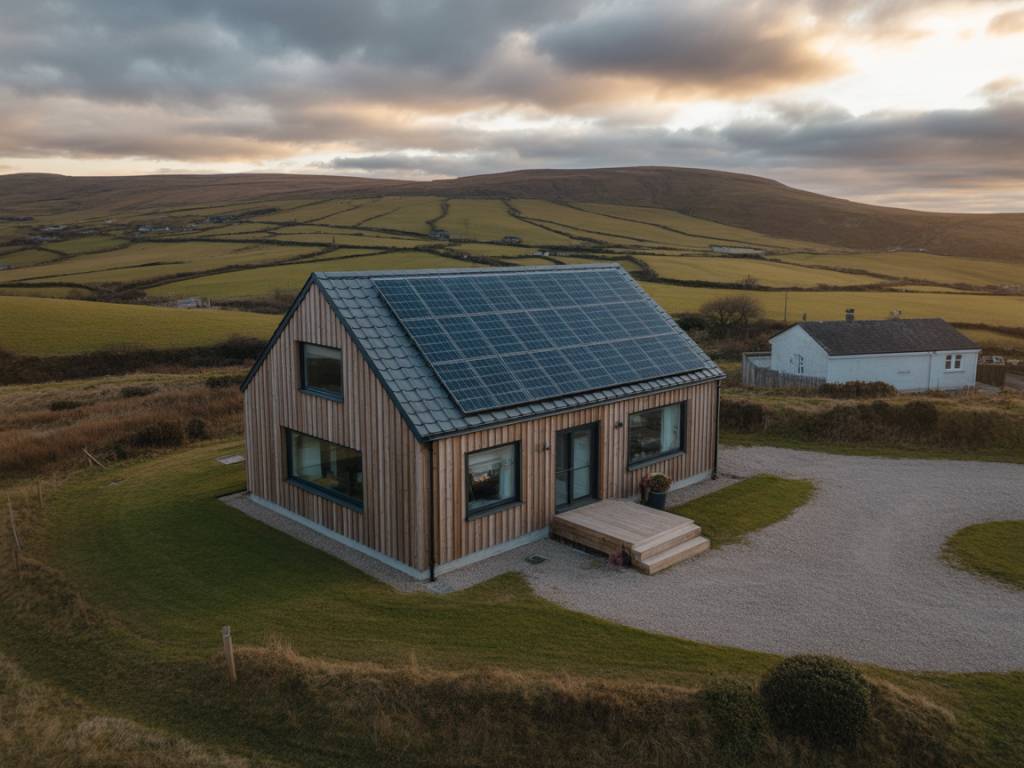
And then there’s energy. A container roof is a near-perfect platform for solar panels; its strong, simple plane needs minimal adjustment. Pair that with good insulation, smart glazing, and efficient appliances, and you inch towards a home that’s gentle on both the planet and your monthly bills.
Off-grid dreams: containers at the edge of the map
Containers come into their own in remote or challenging sites. Their robustness and transportability make them ideal candidates for:
- forest cabins reached via narrow tracks
- clifftop studios where traditional construction would be complex
- temporary housing that needs to move with seasonal work or changing land use
In the Scottish Highlands, I stayed once in a container-turned-bothy perched on a low rise above a loch. The wind that night was the kind that wraps itself around buildings and tests every seam. Inside, though, the little home held firm. The stove ticked, the walls felt solid, and the rain made a soft percussion on the roof that felt strangely comforting, like being inside a well-made tent with a very solid frame.
For off-grid life, containers can integrate:
- solar PV and battery storage
- rainwater harvesting systems feeding into filtration
- composting toilets or advanced low-flush systems
- greywater treatment for reuse in irrigation
That said, “remote” does not mean “regulation-free”. Even in wild places, planning laws, environmental protections and building standards apply. Off-grid container dwellers who thrive tend to be those who do their homework meticulously, rather than assuming that a steel box can simply be dropped and forgotten.
Permits, planning, and the art of negotiation
One of the persistent myths around container homes is that they somehow dodge regulation by virtue of being “temporary”. In reality, permanence is less about wheels and more about intention, services, and time on site.
Local authorities will typically consider:
- how long the structure will remain
- whether it’s connected to utilities
- its impact on neighbours and landscape
- access, safety, and sanitation
In some regions, a container used as a garden office may be permissible under minor development rights, while a container home for full-time living requires full planning approval and compliance with building codes.
There is, however, a quiet advantage. The industrial aesthetic of containers can be softened remarkably with good landscaping and cladding. A timber skin, a living roof, or a careful arrangement of decks and planters can help the project sit more gently in its context — something planners often appreciate.
Ultimately, though, the most effective tool is conversation. In my travels, I’ve met more than one container dweller who invited local officials for tea in the half-finished shell, unrolled plans at the makeshift table, and transformed suspicion into cautious curiosity. Steel can be cold, but the people inside don’t have to be.
Flexibility through the seasons of life
Rigid as they appear, containers can support remarkably fluid ways of living.
For a young couple or single person, one or two containers might be an affordable first step into ownership, allowing them to build equity rather than pay rent. For an older homeowner with land, a compact container home in the garden can become a future downsized nest, while the main house is rented or passed on.
One of my favourite examples was in rural France, where an extended family had created a loose “village” out of four containers and a renovated stone barn. The containers, each with a slightly different character, housed adult children, guests, and a small studio. Over the years, they had been rearranged, linked, and occasionally swapped — a kind of architectural dance that mirrored the evolving tangle of relationships and projects on the land.
Because containers can be moved, split, stacked, or sold, they lend themselves to life’s uncertainties. A job change, a new baby, an ageing parent — these are the quiet tectonic shifts that shape our dwellings. Having a home that can adjust, rather than demand a complete restart, is no small gift.
The shadow side: challenges and cautions
It would be disingenuous to romanticise container living without acknowledging its complications.
Some of the key challenges include:
- Insulation and condensation: Steel is unforgiving. Poor detailing can lead to mould, damp, and uncomfortable temperature swings.
- Space constraints: The internal width of a standard container is around 2.35 metres. Clever built-ins and careful planning are essential to avoid a corridor-like feel.
- Original treatments: Some containers may have been painted or treated with chemicals unsuitable for residential use. Selecting appropriate units and preparing surfaces safely is vital.
- Structural modifications: Removing too much steel without proper reinforcement can compromise integrity, especially in stacked designs.
- Resale and financing: In some markets, unconventional homes can be harder to finance or sell, though this is slowly changing.
The remedy, as usual, lies in humility and expertise. Working with architects and builders who understand both containers and sustainable construction makes a world of difference. A container home is still a house, with all the responsibility that entails — it simply starts from a different skeleton.
Small footprint, big life
Perhaps the greatest gift of container homes is not technical at all, but psychological.
When space is modest, every object earns its place. Clothes are chosen more carefully, kitchen tools become fewer but better, collections are edited rather than hoarded. In this enforced clarity, many people discover that they need less than they imagined — and that the freedom gained (less debt, more time outside, lower running costs) is worth more than the square metres surrendered.
I remember standing in a container kitchen one autumn evening, somewhere along the English coast. The owner had installed a wide window over the sink that framed a slice of sea and ever-changing sky. We stood there, mugs in hand, as the light slid from silver to ink. There wasn’t a spare inch of counter, and yet the space felt expansive in a way that had little to do with dimensions.
“The house stops here,” she said, tapping the window frame, “but the room goes all the way to the horizon.”
In a world wrestling with how to live both well and lightly, that feels like a useful reminder. A container home will not solve the housing crisis, or fix climate change, or guarantee happiness. But as one flexible, adaptable tool among many, it invites us to reconsider what a home can be: less fortress, more vessel. Less monument, more companion.
A quiet, steel-framed question at the edge of the field: how much is enough — and what might you gain by choosing just that, no more, no less?