There is a quiet pleasure in cleaning a home with products you could almost eat.
The gentle bite of vinegar in the air, the citrus brightness of a freshly peeled lemon, the soft earthiness of baking soda fizzing in a sink you’ve neglected a little too long. It’s a different kind of clean – not the aggressive, synthetic kind that stings your nose and leaves neon bottles behind, but a calmer ritual that feels more like tending a garden than scrubbing a battlefield.
Creating a zero-waste cleaning routine with DIY natural products isn’t just about swapping one bottle for another. It’s about rewriting the whole story: the ingredients, the tools, the habits, and even the rhythm of your week. And room by room, it’s entirely possible.
Why zero-waste cleaning feels different
Most conventional cleaners leave an invisible trail – plastic bottles, harsh chemicals in our waterways, microplastics from scrubbing sponges, artificial fragrances lingering in the air. They promise “freshness” while quietly outsourcing the waste somewhere out of sight.
A zero-waste approach flips the script. Instead of a cupboard full of single-use bottles, you gradually move toward:
- Simple, multi-purpose ingredients you can buy in bulk or refill.
- Durable tools that can be repaired, composted, or recycled at the end of their life.
- Routines instead of emergencies: regular light cleaning instead of harsh, last-minute “deep cleans.”
It’s less “battle against dirt” and more “daily conversation with your home.”
The minimalist cleaning kit: ingredients & tools
Before we wander from room to room, let’s gather the essentials. Think of this as a small apothecary for the house, rather than a supermarket aisle in miniature.
Base ingredients (all easily stored in glass jars or refillable containers):
- White vinegar: mild acid; cuts grease, dissolves limescale, deodorises. (Avoid undiluted use on natural stone like marble.)
- Bicarbonate of soda (baking soda): gentle abrasive; great for sinks, baths, ovens, odours.
- Castile soap (liquid): plant-based, biodegradable; a superb all-purpose cleaner when diluted.
- Citrus peels (lemon, orange): for infusions and mild degreasing, a natural scent booster.
- Rubbing alcohol (isopropyl) or strong vodka: for glass, quick-dry surfaces, and occasional disinfection.
- Coarse salt: extra scrubbing power for pans and stubborn stains.
Optional but lovely (and always truly optional):
- Essential oils like tea tree, lavender, eucalyptus, or lemon. Use sparingly for scent and mild antimicrobial benefits.
- Citric acid (in powder form): powerful limescale remover, good for kettles, toilets, and showerheads.
Tools that last (lean towards wood, metal, glass, and natural fibres):
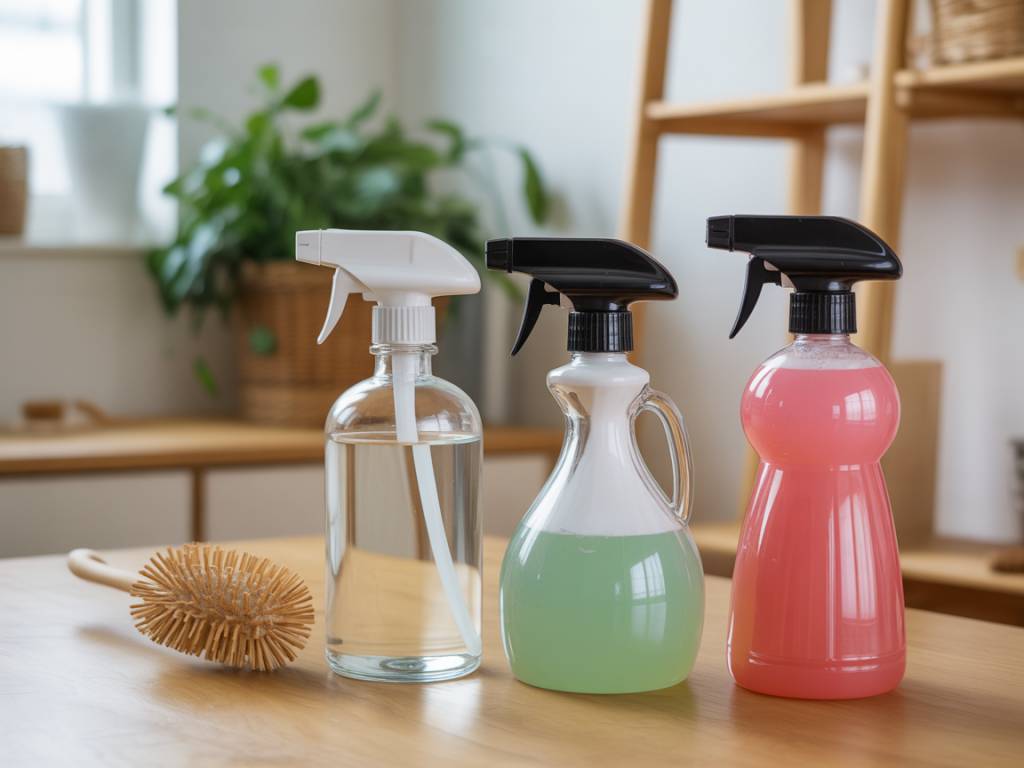
- Glass spray bottles (reused from previous products or bought once, then refilled).
- Old jars for storing powders and pastes.
- Wooden dish brushes with replaceable heads.
- Natural fibre scrubbers (loofah, coconut fibre, sisal).
- Reusable cloths: old t-shirts cut into rags, cotton flannels, or microfiber cloths you already own (keep and care for them rather than replacing).
- A sturdy bucket and a simple mop (ideally with washable, removable head).
With this kit, you can clean almost every surface in your home. The magic lies in the combinations.
One base spray for almost every room
Think of this as your “house blend” – the bottle you reach for most often.
All-purpose citrus vinegar spray
- 1 part white vinegar
- 1 part water
- Optional: a handful of citrus peels (lemon, orange) infused in vinegar for 1–2 weeks beforehand
Instructions:
- Fill a jar with citrus peels, cover with vinegar, and let it infuse for 1–2 weeks.
- Strain and dilute 1:1 with water in a spray bottle.
- Use on countertops, tiles, sinks, taps, fridge shelves, and more.
Avoid using vinegar on marble, granite, or other natural stone. For those, we’ll reach for a gentler option later.
Kitchen: where everything begins with grease and crumbs
The kitchen is the heart of the home – and the source of most sticky mysteries. Here, zero-waste cleaning can feel especially satisfying because you’re using food-safe ingredients in a food space.
Daily reset: 5–10 minutes
- Worktops & table: Spray your all-purpose citrus vinegar and wipe with a dedicated cloth. For stone worktops, swap vinegar for a few drops of castile soap in warm water.
- Hob: Wipe after each use with warm soapy water to avoid burnt-on buildup that needs heavy scrubbing later.
- Sink: Rinse, then sprinkle baking soda, scrub with a brush or cloth, and rinse. If you want some theatre, follow with a splash of vinegar and enjoy the fizz.
Weekly tasks
- Cutting boards: Sprinkle coarse salt on a wooden board, rub with half a lemon, let sit, then rinse and dry thoroughly.
- Fridge: Remove shelves, wipe with warm water and a little castile soap. For odours, place an open jar of baking soda at the back.
- Oven: Make a paste of baking soda and water, spread on the inside surfaces (avoiding heating elements), leave overnight, then scrape and wipe. A vinegar spray helps loosen residue.
Zero-waste swaps in the kitchen
- Refill dish soap into glass or metal dispensers.
- Choose wooden brushes with replaceable heads instead of plastic sponges.
- Use a washable cloth for spills instead of paper towels; reserve an old, stained one as your “oil and disaster” cloth.
Over time, the plastic under your sink shrinks to a small line-up of glass jars and bottles that feel less like clutter and more like quiet company.
Bathroom: limescale, soap scum, and small rituals
The bathroom is where water lingers, which means limescale, mould, and the temptation to reach for something overwhelmingly chemical. Natural products can handle this, with a bit of patience and consistency.
Everyday: 3–5 minute tidy
- Sink & taps: A quick spray of citrus vinegar and a wipe keep soap scum at bay.
- Toilet seat & exterior: Wipe with an all-purpose spray (for disinfection, you can add a little rubbing alcohol to a dedicated bottle).
- Shower: If possible, use a small squeegee or cloth to wipe down glass and tiles after showering – that one habit can almost eliminate water marks and mildew.
Weekly: deeper refresh
- Toilet bowl:
- Sprinkle baking soda generously inside the bowl.
- Add a splash of vinegar or a hot citric acid solution (1–2 tbsp citric acid dissolved in hot water).
- Leave for 15–30 minutes, then scrub with a toilet brush.
- Shower & bath:
- Mix equal parts vinegar and water in a spray bottle.
- Spray walls, taps, and glass; let sit for 10–20 minutes.
- Scrub with a brush or cloth, then rinse with warm water.
- Tiles & grout:
- For light grime, baking soda on a damp cloth is often enough.
- For more stubborn stains, make a paste of baking soda and water, apply with an old toothbrush, leave for 10 minutes, then scrub and rinse.
Zero-waste ideas for the bathroom
- Solid soap and shampoo bars instead of bottled products.
- Reusable cotton rounds or cloths instead of disposable wipes.
- A simple glass jar for homemade bath salts or scrubs (sugar + oil + a drop of essential oil).
The bathroom becomes less a chemistry lab and more a small spa, even on ordinary weekdays.
Bedroom & laundry: fabric care without synthetic clouds
In the bedroom, we spend hours breathing in whatever lingers in our fabrics. A low-tox, low-waste approach here is an invisible but tangible gift to yourself.
Natural laundry routine
- Detergent: If you’re not ready to DIY detergent (it can be finicky with hard water), choose an eco-friendly brand sold in bulk or in cardboard, or via refill stations.
- Fabric softener: Replace with white vinegar – about 100 ml in the softener compartment. It softens fabrics and helps prevent odours without leaving a vinegar smell.
- Scent: If you miss that “laundry smell,” add a drop or two of essential oil to wool dryer balls or a small cloth (never directly in the machine drum).
Simple DIY linen spray
- 100 ml water
- 50 ml vodka or rubbing alcohol
- 5–10 drops essential oil (lavender or eucalyptus work well)
Mix in a spray bottle, shake gently, and mist lightly over linens. Test a small hidden area first if you’re cautious.
Dust and allergens
- Use a slightly damp cloth rather than a feather duster to trap dust instead of redistributing it.
- Wash pillowcases weekly; sheets every one to two weeks, using the vinegar softener trick.
- Open windows daily for a few minutes, even in winter; fresh air is the simplest, most underrated cleaning tool.
There is a quiet joy in slipping into a bed that smells of almost nothing at all – just clean cotton and a hint of fresh air.
Living room: dust, glass, and the soft centre of the home
The living room gathers stories, crumbs, and the odd ring from a forgotten mug. Here, the aim is to keep surfaces inviting, not sterile.
Dusting, the old-fashioned way
- Use a lightly damp cloth (plain water or a little soapy water) on shelves, side tables, and skirting boards.
- For wood, follow with a tiny amount of natural oil (like a drop of olive or linseed oil on a cloth) if the surface is unfinished or looks dry. Buff well.
Homemade glass & mirror cleaner
- 1 part white vinegar
- 1 part water
- 1 part rubbing alcohol (optional but helps with streaks)
Spray on glass or mirrors and wipe with a lint-free cloth or an old t-shirt cut into squares. Newspapers used to be the go-to, but modern inks and coatings make cloth a safer ally.
Upholstery and rugs
- Sprinkle baking soda on carpets and fabric sofas, leave for 15–30 minutes, then vacuum thoroughly to freshen and absorb odours.
- Spot-clean stains with a solution of warm water and a few drops of castile soap. Blot, don’t rub.
Again, less is more. The goal isn’t a living room that smells of “Ocean Breeze Fantasy,” but one that smells of nothing but itself.
Floors & windows: finishing touches that change the whole mood
There’s something oddly satisfying about clean floors and clear windows; they quietly transform the way a room feels.
Floor cleaner (for tiles, vinyl, sealed wood)
- A bucket of warm water
- 1–2 tablespoons of castile soap
- Optional: a splash of vinegar for tiles (skip vinegar on wood)
Mop with a well-wrung mop so floors dry quickly. For wooden floors, just warm water and a small amount of castile soap are usually enough.
Windows
- Dust or wipe frames first to avoid streaks from loose dirt.
- Use your glass cleaner mix on a cloudy day (sun can cause streaks as the liquid dries too fast).
- Wipe with a dedicated window cloth; keep it separate so it doesn’t get greasy from kitchen or bathroom use.
Clean windows are a reminder that we’re not trying to create a sealed, sterile box, but a porous space in conversation with the world outside.
Designing a realistic zero-waste cleaning routine
All of this only works if it fits into your real life – rushed mornings, lazy Sundays, and those weeks when everything feels slightly off-kilter.
Start with habits, not perfection
- Pick one room to transform first – often the kitchen or bathroom.
- Replace products as they run out rather than purging everything at once.
- Schedule small routines: 10–15 minutes in the evening can be more effective than a two-hour marathon once a month.
A sample rhythm for the week (adjust to taste):
- Monday: Kitchen surfaces, sink, and bins.
- Tuesday: Bathroom quick refresh.
- Wednesday: Dust living room and bedroom; quick tidy.
- Thursday: Floors (vacuum and mop high-traffic areas).
- Friday: Laundry and bed linen.
- Weekend: Any “deep dive” tasks you’ve been avoiding – oven, fridge, windows.
It sounds structured, but in practice, it becomes something gentler: small gestures, repeated often, until they feel like second nature.
Embracing the imperfect, beautiful middle ground
Zero-waste is a compass, not a destination. There will be days when you buy a conventional cleaner because you’re overwhelmed, or when a stubborn stain refuses to respond to your gentle potions. That’s all right.
What matters is the steady drift: fewer bottles, more jars; fewer harsh scents, more quiet, almost edible ones; less panic cleaning, more daily care.
In time, you might find that cleaning no longer feels like a chore to rush through, but a small ritual of stewardship. A way of saying, softly and often, “I live here. I’m paying attention.”
And in a world of throwaway everything, that kind of attention might be one of the most radical forms of care we have.