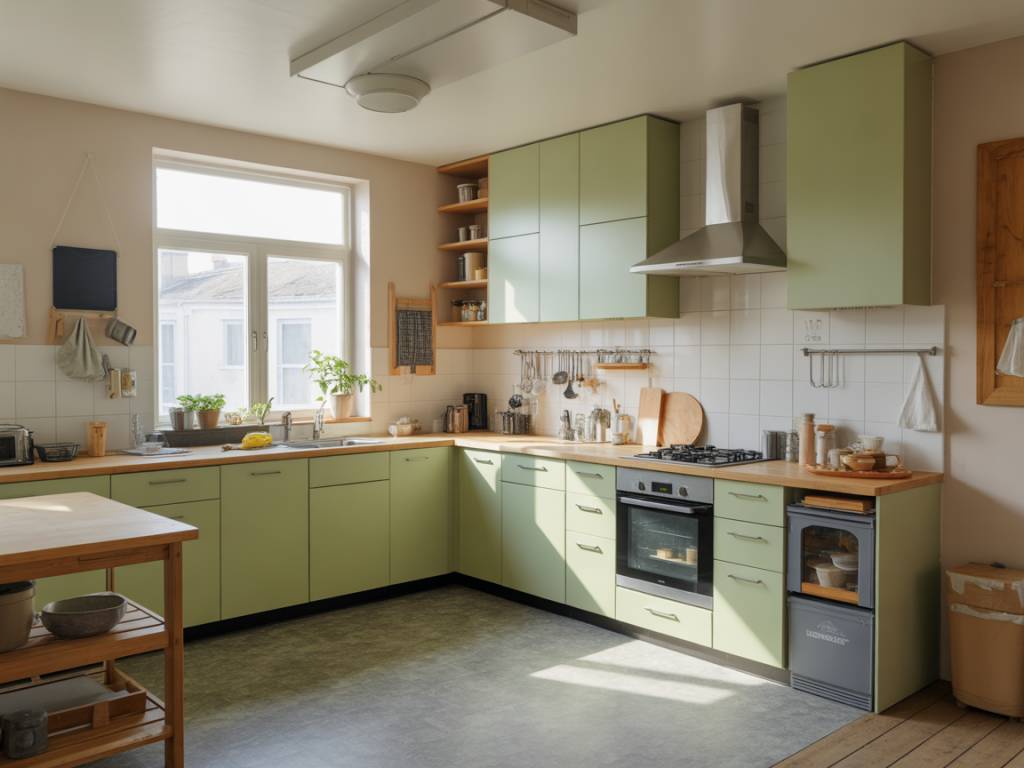
Designing a circular economy kitchen in a UK home goes far beyond swapping plastic straws for metal ones. It means rethinking the entire lifecycle of the space: how materials are sourced, how components are assembled, how easily they can be repaired or reconfigured, and how everyday habits minimise waste. In practice, this approach can create kitchens that are not only more sustainable, but also more adaptable, resilient and pleasant to live in over the long term.
Understanding the circular economy in the kitchen
A circular economy kitchen is designed around three core principles: keeping materials in use for as long as possible, designing out waste and pollution, and regenerating natural systems. In contrast to the traditional “take-make-dispose” model, a circular kitchen anticipates change, disassembly and reuse from the start.
For UK households, this translates into specific design priorities:
- Selecting durable, repairable and non-toxic materials.
- Choosing modular systems that can be updated without ripping everything out.
- Planning efficient zones for cooking, cleaning and storage to reduce wasted energy and food.
- Building everyday routines that prevent waste at the source.
The result is a kitchen that can evolve with its users, accommodating new appliances, lifestyle changes, or aesthetic preferences without starting from scratch.
Durable materials: choosing for longevity and low impact
Material choice is the foundation of a circular kitchen. For UK homes, where space is often limited and humidity can be high, robust, repairable finishes are essential. The objective is to select materials that can be refinished, repurposed or recycled, rather than sent to landfill at the first sign of wear.
Some key material strategies include:
- Solid timber for cabinets and worktops
FSC-certified solid wood fronts and carcasses can be sanded, repainted or re-oiled multiple times over their lifespan. Unlike chipboard or MDF, solid wood tolerates repairs and is more robust against moisture. Many UK joiners now offer fronts designed to fit standard flatpack carcasses, extending the life of existing units instead of replacing entire kitchens. - High-quality plywood carcasses
Where budgets allow, furniture-grade birch or poplar plywood carcasses are stronger and more durable than standard particleboard. Look for low-formaldehyde or formaldehyde-free glues and PEFC or FSC certification to ensure responsible sourcing. - Worktops with repairable surfaces
In a circular kitchen, worktops should withstand heavy use and be repairable or refinished. Options include:- Oiled hardwood (such as oak, beech or ash), which can be sanded and re-oiled.
- Composite worktops with high recycled content, including some UK-made terrazzo-style surfaces using recycled glass or construction waste.
- Stainless steel, highly durable and fully recyclable, already common in professional kitchens.
- Reclaimed and recycled materials
Incorporating reclaimed timber, tiles or stone reduces demand for virgin materials and gives existing products a second life. UK reclamation yards, architectural salvage shops and online platforms often stock old worktops, cupboard doors, handles and sinks that can be adapted with minor joinery work. - Low-toxicity paints and finishes
Choosing low-VOC or natural paints and oils supports indoor air quality and simplifies future refinishing. Kitchens are high-traffic, high-moisture environments, so breathable yet durable finishes are preferable, especially on timber units and walls prone to condensation.
The emphasis is less on the latest look and more on materials that will still be viable in ten or twenty years, even if the aesthetic changes.
Modular layouts: designing for change, not demolition
A circular kitchen anticipates that needs will shift: households grow or shrink, mobility requirements change, technology evolves. Rather than fixing everything permanently, modular design breaks the space down into components that can be recombined, upgraded or replaced individually.
Key characteristics of modular kitchen layouts include:
- Standardised unit sizes
Using standard cabinet widths and heights (common among UK and European manufacturers) makes it easier to swap a door, drawer or carcass without reconfiguring the entire kitchen. This also opens up access to third-party doors and worktops designed to fit standard systems. - Freestanding and semi-freestanding elements
Freestanding pantries, larders, islands and shelving can be moved, repaired or resold. They are easier to disassemble and rehome than fully built-in alternatives. Where built-in solutions are needed, opt for fixings that can be undone without damaging walls or cabinets. - Replaceable fronts and worktops
A common reason people replace kitchens is aesthetic fatigue rather than functional failure. Designing a system where fronts, handles and worktops are relatively straightforward to change allows a visual refresh without replacing the core units. This is particularly practical in UK homes where layout changes may be constrained by structure or services. - Service access and flexible plumbing
Circular design makes maintenance easy. Removable plinths, accessible service voids and clear access panels for pipes and wiring allow repairs and upgrades without ripping out units. Flexible hoses and demountable connections can ease the replacement of taps, sinks and appliances. - Adaptable islands and work surfaces
Islands on lockable castors or modular workbenches can be reconfigured for entertaining, food prep or home working. Over time, these elements can shift function without major construction work, responding to evolving habits or family needs.
For many UK households, especially in compact flats or Victorian terraces, the ability to adapt rather than rebuild is central to reducing both cost and environmental impact.
Appliance choices with lifecycle in mind
Appliances are often the most resource- and energy-intensive elements of a kitchen. A circular approach weighs energy performance against durability, repairability and access to spare parts.
- Prioritise longevity and repair support
Look for manufacturers with clear UK service networks, availability of spare parts and repair documentation. A slightly less “smart” oven that lasts 20 years and is easy to repair will typically have a lower overall impact than a high-tech model replaced every 7–10 years. - Energy and water efficiency
High-efficiency fridges, freezers and dishwashers reduce operational energy use, a significant element of a kitchen’s lifetime footprint. In the UK, where much of the electricity grid is decarbonising, efficient appliances align well with broader climate goals. - Standard dimensions and built-in flexibility
Choosing standard appliance sizes (600 mm width is typical) makes future swaps far simpler. Allowing a small tolerance around appliances and avoiding excessive custom cladding reduces the risk that a future model will not fit. - Refurbished and ex-display options
For some items, especially high-spec ovens, hobs or extractor fans, refurbished or ex-display units can extend a product’s life while reducing cost. Verifying warranty terms and condition is important, but many reputable UK retailers and manufacturers now offer certified refurbished models.
Waste-free habits: integrating circular thinking into daily life
Even the most carefully designed circular kitchen will fall short if everyday practices are wasteful. The layout can nudge users towards better habits by making low-waste behaviours easier than high-waste ones.
Effective strategies include:
- Optimised food storage
Transparent containers, well-lit fridges and clearly zoned cupboards help prevent food disappearing at the back of shelves. Adjustable shelving allows tall items and bulk goods to be stored efficiently, while shallow drawers or pull-outs reduce the “out of sight, out of mind” problem. - Dedicated zones for leftovers and “use soon” items
Assigning a specific fridge shelf or basket for food that needs to be eaten quickly helps cut food waste. Labelling containers with dates, or using simple colour-coded lids, can further reduce confusion. - Integrated composting solutions
In UK homes with access to food waste collection or garden composting, a built-in caddy close to the prep area makes composting effortless. Pull-out bins under the worktop, with clearly separated sections for food waste, recycling and residual waste, encourage correct sorting. - Refill and bulk storage
Glass jars or durable containers dedicated to staples like rice, pasta, oats and pulses make it practical to buy from zero-waste or refill shops where available. Keeping refills visible and accessible raises the likelihood that they will be used before expiry. - Repair and maintenance kits
A circular kitchen invites small repairs: tightening handles, re-oiling worktops, replacing seals, fixing a wobbly shelf. Storing a basic kit of tools, spare screws, touch-up paint and care instructions in the kitchen itself simplifies this, extending component life.
These routines transform the kitchen from a consumption zone into an active space of stewardship, where resources are carefully managed rather than casually discarded.
Water and energy efficiency in a circular kitchen
Circular design also focuses on using resources more intelligently. In the UK context, where water stress is an emerging concern in several regions and energy prices are volatile, efficiency is both ecological and economic.
- Efficient taps and fittings
Aerated or low-flow taps reduce water use without compromising usability. Lever handles can make it easier to select the right temperature quickly, cutting unnecessary hot water draw-off. - Induction hobs and well-insulated ovens
Induction cooking is more energy efficient and responsive than many alternatives, with the added benefit of a flat, easily cleanable surface. Modern ovens with good insulation and clear door glazing help retain heat, and features like smaller “top ovens” can be useful for everyday cooking with lower energy demand. - Task lighting and LEDs
Efficient LED task lighting reduces electricity use while improving visibility for cooking and cleaning. Under-cabinet strips, well-positioned downlights and dimmable fittings can tailor light intensity to actual needs instead of flooding the entire room.
By aligning material durability with resource efficiency, the kitchen becomes a more coherent system rather than a collection of unrelated products.
Working with existing kitchens: refurbishment over replacement
For many UK households, the most sustainable kitchen is the one they already have. Circular thinking starts by asking what can be retained, repaired or improved rather than replaced.
Approaches to upgrading an existing kitchen include:
- Refacing cabinet doors and replacing handles while keeping carcasses and layout.
- Swapping only damaged worktop sections or adding an over-layer rather than removing the entire surface.
- Retrofitting pull-out shelves, drawer organisers and additional lighting to improve usability of existing units.
- Replacing only the most inefficient or broken appliances first, prioritising the fridge and oven.
- Introducing composting, better separation of recycling and food storage improvements without any structural change.
In many cases, these incremental steps dramatically reduce waste and cost, while still achieving a fresher, more functional space.
Balancing aesthetics, practicality and circular principles
A circular economy kitchen does not need to look “eco” in a stereotypical sense. It can be minimalist, traditional, industrial or colourful. The essential shift lies in how elements are chosen and connected: favouring durability over short-term fashion, modularity over fixed customisation, and repair over replacement.
For UK homeowners and renters alike, this approach offers tangible benefits: reduced long-term costs, fewer disruptive renovations, healthier indoor environments and a smaller overall environmental footprint. As more manufacturers, designers and local makers embrace circular thinking, the range of products and services that support this model continues to grow, making it increasingly accessible to households across the country.