
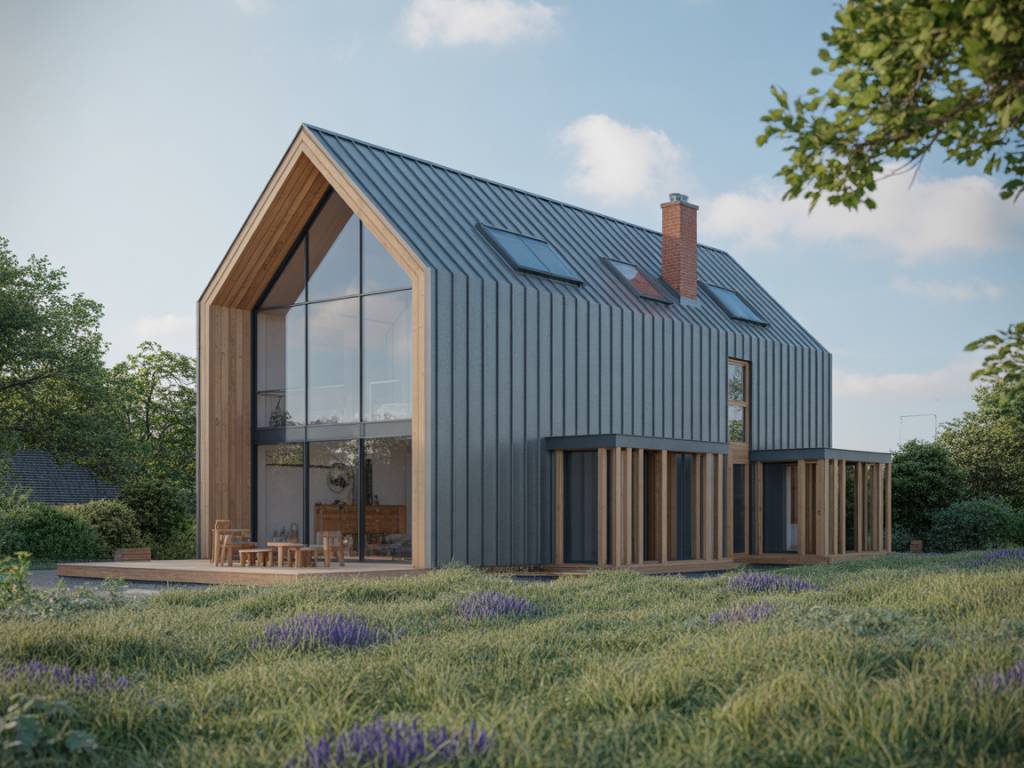
Understanding climate-resilient eco homes in the UK
Across the UK, homeowners are starting to confront three overlapping challenges: hotter summers and heatwaves, more intense storms and flooding, and steadily rising energy costs. A climate-resilient eco home is designed not only to reduce its environmental impact, but also to remain comfortable, safe and affordable to run as weather patterns change.
Designing such a home involves a holistic approach that blends passive design, robust building fabric, efficient mechanical systems and thoughtful material choices. Whether you are planning a self-build, a deep retrofit, or a smaller renovation, many of the core principles remain the same: minimise energy demand first, then meet the remaining demand with efficient systems and, where possible, on-site renewables.
Key climate risks for UK homes
The UK’s traditionally mild climate can give a false sense of security. Recent summers have shown how vulnerable conventional housing can be to overheating and extreme weather. A climate-resilient eco home needs to be planned with the following in mind:
- Heatwaves and overheating: Older housing stock, especially top-floor flats and lightweight timber extensions, can become uncomfortably hot in summer. Poor shading, large south- and west-facing glazing and dark roof finishes exacerbate the problem.
- Storms and high winds: More frequent and intense storms put pressure on roofs, cladding, windows, gutters and fixings. Lightweight structures and poorly detailed roofs are particularly at risk.
- Heavy rainfall and flooding: Localised cloudbursts, combined with saturated ground and overburdened drainage systems, increase the risk of surface water flooding, damp and mould.
- Rising energy costs: Volatile gas and electricity prices make poorly insulated, leaky homes increasingly expensive to heat (and, potentially, to cool).
A resilient design anticipates these pressures and integrates protective strategies from the outset, rather than relying on ad hoc fixes later.
Site orientation and passive design
Before deciding on wall constructions or technologies, it is useful to start with the fundamentals: the orientation of the building, its form and its relationship with the surrounding landscape.
- Maximising winter sun, controlling summer sun: In the UK, orienting main living spaces towards the south or south-west can provide valuable passive solar gains in winter. However, this needs to be balanced with effective shading to prevent overheating during heatwaves. External shading solutions, such as deep overhangs, brise-soleil, shutters or external blinds, are far more effective than internal blinds at stopping heat before it enters the building.
- Compact building form: A compact shape with fewer external corners and protrusions reduces the surface area through which heat is lost or gained. This improves energy performance throughout the year and can simplify detailing for air-tightness and weather resistance.
- Landscaping and microclimate: Trees, hedges and pergolas can create shade, reduce wind speeds and help manage surface water. Deciduous planting is particularly useful: leaves provide shade in summer yet allow sunlight through the bare branches in winter.
For existing homes, complete reorientation is rarely possible, but selective changes – such as adding shading to west-facing windows or improving external landscaping – can still have a significant impact on summer comfort.
Building fabric: insulation, air-tightness and moisture control
A robust building fabric is the foundation of a climate-resilient eco home. The aim is to create a well-insulated, air-tight envelope that minimises unwanted heat loss in winter and limits heat gains in summer, while managing moisture effectively.
- High levels of insulation: In new builds, walls, roofs and floors are typically designed to meet or exceed current Part L Building Regulations, but genuinely low-energy homes often go further, approaching or meeting Passivhaus standards. In the UK climate, thicker insulation in the roof and loft can be particularly cost-effective, and continuous insulation layers reduce thermal bridges that can cause condensation and mould.
- Thermal mass where appropriate: Materials like concrete, brick and certain natural products (e.g. earth blocks or dense timber products) can store heat during the day and release it slowly at night. When combined with night-time ventilation, this can moderate internal temperatures in summer. However, thermal mass is only effective if it is exposed internally and properly integrated into the ventilation strategy.
- Air-tight but well-ventilated: Uncontrolled draughts waste energy and make it harder to maintain stable temperatures. Careful detailing around windows, doors, service penetrations and junctions is critical to achieving good air-tightness. This should be paired with planned ventilation, ideally mechanical ventilation with heat recovery (MVHR), to maintain air quality without sacrificing efficiency.
- Moisture and vapour management: With better insulation and air-tightness comes a greater need to consider how moisture moves through the building fabric. Vapour control layers, breathable insulation materials and attention to detailing around cold bridges help avoid condensation and long-term damage. In flood-prone areas, using “flood-resilient” materials at lower levels – such as closed-cell insulation and moisture-tolerant finishes – can speed up recovery after flood events.
Material choices also play a role in overall ecological impact. Natural and low-embodied-carbon options such as wood fibre insulation, cork, cellulose and timber structures can reduce the building’s carbon footprint, though they still require careful design to perform well over time.
Glazing, shading and summer comfort
As summers get hotter, preventing overheating becomes just as important as retaining heat in winter. Glazing is often the weakest point in the envelope in both respects.
- High-performance windows: Double or triple-glazed units with low-e coatings and warm-edge spacers reduce heat loss in winter and can improve acoustic comfort. In south-facing windows, solar control glass can reduce solar gains, though this must be balanced with the desire for passive heat in cooler months.
- External shading: Fixed overhangs, awnings, shutters, external Venetian blinds and pergolas with climbing plants all help keep direct sun off the glass during heatwaves. Unlike internal blinds, they stop much of the solar radiation from entering the building in the first place.
- Smart ventilation strategies: Night purging – opening windows at night when outdoor temperatures are lower to cool the building’s thermal mass – can be very effective in the UK climate if windows and openings are designed for secure, controlled use. On upper floors and in urban settings, secure night-ventilation hardware is an important safety consideration.
For retrofits, adding external shading can often be done without major structural changes, and it may be one of the most cost-effective measures to improve resilience during heatwaves.
Storm and flood resilience
Designing for more frequent storms and heavy rainfall requires attention to the building’s shell and its interaction with drainage and the surrounding ground.
- Robust roofing and cladding: Specifying roofing materials and fixings rated for higher wind speeds, ensuring proper detailing at ridges, verges and eaves, and using secure mechanical fixings for tiles and metal sheets all improve resistance to storm damage. For cladding, ventilated rainscreen systems with properly detailed air gaps and fixings can shed water more effectively.
- Rainwater management: Oversized gutters, downpipes and well-designed eaves protect facades from wind-driven rain and reduce the risk of water ingress. Rain chains, swales, soakaways and permeable paving help slow and store stormwater onsite, reducing pressure on the public drainage system.
- Flood-adaptive strategies: In known flood-risk areas, raising electrical sockets, using water-resistant plasterboard or lime-based plasters, incorporating tiled floors with removable rugs, and designing easy-to-clean finishes can make post-flood recovery quicker. Landscaping can be shaped to direct water away from the building, and where appropriate, flood barriers or demountable defences can be integrated discreetly.
These measures, while often hidden from view, can make a significant difference to the durability and long-term performance of a home in increasingly unpredictable weather.
Low-energy heating, cooling and hot water
A climate-resilient eco home in the UK should be able to maintain comfortable indoor conditions using minimal energy, even as fuel prices fluctuate.
- Heat pumps as a central technology: Air-source and ground-source heat pumps, when paired with good insulation and low-temperature emitters (such as underfloor heating or oversized radiators), can deliver efficient space heating. Many systems also offer reversible operation, providing modest cooling during summer. The UK’s electricity grid is gradually decarbonising, making electric heating solutions more attractive from an emissions perspective.
- Mechanical ventilation with heat recovery (MVHR): In a highly insulated, air-tight home, MVHR systems recover heat from outgoing stale air and transfer it to incoming fresh air. This reduces heating demand and maintains good indoor air quality. Some systems offer bypass modes for summer, helping to cool the home using cooler night air.
- Efficient hot water: Options include dedicated hot water heat pumps, solar thermal systems and highly insulated hot water cylinders. Reducing hot water demand with low-flow fixtures and efficient appliances further cuts energy use.
For many households, a phased approach is realistic: improving insulation and air-tightness first, then upgrading heating systems and finally integrating renewables.
On-site renewables and energy independence
While reducing energy demand is the priority, generating clean energy on-site can offer additional protection against rising costs and grid disruptions.
- Solar photovoltaic (PV) panels: Roof-mounted PV remains one of the most accessible and widely deployed renewable technologies in UK homes. Careful system design, including orientation, roof pitch and shading analysis, maximises annual output. When combined with smart controls and time-of-use tariffs, PV can significantly reduce electricity bills.
- Battery storage: Domestic batteries allow homeowners to store excess solar generation for evening use and, in some cases, provide backup power during outages. While not essential for every project, storage can enhance resilience for remote or vulnerable households.
- Smart controls and monitoring: Smart thermostats, sub-metering and simple monitoring apps help occupants understand how their home is performing and adjust usage patterns. Over time, this can highlight issues (such as unexpected heat loss) and support more efficient behaviour.
For new developments, community-scale solutions such as shared heat networks or neighbourhood microgrids may offer additional resilience benefits.
Materials, embodied carbon and long-term durability
A truly future-proof eco home considers not just operational energy but also the carbon emitted during construction and refurbishment – the embodied carbon.
- Low-embodied-carbon materials: Timber structures, recycled steel, low-clinker cement, natural insulations and reclaimed materials all help to reduce upfront emissions. In many cases, these choices also offer good thermal and moisture performance.
- Durability and repairability: Materials exposed to harsher weather conditions need to withstand more intense UV radiation, driving rain and temperature swings. Choosing robust products with replaceable components (for example, modular cladding or easily serviceable windows) can extend the building’s life and reduce future waste.
- Healthy indoor environments: Low-VOC paints, formaldehyde-free timber products and breathable wall build-ups contribute to better indoor air quality, particularly important in air-tight homes. As summers warm, indoor pollutants tend to off-gas more rapidly, making material choices even more relevant.
Balancing low embodied carbon with durability, cost and availability is an evolving challenge, but the UK construction industry is rapidly expanding its range of certified, environmentally responsible products.
Practical steps for homeowners and self-builders
Turning principles into practice depends heavily on budget, project scope and the constraints of an existing building or site. For many UK households, the path to a climate-resilient eco home will be incremental.
- Start with an energy and fabric assessment: A professional survey or an in-depth retrofit assessment can identify the biggest sources of heat loss, overheating risk and moisture problems. This provides a roadmap for staged improvements.
- Prioritise “no-regret” measures: Loft and roof insulation, draught-proofing, basic shading, and upgrading the most inefficient windows and doors generally deliver reliable benefits regardless of future technology choices.
- Coordinate fabric and systems upgrades: It often makes sense to improve the envelope before replacing the heating system so that the new system can be correctly sized for lower energy demand.
- Consider future maintenance and adaptability: Choose designs and systems that can be serviced, repaired and upgraded. Think about how future occupants might use the space, including potential needs for home working or multigenerational living.
As building regulations tighten and weather patterns continue to shift, homes that have been designed or retrofitted with resilience in mind are likely to be more comfortable to live in and more attractive in the property market.
Designing a climate-resilient eco home in the UK is ultimately about anticipating change and responding thoughtfully. By combining careful passive design, a robust building fabric, efficient systems and considered material choices, it is possible to create homes that offer comfort, safety and affordability in a warming, more volatile climate, while substantially reducing their environmental footprint.