
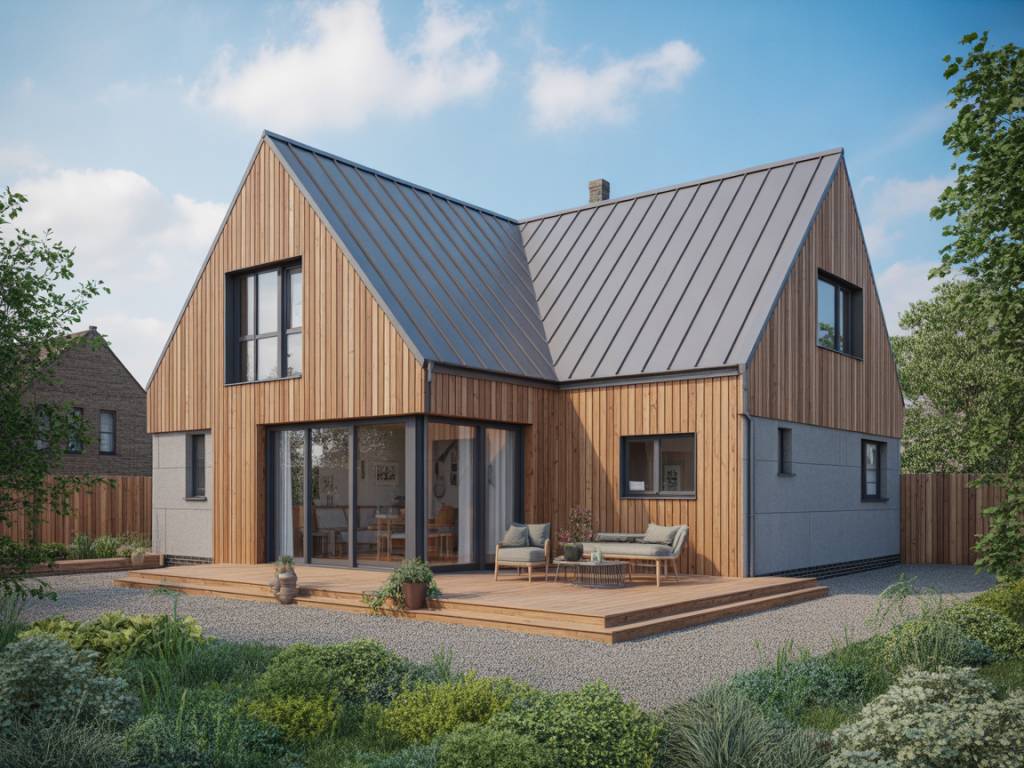
Why low-carbon retrofits matter for typical UK homes
Across the UK, millions of homes were built long before energy efficiency became a priority. Solid brick terraces, post-war semis and 1960s bungalows share a common problem: they leak heat, waste energy and are often uncomfortable in both winter and summer. At the same time, rising energy prices and the climate emergency are pushing more homeowners and renters to rethink how their homes consume energy.
Yet the perception persists that low-carbon retrofits are only feasible for deep-pocketed grand designs. In reality, carefully planned, incremental upgrades can make a noticeable difference even on a tight budget. The key is to prioritise measures that offer strong carbon savings per pound spent, and to understand how different interventions interact in a typical UK house.
Start with understanding your home
Before buying equipment or booking tradespeople, it is worth investing time in understanding how your home behaves. Every property has an energy “fingerprint” shaped by its age, construction and occupancy patterns.
For a typical UK house, look first at:
- Construction type: solid wall (common in pre-1920 homes), cavity wall, concrete panels, timber frame.
- Roof and loft: pitched or flat roof, existing insulation depth, any signs of damp or leaks.
- Windows and doors: single, double or triple glazing, quality of frames, draughts around openings.
- Heating system: age and type of boiler, presence of thermostatic radiator valves, cylinder insulation.
- Ventilation: extract fans in kitchen and bathroom, trickle vents, evidence of condensation or mould.
If your budget allows, a professional home energy survey or retrofit assessment can be valuable, but even a careful walk-through with a notepad can reveal the main sources of heat loss and discomfort. Smart meters and plug-in energy monitors also provide low-cost insight into consumption patterns.
Setting priorities on a tight budget
With limited funds, it is important to focus on measures that are:
- Relatively inexpensive to install.
- Low risk in terms of damp or structural issues.
- Proven to reduce bills and carbon emissions.
- Compatible with future, deeper retrofits.
In most cases, the highest-priority interventions for a UK home will be:
- Improved air tightness and draught-proofing.
- Targeted insulation in the loft and around key thermal bridges.
- Optimised heating controls and lower-temperature operation.
- Low-cost behaviour changes and small electrical upgrades.
Low-cost airtightness and draught-proofing
Uncontrolled draughts are one of the simplest and cheapest problems to address, and they significantly affect comfort and heat loss. In older UK properties, cold air often enters through gaps you barely notice until you start looking for them.
Common sources of draughts include:
- Gaps around windows and doors.
- Keyholes, letterboxes and unused chimneys.
- Floorboard gaps, especially above unheated cellars.
- Service penetrations – where pipes, cables and vents pass through walls and floors.
On a tight budget, practical upgrades might involve:
- Draught-proofing strips around doors and windows, carefully fitted to avoid hindering opening and closing.
- Letterbox brushes and keyhole covers to reduce direct airflow.
- Chimney balloons or registers for unused fireplaces, while maintaining some ventilation to avoid damp.
- Flexible sealants or caulk to close small gaps between skirting boards and floors.
- Rugs and heavy curtains as low-cost thermal buffers in particularly leaky rooms.
Draught-proofing must be balanced with adequate ventilation. If you tighten the envelope of your home significantly, ensuring reliable extract in bathrooms and kitchens becomes even more important to manage moisture and indoor air quality.
Insulation: where small steps make a big impact
Full-home insulation can be expensive, particularly for solid wall properties, but selective insulation upgrades can still offer strong returns on a modest budget.
Loft insulation and roof spaces
Heat rises, and in many UK homes, the loft is the easiest and most cost-effective place to add insulation. Current guidance often recommends around 270 mm of mineral wool or equivalent, but many properties still have much less.
Budget-friendly actions include:
- Topping up existing loft insulation to modern standards, ensuring it is laid evenly and not compressed.
- Installing loft hatches with insulated lids and good draught seals to prevent warm air escaping into the loft.
- Creating insulated storage decks using raised platforms so that insulation can maintain full depth underneath.
Before adding loft insulation, it is essential to check for signs of roof leaks and ensure that ventilation pathways (such as eaves vents) are maintained to avoid condensation build-up.
Floors and simple thermal upgrades
Ground floors in older houses can be significant heat loss pathways. Full underfloor insulation may be beyond a tight budget, particularly if access is difficult, but there are staged options:
- Sealing obvious gaps between floorboards or around the edges of rooms using flexible fillers or thin strips.
- Adding thermal underlay beneath carpets or laminate flooring to increase comfort and reduce heat loss.
- Using insulated floor coverings in the coldest rooms, especially over unheated spaces like garages or cellars.
For suspended timber floors with accessible voids, DIY-friendly underfloor insulation materials exist, but installation must be meticulous to avoid moisture traps and to maintain ventilation beneath the floor.
Walls: working with what you have
Wall insulation is often the most complex and costly aspect of a retrofit. For cavity wall homes, professionally installed cavity insulation can still be relatively affordable, but it is vital to assess cavity condition and exposure to driving rain.
On a very tight budget, homeowners of solid wall properties can consider limited, strategic internal insulation rather than whole-house coverage. For example:
- Insulating cold reveals around windows and doors where condensation often forms.
- Applying insulated plasterboard to particularly cold external walls in key rooms, after checking for damp problems.
- Using breathable insulation systems in older, moisture-sensitive buildings to avoid trapping damp.
Partial approaches do not deliver the full performance of a complete wall system, but they can improve comfort and reduce mould risk in problem areas while fitting within a modest budget.
Smarter heating on a budget
Replacing a gas boiler with a heat pump is increasingly promoted as a route to low-carbon heating, but for many households this remains a medium- to long-term step. In the shorter term, optimising existing systems can bring measurable savings and reduce emissions, especially when combined with better insulation and airtightness.
Cost-effective measures include:
- Room thermostats and programmer upgrades to give fine control over heating schedules and setpoints.
- Thermostatic radiator valves (TRVs) to zone your home and avoid overheating rarely used rooms.
- Balancing radiators so each room heats evenly, allowing lower boiler temperatures overall.
- Lowering flow temperatures on modern condensing boilers to improve efficiency, while monitoring comfort.
- Adding or upgrading cylinder insulation and pipe lagging to reduce losses from hot water storage.
Smart heating controls, including learning thermostats and connected TRVs, can be attractive where budgets stretch a little further. They provide data that helps you understand how your home responds to different setpoints and occupancy patterns, supporting further refinement.
Ventilation, moisture and indoor air quality
As you tighten and insulate your home, moisture management becomes more critical. Poorly ventilated spaces can accumulate humidity from cooking, bathing and even breathing, leading to condensation, mould growth and health concerns.
Low-cost improvements typically target:
- Effective extract ventilation in kitchens and bathrooms, ideally with continuous or humidity-controlled fans.
- Trickle vents in window frames where feasible, especially in bedrooms and living rooms.
- Behavioural changes such as using lids on pans, drying clothes outdoors when possible, and closing doors to wet rooms when showering.
On a tight budget, full mechanical ventilation with heat recovery is unlikely, but it can be a future-stage upgrade. Planning today’s measures so they do not conflict with tomorrow’s duct routes or equipment locations is part of a thoughtful retrofit strategy.
Lighting, appliances and small electrical loads
While space heating dominates energy use in most UK homes, electrical efficiency remains a useful part of a low-carbon strategy, especially where electricity is increasingly supplied by renewable sources.
Impactful, budget-aware steps include:
- Replacing halogen and incandescent bulbs with LED equivalents throughout the house.
- Using smart plugs or timers for devices with high standby loads, such as entertainment systems.
- Choosing energy-efficient appliances when items naturally reach end-of-life, rather than early replacement.
- Monitoring consumption with plug-in meters to identify unexpected heavy users.
For some households, small-scale solar, such as balcony or shed-mounted panels with micro-inverters, can complement efficiency measures, though payback periods vary widely and should be assessed carefully.
Planning for future upgrades: a staged retrofit path
A low-carbon retrofit on a tight budget is rarely a single project; it is more often a sequence of interventions spread over years. The risk is that early, inexpensive measures can sometimes make later, deeper retrofits harder or more expensive.
To avoid this, it helps to sketch a simple long-term plan, even if much of it remains aspirational:
- Document existing construction, materials and known issues.
- List immediate, low-cost actions (draught-proofing, loft top-up, heating controls).
- Identify medium-term projects (cavity insulation, partial internal wall insulation, upgraded ventilation).
- Reserve future options for major shifts (heat pump installation, full external wall insulation, new high-performance windows).
By aligning small steps with a broader strategy, homeowners can avoid wasted effort and sunk costs, while progressively reducing the carbon footprint and improving the comfort of typical UK houses.