
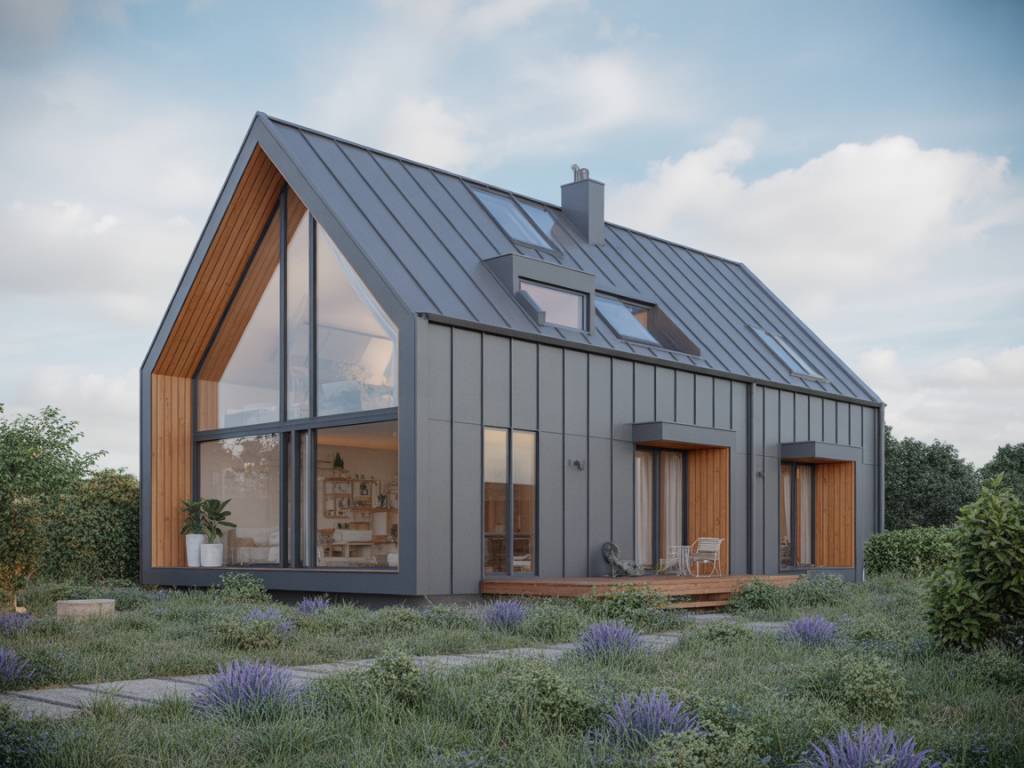
As the UK faces hotter summers, heavier downpours and more frequent storms, the traditional assumptions behind home design are under strain. The same building that once needed to trap every bit of winter heat may now overheat dangerously during prolonged heatwaves. At the same time, storm resilience, flood risk and energy prices are becoming central concerns for householders planning renovations or new builds.
Designing a resilient, low-energy home in this evolving climate means thinking carefully about orientation, fabric, shading, ventilation, drainage and backup systems. The goal is a house that stays comfortable during heatwaves without excessive air conditioning, withstands severe weather, and keeps energy use and emissions low throughout the year.
Understanding the changing UK climate at home scale
Climate projections for the UK consistently point to several overlapping trends:
- Hotter, longer summer heatwaves, especially in the South and Midlands
- Milder but still damp winters, with fewer frost days but more intense rainfall events
- Increased frequency of flash floods and surface-water flooding
- Stronger, more frequent winter storms with high winds and driving rain
At home scale, these shifts create three main design challenges:
- Preventing overheating during summer and shoulder seasons
- Managing intense rainfall and local flooding
- Ensuring structural resilience and continuous operation during storms and power cuts
Any low-energy strategy that only addresses winter heat loss is now incomplete. A truly future-ready home must balance winter efficiency with summer comfort and weather resilience.
Orientation, layout and passive solar control
Traditional passive solar design in the UK has focused on maximising winter sun while limiting heat loss. With more frequent hot spells, orientation and layout need a more nuanced approach.
Key principles include:
- Limit large west-facing glazing: West sun is low in the sky and powerful in the late afternoon, a time when homes are already warmed by the day. Large, unshaded west windows are a frequent cause of overheating.
- Use south-facing glazing strategically: South-facing windows can still be valuable for winter gains, but they now need properly designed shading (overhangs, brise-soleil, shutters) to block high summer sun while allowing low winter sun.
- Organise rooms by thermal needs: Place living spaces and frequently occupied rooms on cooler orientations where possible (typically north-east or east). Use west-facing rooms for spaces occupied later or less intensively.
- Design for cross-ventilation: Locate opening windows or vents so that prevailing summer breezes can flow across the plan, especially through bedrooms and main living areas.
For existing homes, you cannot change the compass orientation, but you can still adapt the layout by changing room functions, adding shading to specific elevations, or improving opportunities for cross-ventilation through window upgrades or new openings (subject to structural and planning constraints).
Building fabric: insulation, airtightness and thermal mass
A low-energy home in the UK still needs good insulation and airtightness to reduce heating demand. However, with warmer summers, high-performance fabric must also help avoid overheating.
Three concepts interact here:
- Insulation: Adequate insulation reduces winter heating demand and stabilises internal temperatures against external fluctuations. Roof and loft insulation are particularly influential in preventing solar gains from overheating upper floors.
- Airtightness: Air leaks waste energy and can cause drafts, moisture problems and uncontrolled heat loss. A carefully detailed airtight layer, combined with controlled ventilation, improves comfort and energy performance.
- Thermal mass: Heavy materials such as concrete, brick, stone and some forms of dense internal plaster can absorb and release heat slowly. When paired with night-time ventilation, they can help flatten daytime peaks during heatwaves.
A common concern is that adding insulation will inevitably lead to overheating. In practice, overheating is usually driven more by excessive solar gain through glazing, insufficient shading, and inadequate ventilation, rather than by insulation alone. The most robust strategy combines:
- High levels of insulation in roof, walls and floors
- Careful control of solar gains (especially west and south-west)
- Sufficient thermal mass exposed internally (e.g., concrete slab floors, masonry internal walls, dense plaster finishes)
- Passive night cooling through secure, controllable ventilation openings
For retrofits, internal or external wall insulation can be combined with internal thermal mass (for example, leaving brick party walls or solid floors exposed) to help buffer daytime heat without sacrificing efficiency.
Shading, glazing and window strategies for heatwaves
Glazing is both a major asset and a major liability in a hotter climate. Daylight and solar gains lower lighting and heating needs in winter, but unshaded glass can behave like a greenhouse during summer heatwaves.
Important measures include:
- Fixed external shading: Overhangs, pergolas, balconies and brise-soleil are highly effective at blocking high-angle summer sun. External shading typically outperforms internal blinds because it keeps solar energy outside the building envelope.
- Operable shading: External shutters, louvres and awnings allow seasonal adjustment. In the UK, many traditional shutters were removed over time; reintroducing modern equivalents can substantially reduce overheating.
- High-performance glazing: Low-g (solar control) glass can limit solar gains on exposed elevations. Care is needed not to reduce beneficial winter gains on carefully shaded south facades.
- Night-time purge ventilation: Windows and vents that can be safely left open at night (secure night latches, high-level openings, rooflights) enable the stored heat in thermal mass to be expelled when outside air is cooler.
- Window opening strategy: Designing or retrofitting for a clear, simple summer routine (close external shutters and blinds during the day; open secure vents at night) helps residents manage indoor temperatures without mechanical cooling.
For households considering mechanical cooling, high-efficiency heat pumps can provide reversible heating and cooling, but they should be seen as a last resort after passive measures are fully exploited. Every kilowatt-hour of cooling avoided through good design translates into lower bills and reduced peak electricity demand on hot days.
Ventilation, indoor air quality and moisture control
As airtightness improves, deliberate ventilation strategies become essential. A resilient, low-energy home must balance summer heat removal with year-round indoor air quality and moisture management.
Common approaches include:
- Mechanical ventilation with heat recovery (MVHR): In winter, MVHR extracts heat from stale outgoing air and transfers it to incoming fresh air, reducing heating demand. In summer, systems can be bypassed to allow cooler night air into the home. For heatwave resilience, locate MVHR units away from hot loft spaces where possible and ensure ductwork is well insulated.
- Hybrid ventilation: Combining MVHR or continuous mechanical extract with controlled natural ventilation (openable windows, passive stacks) allows flexible operation during different seasons and weather events.
- Moisture-robust construction: Warmer, more humid conditions and heavy rain increase the risk of interstitial condensation. Vapour-open but airtight construction, with properly detailed vapour control layers and drainage paths, is vital, especially in retrofits of older solid-wall homes.
During storms and extreme rainfall, residents may naturally keep windows closed for comfort and security. A well-designed background ventilation system ensures healthy indoor air even when natural ventilation is temporarily limited.
Storm resilience: wind, rain and power security
Heavy rain, strong winds and power outages present another set of design criteria for future-ready homes.
Key aspects include:
- Roof and cladding robustness: Roof coverings, fixings and edge detailing should be specified for high wind uplift resistance. Sarking boards, taped underlays and well-fixed battens and tiles reduce the risk of storm damage and water ingress.
- Rainwater management: Oversized gutters, deep capacity, robust brackets and well-designed downpipes reduce overflow risk. Leaf guards and accessible maintenance points help keep systems functional during intense rainfall.
- Driving rain resistance: Exposed elevations benefit from rainscreen cladding systems or well-maintained render and pointing. Window and door junctions need careful flashing and weather seals to prevent water penetration during horizontal rain.
- Impact protection: Where trees or flying debris pose a risk, laminated glazing and reinforced frames can limit damage and improve safety.
- Power security: Battery storage combined with rooftop solar can maintain essential loads (lighting, refrigeration, communications, some heating or cooling) during grid outages. Even modest systems can make a home more habitable during prolonged storm-related power cuts.
Resilience does not mean making a property invulnerable, but reducing the likelihood of severe damage and enabling faster recovery after extreme events.
Flood and surface-water management on site
Intense rainfall and overloaded drainage systems are driving more frequent localised flooding across the UK, even away from major rivers. For low-energy homes, protecting fabric and services from moisture is a core part of long-term performance.
Important strategies on and around the plot include:
- Sustainable drainage systems (SuDS): Permeable driveways, rain gardens, swales and soakaways slow water runoff and allow local infiltration, reducing the load on municipal drains.
- Water storage: Water butts and larger rainwater harvesting tanks capture roof runoff, lowering peak discharge and providing a backup irrigation or flushing supply.
- Floor levels and thresholds: Raising ground floors relative to external levels, using flood-resistant thresholds and ensuring that paths and hard landscaping slope away from the building help keep interiors dry.
- Services and plant location: Locating boilers, heat pumps, batteries and electrical distribution above potential flood levels reduces the risk of critical system failures during local flooding.
For existing properties in known flood risk areas, specialist products such as demountable flood barriers, non-return valves on drains and flood-resilient internal finishes may also be worth considering as part of a broader resilience package.
Energy systems: heat pumps, solar and smart control
A resilient, low-energy home in a changing UK climate increasingly relies on electrified, efficient systems that can operate flexibly and integrate with on-site renewables.
Typical elements include:
- Heat pumps for heating and (if necessary) cooling: Air-source and ground-source heat pumps provide efficient low-carbon heating. Some systems can also provide cooling, but passive measures should always be prioritised to keep cooling loads modest.
- Solar photovoltaic (PV) panels: Rooftop PV helps offset household electricity use. During heatwaves, high solar output naturally coincides with potential cooling needs, which can be beneficial if mechanical cooling is installed.
- Battery storage: Home batteries store excess daytime generation for evening use, support essential loads during outages, and can participate in smart tariffs and demand-response schemes.
- Smart controls: Internet-connected thermostats, smart TRVs, ventilation controls and whole-house energy monitors enable better fine-tuning of comfort and consumption, and can respond to time-of-use tariffs or grid signals.
Well-designed controls also support resilience by automatically adapting operation during extremes. For example, a ventilation system might increase night-time airflow during heatwaves or reduce intake during external pollution events linked to wildfires or traffic incidents.
Practical renovation steps for existing UK homes
Most of the homes that will shelter people through mid-century climate conditions are already built. For owners of typical UK properties – from Victorian terraces to 1960s semis – a staged approach to adaptation is often the most realistic.
High-impact, broadly applicable steps include:
- Upgrade loft and roof insulation while ensuring effective ventilation and solar control on rooflights.
- Install or retrofit external shading to exposed windows, particularly west and south-west elevations.
- Improve airtightness through careful sealing, followed by the installation of controlled background or mechanical ventilation.
- Consider internal or external wall insulation, depending on construction type and heritage constraints, with moisture-aware detailing.
- Replace older single glazing with high-performance double or triple glazing, choosing appropriate solar control coatings by facade.
- Optimise gutters, downpipes and on-site drainage, adding water butts and permeable landscaping where possible.
- Plan for electrified heating (such as a heat pump) when current systems reach end-of-life, sizing radiators or underfloor systems to run at low flow temperatures.
- Where feasible, add solar PV and, later, battery storage to enhance both efficiency and storm resilience.
Many of these measures are available as off-the-shelf products, from external blinds and shutters to heat-recovery ventilators, high-performance windows and smart controls. Selecting systems certified for UK conditions and installed by competent professionals is crucial to achieving reliable, long-term performance.
Designing for more frequent heatwaves and storms does not require sacrificing comfort or aesthetics. Instead, it calls for an integrated, fabric-first approach that combines good orientation, shading, ventilation, insulation and robust detailing. The outcome is a home that uses less energy, remains comfortable in a wider range of conditions and is better prepared for the climate that is already arriving across the UK.