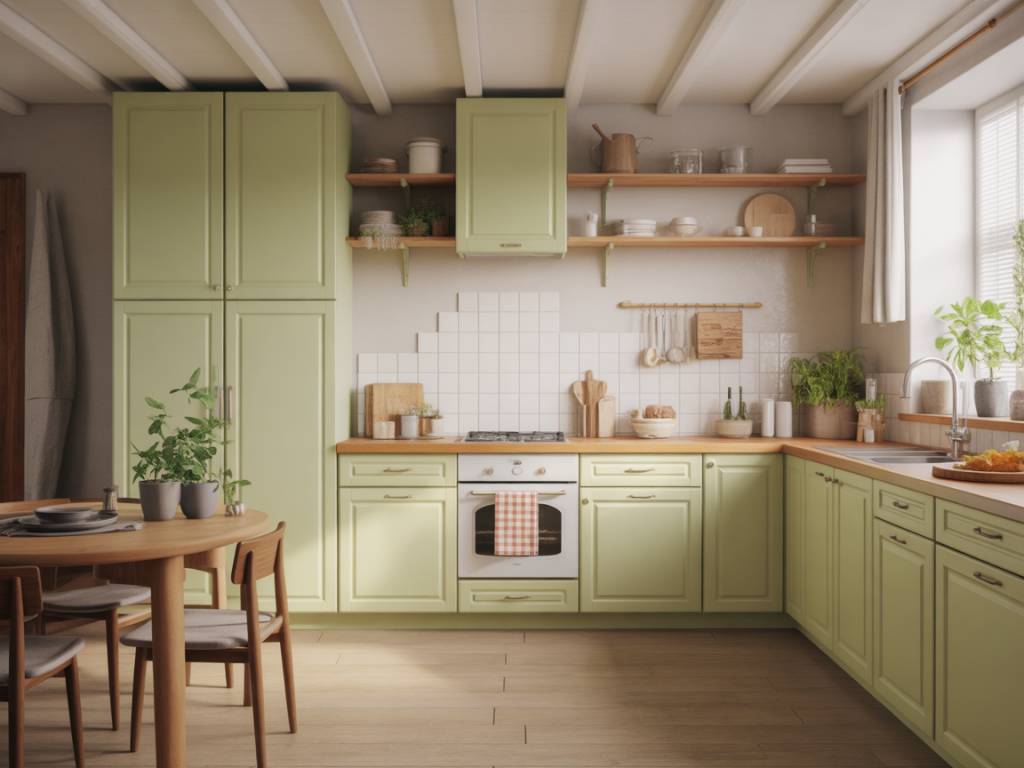
There is a particular kind of quiet that only exists in a kitchen before everyone else wakes up. The kettle is the first to stir, a low murmur over the faint hum of the fridge. Light sneaks in across the worktop, catching on a wooden spoon or the curve of a ceramic mug. This is where the day begins – and where, for many of us, the environmental impact of our home is felt most strongly.
Designing an eco-friendly kitchen in a modern UK home is not just about buying bamboo chopping boards or a single “green” gadget. It’s about rethinking the whole space so that style, function and sustainability exist in quiet, practical harmony. The good news? Done well, it also creates a room that feels calmer, more beautiful and more deeply lived-in.
Starting with what you already have
Before sketching islands and picking paint colours, the most sustainable decision you can make is often the least glamorous: keep as much as possible.
In refurbishment, the greenest kitchen is rarely the one that arrives wrapped in plastic on a delivery lorry. It’s the one that reuses existing bones and only replaces what no longer works – structurally, practically, or aesthetically.
- Keep the layout if it works. Moving plumbing, gas and electrics consumes more materials and labour. If your current “working triangle” (sink, hob, fridge) is basically sound, refine it rather than redraw it.
- Reface, don’t replace. Solid cabinet carcasses can be given new life with fresh doors, new handles and updated hinges. A tired 1990s kitchen can become a warm, modern space with FSC-certified oak fronts and simple brass pulls.
- Rescue and repair. Sanding and oiling a wooden worktop, mending a wobbly drawer, or re-enamelling a cast-iron sink can save both money and embodied carbon.
There’s a quiet satisfaction in standing at a worktop you chose not to send to landfill, knowing it carries stories of dinners past beneath its renewed surface.
Planning a layout that works as hard as you do
Sustainability is also about designing a kitchen that serves your life for many years without needing constant tweaks or replacements.
Think first about how you move through the space:
- Optimise your prep zone. Ideally, there’s generous worktop space between sink and hob. This reduces drips across the floor, speeds up cooking, and makes washing vegetables or draining pasta safer and easier.
- Allow for real life, not just photo shoots. Where will groceries land when you come in loaded with bags? Is there somewhere for a laptop while you’re working from the kitchen table? Can two people cook without colliding?
- Future-proof the space. If you might age in place, plan for wider walkways, rounded worktop edges and at least one low-prep surface or pull-out board. Think of it as designing for your future self, not just your present Pinterest board.
A functional layout reduces wasted steps, time and energy – both yours and your home’s. It also makes sustainable habits, like recycling and batch cooking, feel easy rather than virtuous.
Choosing materials that age gracefully
The tactile side of a kitchen – the surfaces your hands remember – can be both beautiful and responsible. The key is to prioritise durability, low toxicity and traceable sourcing.
Cabinets and fronts
- FSC- or PEFC-certified timber. Look for these labels on solid wood or plywood. They indicate responsibly managed forests and better oversight of supply chains.
- Plywood over chipboard. Plywood is often stronger and more moisture-resistant than standard particleboard. Pair it with low-formaldehyde or formaldehyde-free glues for better indoor air quality.
- Recycled content. Some manufacturers now offer cabinet carcasses made with high percentages of recycled wood fibre. These can be a solid choice if they’re robust and responsibly finished.
Worktops
- Recycled composite surfaces. Options made with recycled glass, porcelain or stone offcuts give you the sleek, contemporary look of stone with far lower environmental impact.
- Solid wood (responsibly sourced). Warm under the hand and easy to repair, wood worktops can last decades with care. Choose FSC-certified species and finish with natural oils rather than high-VOC varnishes.
- Local stone where possible. If you’re drawn to stone, consider British or European quarries over options shipped from halfway around the world.
Floors
- Engineered wood or solid timber. Again, ensure certifications like FSC, and avoid tropical hardwoods unless you’re absolutely sure of their provenance.
- Cork. Soft underfoot, naturally insulating and made from renewable bark, cork can be a wonderfully forgiving kitchen floor, especially if you cook a lot.
- Recycled tiles. Tiles made with recycled content or reclaimed quarry tiles bring character and reduce the need for virgin material.
Paints, finishes and adhesives
- Low-VOC or VOC-free paints. Paints with reduced volatile organic compounds improve indoor air quality – particularly important in small UK kitchens where ventilation can be a challenge.
- Natural oils and waxes. For timber surfaces, oils like linseed or hardwax oils can protect while keeping repair simple: a light sand, a fresh coat, and the surface is renewed.
The aim is to build a kitchen that looks better, not worse, as it gathers years and stories – the opposite of fast furniture fatigue.
Appliances that earn their place
In many UK homes, appliances account for a large chunk of kitchen energy use. Choosing wisely is one of the most impactful decisions you can make.
- Prioritise real efficiency over gimmicks. Look for the best energy rating you can afford (A or better under the new EU/UK scale) for fridges, freezers and dishwashers. These run daily, so small efficiencies add up.
- Right-size your appliances. Do you truly need an American-style fridge-freezer for a two-person flat in Manchester? A smaller, efficient fridge that suits your actual shopping habits will waste less energy and take up less space.
- Induction hobs over gas. Induction is highly efficient, fast to respond and compatible with the UK’s move away from gas heating and cooking. The air quality benefits are significant: no combustion in the room means fewer pollutants in the air you breathe.
- Dishwashers as water-savers. An A-rated, full-size dishwasher, used properly and run full, can use less water and energy than washing everything by hand under a running hot tap.
If budget is tight, replace the most energy-hungry appliance first – often the fridge-freezer – and plan to upgrade others over time. Sustainability, like a good stew, can be built in stages.
Designing for water and waste without killing the vibe
Bins, compost and water-saving hacks rarely appear on glossy mood boards, yet they quietly define how well a kitchen works day to day.
Water
- Fit an aerator on taps. A simple device that introduces air into the flow, reducing water use while maintaining good pressure. Cheap, easy to install, and barely visible.
- Consider a hot-water tap carefully. In busy homes, an efficient boiling-water tap can reduce kettle use. In quieter households, though, the standby energy might not justify the investment.
- Efficient hot-water system. If you’re renovating more broadly, pairing your kitchen with an efficient combi boiler, heat pump or well-insulated cylinder can make washing up and cooking far less wasteful.
Waste and recycling
- Integrated sorting. Plan sufficient bin space for general waste, mixed recycling, glass (if collected separately) and food waste. Build this into cabinetry so bags and caddies aren’t an afterthought.
- Food waste caddies that actually get used. Place the caddy near your main prep area, not across the room. A removable inner bucket or compostable liners make it more likely you’ll stick with the habit.
- Storage that reduces food waste. Deep drawers where you can actually see what you own, clear jars for dry goods, and a “eat me first” section in the fridge help to prevent forgotten leftovers and duplicates.
A kitchen designed around realistic daily habits makes sustainable choices the easiest, most frictionless option – no saintly willpower required.
Lighting that flatters both you and your energy bill
Lighting is where technology and atmosphere meet. In a northern climate, with short winter days and grey afternoons, getting it right is essential.
- All-LED, everywhere. Modern LED bulbs last for years and sip electricity. Choose warm white (around 2700–3000K) for a cosy, inviting feel that still renders food colour accurately.
- Layered lighting. Combine:
- Task lighting – under-cabinet LEDs for chopping and washing up
- Ambient lighting – ceiling or track lights to fill the room
- Accent lighting – a pendant over the table, or a strip in open shelving to highlight favourite ceramics
- Make the most of daylight. If you’re altering the building fabric, a well-placed rooflight or enlarging a window can greatly reduce the need for electric light during the day. Pair with good insulation and double or triple glazing to avoid draughts.
Thoughtful lighting turns an efficient space into a welcoming one – the kind of kitchen where guests linger long after dessert, and you don’t resent the electricity meter for it.
Small-space and rental-friendly ideas
Eco-friendly design isn’t reserved for detached houses with generous plots. Many UK kitchens live within terraced homes, new-build apartments or rentals with strict rules.
- Freestanding, not fixed. Freestanding islands on castors, slim shelving units and modular storage can move with you to your next home rather than being ripped out and discarded.
- Clamp-on and plug-in lighting. In rentals where rewiring is impossible, use plug-in wall lights, clamp-on lamps and LED strips with adhesive backs to improve task lighting without damaging walls.
- Pressure-mounted or hanging storage. Over-door racks, magnetic knife strips and hanging rails under cabinets can multiply storage without a drill.
- Portable induction hobs. If you’re stuck with an old, inefficient cooker and can’t change it, a single or double portable induction hob can transform your daily cooking experience.
Sustainability, in this context, is about reversibility: choosing interventions that leave the property intact while significantly improving your comfort and footprint.
The sensory side of a sustainable kitchen
Beyond the labels and ratings, an eco-friendly kitchen should feel good – under bare feet on winter mornings, in the late July light, or during the quiet clatter of washing up after friends have gone home.
Consider the senses as you design:
- Touch. The warmth of oiled wood, the coolness of recycled glass, the soft give of cork underfoot. Sustainable materials often have a tactile richness that laminates can’t quite imitate.
- Sound. Soft-close drawers, felt pads under chair legs, and even a simple rug runner can absorb the clatter of pans and the echo in hard-surfaced rooms.
- Smell. Low-VOC paints and finishes, good extraction and openable windows keep the air clear of harsh chemical smells and lingering frying aromas.
- Sight. A palette drawn from natural materials – clay, stone, timber, linen – tends to age more gracefully than high-gloss trends. It also makes it easier to mix new pieces with old finds over time.
When you stand in such a kitchen, even something as unremarkable as rinsing lentils or slicing bread feels gently anchored to the wider world that produced those ingredients.
Making sustainable choices fit your budget
Sustainability has an unfortunate habit of being marketed as a luxury. It doesn’t have to be.
- Spend on the long-lived. Direct more of your budget towards durable carcasses, quality hinges, and efficient appliances. Handles, wall colours and even doors can be changed relatively easily later.
- Mix high and low. Pair a recycled composite worktop with simple, flat-pack carcasses. Use standard carcasses with custom timber doors from a local joiner. The result can look bespoke without the full bespoke price tag.
- Buy second-hand where it matters less. Freestanding furniture, stools, shelving and even entire ex-display kitchens can be found on resale sites and local marketplaces. A salvaged larder cabinet can become a characterful focal point.
- Phase the project. You don’t have to do everything at once. Begin with insulation and efficient lighting, upgrade appliances as they reach end of life, and tackle cabinets and worktops when you’ve saved a little more.
The point is not perfection, but momentum: a series of thoughtful choices that, over time, transform the way your kitchen works for you and the planet.
Bringing it all together
Imagine, a few months from now, stepping into your finished kitchen on a wet November evening. Rain patterns the window. The induction hob glows softly; a pot murmurs on a low simmer. Under-cabinet lights turn the worktop into a warm stage where onions, carrots and herbs wait to be transformed.
You reach for a pan – from the same cupboard, perhaps, that’s been there for years, now fitted with new doors that close with a satisfying hush. Your hand brushes the grain of the worktop, recently oiled, faintly scented of beeswax and citrus. The fridge, smaller than the one you once had, is well stocked but not overflowing; you can see, at a glance, what should be eaten next.
In the corner, a lidded caddy holds peelings and coffee grounds, destined for the council’s food waste collection or a compost heap beyond the back door. The bin underneath the sink is neatly divided: recycling, glass, general waste. The system asks nothing more of you than a small flick of the wrist in the right direction.
Outside, the UK’s energy mix is gradually greening. Inside, your LED bulbs sip at the power they’re given. The extractor hums quietly, drawing steam away without a roaring fan. When guests come, they gravitate, as people always do, to the same place: perching on stools, leaning against the doorway, hands warming around mugs while you cook.
This is the quiet magic of a well-designed eco-friendly kitchen. It doesn’t preach. It doesn’t need aggressive labelling or a wall of worthy slogans. It simply works – for weekday breakfasts, for Sunday roasts, for late-night toast – with less waste, less fuss, and more grace.
In the end, designing such a space is less about chasing an aesthetic and more about asking a simple, grounding question: how can this room support the way I live, the people I love, and the world beyond these walls, all at once?
Answer that honestly, and you’ll find that style, function and sustainability begin to line up quite naturally – as comfortably as your favourite mug in its familiar place on the shelf.