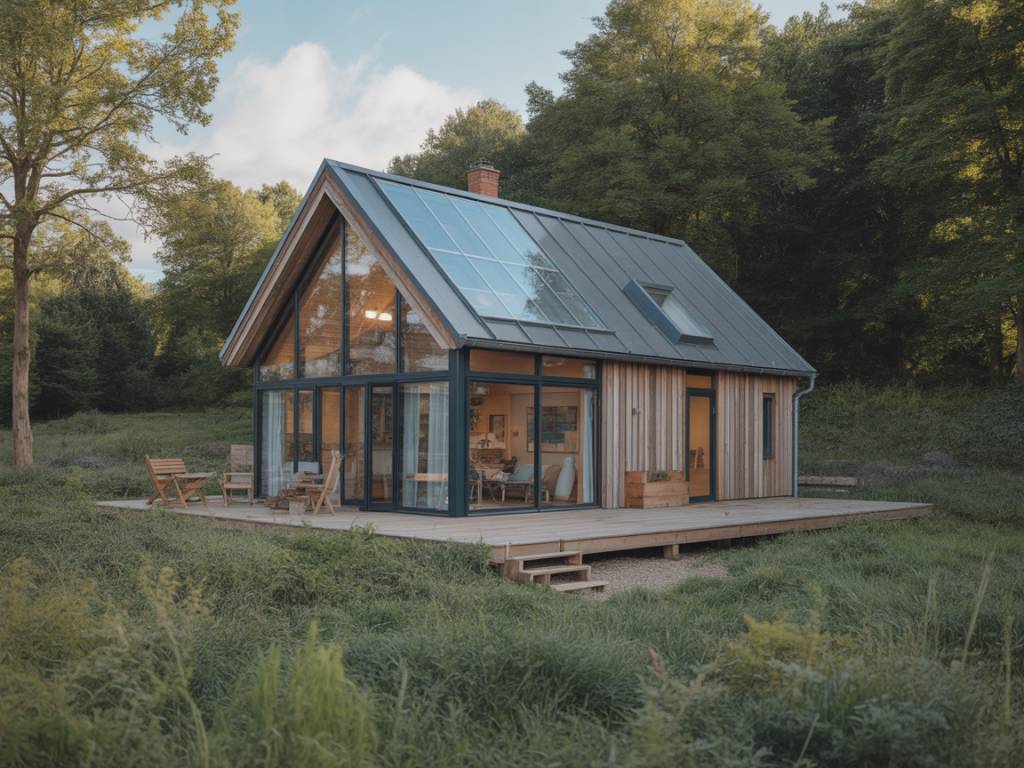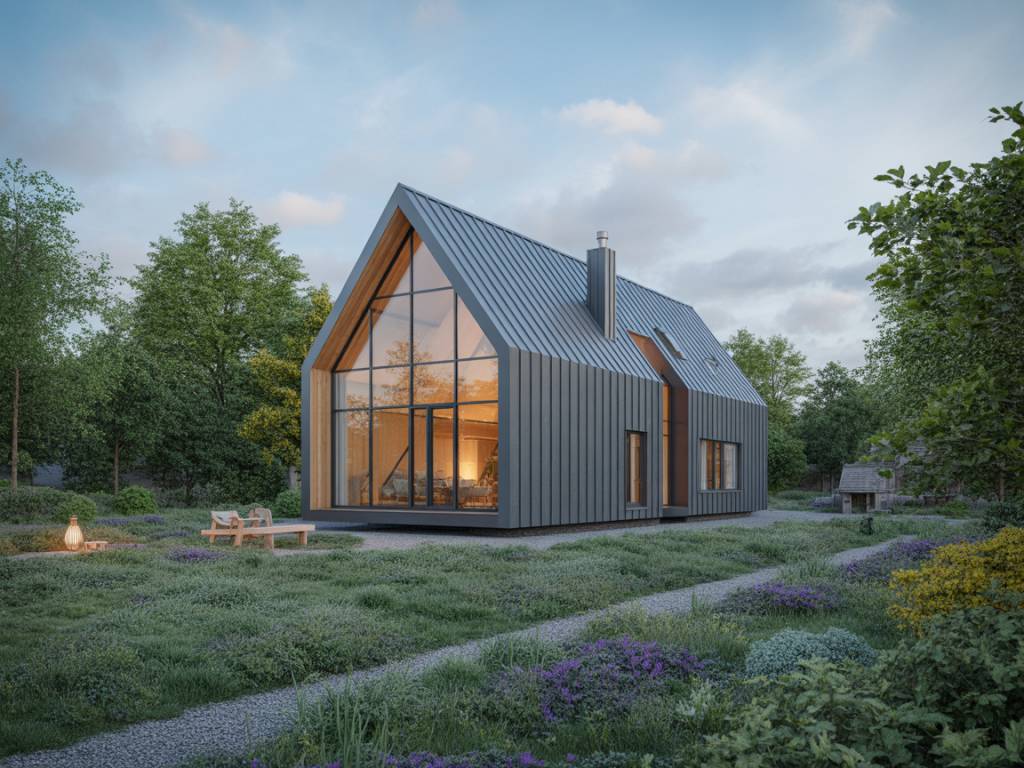
On a clear January morning in Devon, the sun sits low, almost hesitant, just above the hedgerows. Inside a well-designed passive solar home, that same shy sun spills across a slate floor, warming it slowly, quietly, like a hand resting on your shoulder. By late afternoon, when the air outside is turning sharp again, the stored warmth is only just beginning to drift back into the room.
This is the quiet promise of passive solar design in the British climate: no gadgets whirring in the background, no roaring boiler, just a house shaped with enough care that it turns daylight into comfort and fossil fuel into a last resort.
What passive solar really means (and why it matters in Britain)
Passive solar design is, at heart, beautifully simple: you shape the building so it can collect, store, and gently release the sun’s energy with minimal mechanical help. No tracking panels, no moving parts. Just orientation, glass, materials, and a good understanding of how light moves across your plot throughout the year.
In practical terms, a passive solar home typically aims to:
- Maximise useful winter sun to reduce heating demand
- Minimise overheating in summer, especially during heatwaves
- Store solar heat in the building fabric (thermal mass) rather than letting it disappear as quickly as it arrived
- Use insulation and airtightness so the captured heat actually stays indoors
In the UK, where heating is responsible for a large slice of domestic energy use and emissions, every degree of warmth gained for free matters. The common objection is easy to guess: “But we barely see the sun, do we?” And yet, across much of Britain, there’s enough winter solar energy hitting a south-facing wall to make a tangible difference—if the building is ready to catch it.
Working with the British climate, not against it
Designing a passive solar home for southern Spain is one story; designing one for Shropshire drizzle and Scottish low winter sun is another. Our latitude and weather patterns slightly change the rules of the game, but they don’t stop us playing.
Key British-specific considerations include:
- Low winter sun, high summer sun
In December, the sun arcs low across the southern sky, making it perfect for deep penetration into living spaces if windows are placed correctly. In June, the high sun can be blocked relatively easily by overhangs or shading. - Cloud cover and variable skies
You won’t get Mediterranean levels of radiation, so your design should be efficient, not extravagant. Over-glazing in the hope of catching rare sun often backfires, causing heat loss and summer glare. - Cool, damp conditions
High insulation, airtightness, and robust vapour control become critical. A passive solar house in Britain works best when it is also a very well-built, low-energy house overall. - Increasing summer heatwaves
As the climate warms, summer comfort is no longer optional. A good passive solar design for Britain must think about shading and night-time cooling as seriously as it thinks about winter gains.
The aim is not to create a glass box facing south, but a home that uses the weather as an ally—accepting its grey moods and brief, golden interludes with equal calm.
Orientation and layout: drawing the low sun inside
If you’re lucky enough to be starting from scratch, orientation is your most powerful tool. If not, there is still much you can do with layout.
In the UK, “south-facing” doesn’t require laser-like precision. Within about 30 degrees either side of true south, you can still reap strong benefits. What matters more is how the internal spaces are arranged behind that south-ish façade.
For a new build, a broadly passive-solar-friendly layout often means:
- Living spaces to the south
Place the rooms where you spend daytime hours—living room, kitchen, office, playroom—on the southern side so they are bathed in winter light. - Service and storage spaces to the north
Bathrooms, utility rooms, stairs, storage, and sometimes the kitchen (if you have multiple living spaces) can line the cooler north side, acting like a buffer against chill winds. - Compact, not sprawling
A compact, simple shape loses less heat. Think of a neat rectangle rather than a cluster of bays and projections that leak warmth. - View and sun in balance
Sometimes the best view is west over a valley, not south. In that case, you might accept a compromise: a glazed corner that captures both the view and the winter sun, plus smaller dedicated south windows elsewhere.
In renovation, you can’t spin the house on its foundations, but you can “rotate” how you live inside it. Perhaps the rarely used formal dining room to the south becomes your main living space, while a north-facing front room becomes a snug or study. Sometimes the most effective energy upgrade begins with moving the sofa.
Glazing: how much, where, and which type
Glass is both hero and villain in the British climate. It gathers precious winter sun but can also leak heat at night. The art lies in choosing carefully—enough glass in the right places, with the right performance.
Consider these principles:
- Prioritise south-facing glazing
South-facing windows receive the most useful winter sun and the least harsh summer sun. This is where larger panes and glass doors can make sense, especially onto a garden or terrace. - Limit north-facing glass
North windows collect almost no direct solar gain, so they behave mostly as thermal holes. Keep them modest, focus them where you truly need light or views, and use excellent frames and glazing. - Balanced east and west glazing
Morning and evening sun can be charming but also cause summer overheating. Roof overhangs are less effective here because the sun is low. Use moderate sizes, consider external blinds or deciduous planting as companions. - High-performance glazing
Look for low U-values (good insulation) and, on key south windows, a reasonable solar gain (g-value). Triple glazing is increasingly common in low-energy British homes, particularly in colder regions.
Frame choice matters too. Slim, well-insulated timber or composite frames can reduce heat loss and allow more actual glass in a given opening, making the most of each ray that reaches you between showers.
Thermal mass: storing the shy winter sun
A sunlit stone floor on a February afternoon feels like a subtle act of generosity. That sensation is thermal mass in action: materials that absorb heat slowly and release it equally slowly, smoothing out the indoor temperature curve.
Good thermal mass can:
- Store daytime solar gains to be released in the evening
- Buffer temperature swings during sunny winter days and cool nights
- Help keep the house cooler during hot spells, if combined with night ventilation
Common thermal mass materials include:
- Concrete slabs or screeds beneath stone, tile, or polished concrete floors
- Internal masonry or blockwork walls in sunlit areas
- Earthen plasters and brick feature walls
The key is not just having heavy materials, but putting them where the sun actually reaches. A thick internal wall hidden in the dark does little. A modest concrete floor that drinks in sunlight for several hours a day can be transformative.
In a renovation, you might simply expose a masonry wall that has long been plasterboarded over, or replace a cold laminate floor with tiles over an insulated concrete slab. The feel underfoot changes, and slowly, so does the heating bill.
Insulation, airtightness and ventilation
Passive solar gains are only worth collecting if you can keep them. This is where the less glamorous components—insulation, airtightness, and ventilation—quietly hold the whole concept together.
Think of the house as a thermos flask with a window: what you gain through that window needs to be protected from easy escape.
- High levels of insulation
Walls, roof, and floor all need to be well insulated, with minimal thermal bridges (those sneaky routes where heat can bypass insulation via concrete or steel). Natural and recycled materials—wood fibre, cellulose, cork, sheep’s wool—can pair beautifully with the ethos of a passive solar home. - Airtightness
Warm air leaking out through gaps is a double loss: you lose the heat and let in cold draughts. Careful sealing of joints, membranes, and penetrations can make the house feel calmer and more comfortable, regardless of the numbers on your energy bills. - Controlled ventilation
A tight house still needs fresh air. In many low-energy British homes, this is provided by Mechanical Ventilation with Heat Recovery (MVHR), which recovers a large portion of the heat from outgoing stale air to warm the incoming fresh air. The result is steady air quality without wasting your hard-won solar gains.
The combination of passive solar design with a robust fabric-first approach is where the real magic happens: sun, caught and stored, surrounded by a shell that treats each watt of heat as something precious.
Shading and summer comfort in a warming UK
A house that sips energy in winter but becomes a glass oven in July is hardly a success. With heatwaves becoming more frequent across Britain, summer comfort deserves serious attention from the outset.
Well-designed shading can let winter sun in and keep high summer sun out. Some reliable strategies include:
- Roof overhangs or balconies
Above south-facing windows, fixed shading can be sized so that low winter sun slips under, while high summer sun is blocked. This works particularly well on two-storey façades. - External blinds or shutters
Far more effective than internal blinds, they stop heat before it enters. They can be manually or automatically operated and pair nicely with large glazed doors. - Deciduous planting
A tree or pergola with summer foliage on the south or west side can offer generous shade in August and then retreat in winter to allow the light back in. Nature, again, becomes part of the design team. - Night-time cooling
Good cross-ventilation—opening high-level windows or vents at night—allows the building to dump heat, with the thermal mass cooling down ready for the next day.
The aim is a home that feels evenly comfortable across the seasons: cool enough to sleep through a heatwave, warm enough to read by a window in December without a blanket.
Renovating an existing British home for passive solar gains
Most of Britain’s housing stock is already standing: stone cottages, Victorian terraces, post-war semis, speculative estates. You may not be able to rotate your house like a sundial, but you can still apply passive solar principles—gently, creatively.
Some realistic upgrade paths include:
- Re-thinking room use
Move your main living area to the sunniest part of the house. Let the south-facing box room become a home office rather than a dumping ground. A simple change in how you occupy the space can dramatically alter comfort. - Adding or enlarging south-facing windows
Within planning and structural limits, consider a modest increase in south glazing: a new set of French doors to the garden, a wider kitchen window, or a small sunspace that acts as a buffer zone. - Improving existing glazing
Replacing old single glazing with high-performance double or triple glazing reduces losses and captures solar gains more effectively. Paying attention to airtight installation and insulated frames is just as important as the glass itself. - Upgrading insulation and airtightness
Loft insulation, internal or external wall insulation, and careful draft-proofing can transform a leaky house into one capable of making good use of solar gains. Pair these with controlled ventilation to avoid stuffiness. - Internal thermal mass
Exposing existing brick or stone, using dense floor finishes in sunlit areas, or even adding an internal masonry partition can help capture and stabilise warmth.
Each building has its own temperament. A stone cottage in the Dales asks for different strategies than a 1980s bungalow in Kent. The goal is the same: open the door a little wider to the winter sun, and close it a little more firmly to heat loss.
Everyday life inside a passive solar home
Beyond the numbers and diagrams, passive solar design subtly changes how you inhabit a house. Mornings pull you toward certain rooms, where light pools on the table. You learn to read the way the sun shifts month by month, the way a single bright afternoon can echo as evening warmth on the sofa.
Some habits emerge almost without conscious thought:
- You gravitate to the sunniest spots in winter, like a plant turning its leaves.
- You close external blinds on west-facing windows before a predicted heatwave, knowing they’ll blunt the worst of the afternoon glare.
- You throw open high-level vents on a summer night, trusting the cooled stone floor to keep its promise until morning.
- You notice heating coming on less, perhaps much less, and find yourself strangely pleased by how ordinary that absence feels.
A well-designed passive solar home in the British climate is not about achieving some monastic ideal of “off-grid perfection”. It’s about working with the light that is available—modest, changeable, often filtered through cloud—and building in such a way that those brief, bright interludes are enough to tilt the balance of comfort and energy use in your favour.
In a country where warmth has long been something bought in kilowatt-hours and stacks of fuel, there’s something quietly radical about a house that treats daylight as its primary heating fuel. Not with fanfare, but with a kind of everyday grace: a warm floor under bare feet in January, a window seat that never feels cold, a boiler that waits patiently because, for now, the sun has things well in hand.