
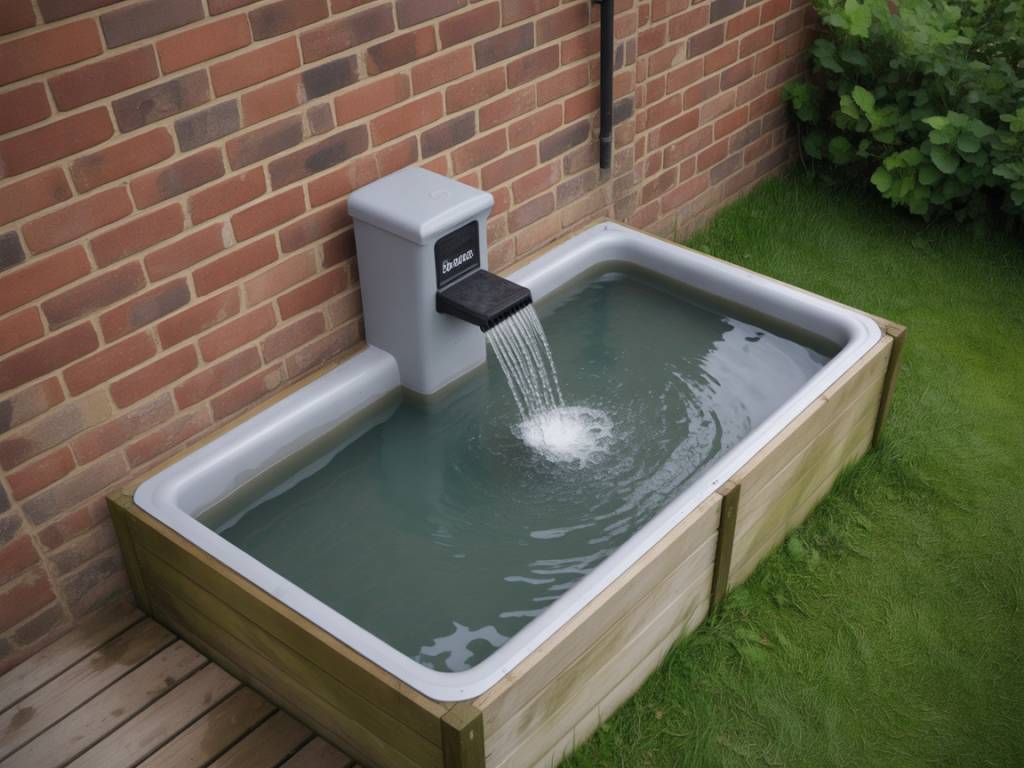
Rising water bills, increasing pressure on mains supplies and a growing interest in sustainable living are pushing many UK homeowners to look seriously at greywater recycling. Once confined to eco-builds and experimental projects, modern systems have become more compact, more reliable and easier to integrate into typical British homes and gardens.
What exactly is greywater in a UK home?
Greywater is lightly contaminated wastewater generated from everyday domestic activities such as:
- Showers and baths
- Bathroom washbasins
- Washing machines (in some system designs)
It excludes water from toilets (blackwater) and usually excludes kitchen sinks and dishwashers, which contain high levels of fats, food residues and detergents that are harder to treat.
In a typical UK household, greywater can represent 50–70% of total wastewater volume. Instead of sending this water directly down the drain, a greywater system captures, treats and reuses it for non-potable applications such as toilet flushing and garden irrigation.
Key components and how systems work
Although brands and models differ, most domestic greywater systems in the UK include a similar set of elements designed to provide basic treatment and safe reuse:
- Collection network: Separate pipework that diverts greywater from baths, showers and basins before it mixes with toilet waste. In retrofits, this is often the most disruptive part of the installation.
- Pre-filter: A coarse filter or lint trap that removes hair, fluff and larger particles to protect downstream components.
- Storage tank: A chamber (often 100–300 litres for a house) where greywater is held temporarily. This may be installed inside (e.g. under a staircase), in a plant room, or buried externally like a small rainwater tank.
- Treatment stage: Depending on the sophistication of the system, this may include:
- Settling and fine filtration only (basic systems)
- Biological treatment using a small biofilm reactor or membrane filter
- UV disinfection for systems supplying multiple toilets or for higher hygiene assurance
- Pump and control unit: A small, automated pump delivers treated greywater to the point of use, usually a dedicated toilet-flushing circuit and/or garden tap. Controls typically prioritise greywater but automatically switch to mains backup when the tank is empty or the system is offline.
- Overflow and bypass: A connection to the foul sewer ensures that when the storage tank is full or the system is shut down, greywater is safely discharged without flooding.
From the user’s perspective, a well-designed system should be almost invisible. Toilets flush as usual, garden hoses run normally, and the switch between greywater and mains backup is automatic and compliant with UK water regulations.
Best uses of recycled greywater in UK homes
Because of hygiene and regulatory constraints, recycled greywater is not used as drinking water. Instead, it is typically applied to:
- Toilet flushing: The most common and stable demand, especially in homes with multiple bathrooms. Toilets alone can account for around 30% of household water use.
- Garden irrigation: Particularly valuable in the southeast and east of England, where summer hosepipe bans are increasingly common. Treated greywater can supplement or replace mains watering for lawns, borders and ornamental planting.
- Laundry (in some systems): More advanced systems may allow reuse of greywater for washing machines, though UK practice is still cautious here and tight control of detergents becomes important.
Many off-the-shelf British systems are designed primarily for toilet flushing, with outdoor use as an optional extra.
Design considerations for UK properties
The feasibility and performance of a greywater system depend heavily on the physical characteristics of the building and the occupants’ habits.
Property type and layout
- New-builds: Easiest to design with separate greywater and blackwater pipework from the outset, making integration simpler and often cheaper.
- Renovations and retrofits: Older British housing, with compact bathrooms stacked above one another, can be surprisingly well-suited to retrofits if pipework is accessible. However, solid walls, boxed-in services and limited plant space can increase cost and disruption.
- Flats and apartments: Greywater systems can work well in blocks with a central plant serving multiple units, but will require coordination with freeholders, managing agents and building control. Individual flat systems are less common.
Space and access
A domestic system requires space for a storage tank, treatment module and control panel. Typical locations include utility rooms, understairs cupboards, loft spaces (with structural assessment) or small external enclosures. For buried tanks, access for excavation machinery and for future maintenance is essential.
Water demand patterns
For the economics to stack up, the house should have:
- Sufficient greywater generation (showers, baths, frequent laundry)
- Consistent non-potable demand (multiple toilets, regular garden use)
- Occupancy stable enough to keep the system running regularly; long vacant periods can require draining and cleaning
Regulations and standards in the UK
Greywater systems in UK homes sit at the intersection of several regulatory frameworks designed to protect public health and the mains water network.
Building Regulations – Part G (Sanitation, hot water safety and water efficiency)
Part G encourages water efficiency and sets a performance standard for water use in new dwellings (typically 125 litres per person per day, or 110 l/p/d under some planning conditions). Greywater recycling can be a useful tool for developers to meet these targets. Systems must, however, ensure that all sanitary appliances are safely and hygienically supplied.
Water Supply (Water Fittings) Regulations 1999
These regulations govern how any non-wholesome water (including greywater) is connected to domestic plumbing. Key requirements include:
- Prevention of backflow: The greywater circuit must be completely separated from potable mains pipework. No cross-connections are allowed.
- WRAS-compliant components: Many water companies expect backflow prevention devices, valves and fittings to be approved under the Water Regulations Advisory Scheme (WRAS) or equivalent.
- Clearly identified pipework: Non-potable pipes should be labelled and, in many cases, colour-coded to avoid accidental connection.
In practice, reputable suppliers of domestic greywater systems will design their units to comply with these requirements, but the onus is on the installer and homeowner to ensure correct installation and notification to the local water undertaker where required.
British Standard BS 8525
BS 8525 is a dedicated standard for greywater systems. It is split into two parts:
- Part 1: Code of practice for design, installation and maintenance
- Part 2: Requirements for greywater treatment systems
While not law in itself, BS 8525 provides the technical benchmark that specifiers, building control officers and insurers increasingly expect. Systems tested and certified to this standard offer greater assurance regarding performance, hygiene and durability.
Environmental and planning considerations
- Environment Agency guidance: Discharge of overflow to the foul sewer is usually acceptable. Any proposal to discharge to surface water or soakaways must be carefully assessed to protect groundwater and surface water quality.
- Planning conditions: Some local authorities, especially in water-stressed regions or eco-developments, encourage or require water reuse. However, they may also scrutinise system design to ensure there is no risk of pollution or nuisance.
Realistic savings on UK water and sewerage bills
Whether a system makes financial sense depends largely on the local tariff and the scale of use.
How much mains water can be displaced?
Consider a four-person household in England:
- Average water use: around 130 litres per person per day
- Total: about 190 m³ (cubic metres) per year
Toilet flushing often accounts for around 30% of this, so roughly 57 m³ per year. A well-sized greywater system serving all toilets could potentially replace most of that with recycled water, subject to consistent shower and bath use.
Water and sewerage tariffs
Combined water and sewerage charges in England and Wales often fall in the range of £2.50–£4.00 per cubic metre, depending on region and provider. Taking a mid-range figure of £3.00/m³ (including both supply and wastewater charges):
- 57 m³ x £3.00 ≈ £171 potential annual saving if toilet use is fully substituted by greywater.
In reality, the saving may be lower due to:
- Periods when the greywater tank is empty and toilets revert to mains
- System downtime for maintenance
- Higher-than-average or lower-than-average household consumption patterns
More conservative assessments often suggest annual savings in the range of £80–£150 for a typical family home.
System costs and payback
Indicative costs for domestic greywater systems in the UK (supply and installation) are often as follows:
- Basic, small-scale system (single bathroom, toilet flushing only): £1,500–£3,000
- Mid-range system (several bathrooms, toilets plus irrigation): £3,000–£6,000
- Larger or more advanced systems (multiple dwellings, UV disinfection, more complex treatment): £6,000 and above
With an annual saving of £100–£150, simple payback periods of 10–20 years are common, though lower if water tariffs rise significantly or if the system forms part of a wider eco-refurbishment adding property value. For many homeowners, the decision is driven as much by environmental motivations and resilience (reduced reliance on mains during restrictions) as by short-term financial returns.
Maintenance and reliability in everyday use
Modern greywater systems are designed to be largely automatic but not entirely maintenance-free. Typical tasks include:
- Cleaning or replacing filters at intervals specified by the manufacturer
- Periodic inspection of pumps, valves and sensors
- Occasional tank cleaning, especially in systems with minimal treatment
- Checking that overflow and bypass routes are unobstructed
Many homeowners opt for a maintenance contract with the installer or manufacturer, particularly in the first few years of operation. When comparing systems, it is worth asking about access to spare parts, remote monitoring options and typical service intervals in real UK installations, not just in idealised test conditions.
Choosing a greywater system or supplier
For those considering a purchase, several practical criteria can help differentiate between products on the UK market:
- Certification: Preference for systems tested to BS 8525 and using WRAS-approved components for any interface with mains supplies.
- Footprint and flexibility: Compact units that can be sited in utility rooms, under floors or in gardens with minimal disruption are often easier to retrofit.
- Treatment level: For toilet-only reuse, simpler systems may suffice. For irrigation or potential laundry reuse, more advanced treatment and disinfection can be worthwhile.
- Energy consumption: Pumping and treatment add a small electricity load; efficient pumps and smart controls keep this low.
- After-sales support: Availability of local installers, service plans and technical support should carry significant weight, particularly for first-time adopters.
- Compatibility with detergents and household products: Some systems are sensitive to certain chemicals; clear guidance from the supplier can avoid long-term issues.
Many specialist water-reuse companies, as well as some rainwater-harvesting suppliers, now offer combined or modular systems that can be tailored to different UK property types. For homeowners, obtaining quotes from two or three experienced installers and asking for references from previous local projects often provides a more realistic sense of performance and satisfaction than brochure claims alone.
As the UK grapples with water scarcity, ageing infrastructure and climate volatility, greywater recycling will likely move further into the mainstream of domestic design and refurbishment. For now, the technology offers a practical, if not universally economical, pathway to cutting mains consumption, easing pressure on sewer networks and bringing daily habits a little closer to a circular use of resources.