
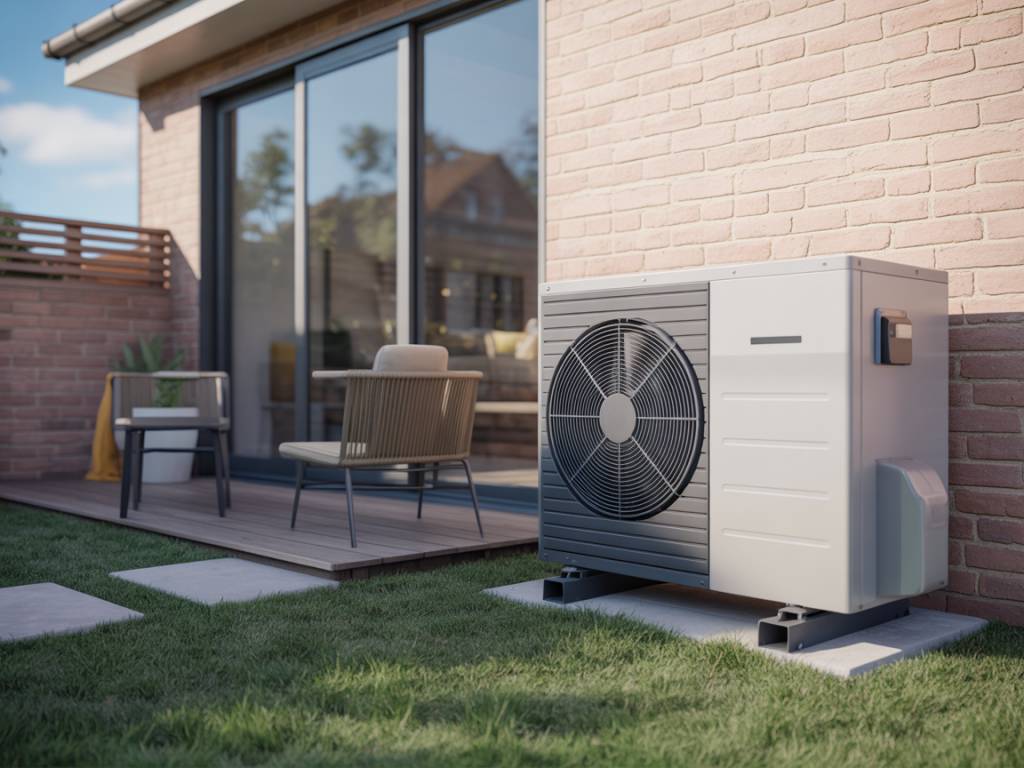
If you live in the UK, you’ve probably noticed a quiet revolution humming away behind terraced houses and stone cottages: the gentle whirr of a heat pump where an old gas boiler once ruled. It isn’t loud. It doesn’t smell of oil. It doesn’t glow orange like a flue on a winter evening. Yet it’s slowly rewriting how we think about warmth, comfort, and the way our homes sit in the landscape.
But is a heat pump really the right choice for your property — and, more importantly, for your particular patch of UK weather? A stone farmhouse in the Highlands does not live the same winter as a semi in Surrey, after all.
Let’s walk through the physics, the practicalities, and the small, almost invisible comforts that a heat pump can bring, from coastal drizzle to frostbitten moor.
What a heat pump actually does (beyond the buzzwords)
At its heart, a heat pump is less a furnace and more a storyteller of temperatures. Instead of burning something to create heat, it moves heat from one place to another — like a very polite bouncer escorting warmth indoors.
In simple terms:
- An air-source heat pump (ASHP) takes heat from the outside air, even when it feels bitterly cold.
- A ground-source heat pump (GSHP) draws heat from the ground via buried pipes or boreholes.
- A water-source heat pump uses a nearby lake, river, or pond as its source of heat.
They all work on the same basic principle: a refrigerant circulates, absorbing heat at a low temperature outside, then being compressed to raise its temperature before releasing that heat inside your home. It’s essentially your fridge, running in reverse, only instead of keeping your milk cold, it’s quietly nudging your living room towards 20°C.
The magic metric here is the Coefficient of Performance (COP). If a heat pump has a COP of 3, that means for every 1 kWh of electricity it uses, it delivers 3 kWh of heat. In real UK installations, seasonal efficiency (SCOP) of 2.5–4 is common, depending on climate, system design, and insulation quality.
On a damp January morning in Yorkshire, that difference between 1 and 3 is the gap between a grudging acceptance of your energy bill and a quiet, satisfied smile when it lands in your inbox.
UK climates are not all the same: why that matters for heat pumps
The UK is small, but its climates are surprisingly varied. When you’re deciding whether a heat pump is right for you, it’s helpful to think in terms of broad climate “families”.
- Mild & maritime: Coastal areas in the South West, much of Wales, and parts of western Scotland. Winters are wet but relatively gentle.
- Temperate & sheltered: Much of southern and central England. Cold snaps arrive but rarely linger for months.
- Cool & upland: Northern England, the Pennines, parts of Wales and Scotland. More frost, more wind, more “horizontal rain”.
- Cold & exposed: Highland Scotland, some rural moorland areas, more extreme microclimates.
Your local conditions affect how hard your heat pump has to work, especially on the coldest days. Heat pumps don’t “stop working” when it’s cold, but their efficiency does dip as the outside temperature falls, particularly for air-source models.
So the real question becomes: how often is it very cold, and how well is your home prepared to hold on to the heat you give it?
Heat pumps in mild and coastal UK climates
Let’s start where heat pumps feel most at home: mild, maritime climates. Think of a small cottage perched above a Cornish harbour, the kind where salt air peels paint from windowsills and winter is more about wind than snow.
In these settings, an air-source heat pump is often an excellent match:
- Outdoor temperatures rarely plunge far below freezing for long.
- The heat pump spends most of its time in its “comfort zone”, running efficiently.
- Space is often at a premium, and an outdoor ASHP unit is easier to install than extensive ground loops.
If you live in places like Cornwall, Devon, West Wales, or coastal Lancashire, a well-sized ASHP, paired with decent insulation, can feel almost tailor-made to your climate. The sound of the unit is often drowned out by the wind, and the constant, gentle heat suits older stone cottages that dislike being heated aggressively and then abandoned to the cold.
One thing to watch on the coast: salt-laden air. Units should be tested for coastal environments, and you’ll want a good installer who understands corrosion protection and placement.
Heat pumps in temperate southern and central England
This is suburbia and small-town territory: the three-bed semi with a modest garden, the 1930s detached at the end of a quiet cul-de-sac, the Victorian terrace within walking distance of the high street. Winters here can still bite, but the cold tends to come in waves rather than siege.
For these homes, heat pumps can work extremely well — but your success will depend on how prepared your property is to make the most of low-temperature heating.
You’re in a strong position if:
- Your loft is well insulated, and cavity walls (if any) are filled.
- You’re open to bigger radiators or (better yet) underfloor heating to accommodate lower flow temperatures.
- You either have, or are planning, solar PV to offset running costs and emissions.
In these regions, many homeowners are replacing gas boilers with ASHPs while retrofitting better insulation in stages. A common pattern:
- Year 1–2: Install the heat pump and upgrade the most underperforming radiators.
- Year 3: Improve windows or add external/internal wall insulation to the coldest rooms.
- Year 4+: Add solar panels and tweak controls to make the most of self-generated electricity.
The rhythm of heating also changes. Rather than blasting the boiler for an hour in the morning and again in the evening, heat pumps prefer to maintain a comfortable temperature throughout the day, modulating up and down. It’s more like wearing a perfectly weighted jumper all day than darting between shivering and overheating.
Heat pumps in northern, upland and colder UK regions
Now picture a stone farmhouse in the Yorkshire Dales, or a croft in the Highlands, where the wind rearranges your hair and sometimes your plans. These landscapes are where heat pumps are most questioned — and, with the right approach, can also be most transformative.
The challenges here are real:
- More frequent sub-zero temperatures, nibbling at efficiency.
- Older, often poorly insulated buildings that leak heat.
- Higher heat loss due to wind exposure and large exterior surface areas.
But that doesn’t automatically disqualify heat pumps. It just shifts the conversation towards design and pairing.
In these climates, consider:
- Ground-source heat pumps (GSHPs) where land or boreholes are feasible. Underground temperatures are remarkably stable, often around 8–12°C in much of the UK, even when air temperatures plunge. That stability translates into consistent efficiency.
- Hybrid systems that pair a heat pump with a backup boiler or electric resistance heater, used only on the coldest days. For some large, draughty homes, this provides a sensible balance of comfort and resilience.
- Deeper fabric improvements: external wall insulation on stone, secondary glazing on old sash windows, and attention to airtightness — without smothering the building’s ability to breathe.
A well-designed system in the Highlands might, for example, rely mostly on a GSHP for 95% of the year, with a backup heat source kicking in only during extreme cold snaps. The result: dramatically lower annual emissions and running costs, with security for the worst weather.
Is your property heat pump ready? A practical checklist
Whatever your climate, your property itself will decide whether a heat pump feels like a revelation or a reluctant compromise. Before you fall in love with any brochure, ask your home a few quiet questions.
1. How well do you keep hold of heat?
- Is your loft insulated to at least 270 mm?
- Are cavities filled (if suitable)?
- Do you have double or triple glazing — or at least well-fitted single glazing with good curtains or secondary glazing?
- Do rooms cool rapidly as soon as the heating goes off?
If your home loses heat quickly, a heat pump can still work, but it will need to be larger, and running costs will be higher. In almost every case, it’s cheaper and more comfortable to improve insulation first.
2. Are your radiators and system geared for low temperatures?
Heat pumps like to send water around your heating system at lower temperatures (often 35–50°C) than boilers (which often run at 60–80°C). That means your emitters need to be sized accordingly.
Good signs:
- Underfloor heating in large areas of the home.
- Already oversized radiators or a willingness to replace them where needed.
- A reasonably modern wet central heating system that can be repurposed.
3. Do you have suitable outdoor (and indoor) space?
- An ASHP needs clear airflow and should be positioned to minimise noise for you and your neighbours.
- A GSHP demands either horizontal trenches or vertical boreholes — more intrusive upfront, but visually discreet once finished.
- Indoor space is required for the hot water cylinder and controls; airing cupboards often become the quiet heart of the system.
4. What is your current fuel, and what are your tariffs like?
In off-gas areas (oil, LPG, or direct electric heating), heat pumps can dramatically cut running costs, especially where electricity tariffs are favourable or paired with solar PV and smart controls.
If you’re currently on mains gas, the economics are more delicate but increasingly attractive as gas and electricity price dynamics shift and incentives evolve.
Exploring the different types of heat pumps for UK homes
Once you’ve established that your property and climate are broadly compatible, the question shifts to which kind of heat pump makes the most sense.
Air-source heat pumps (ASHPs)
- Generally the most affordable to install.
- Quicker installation, less disruption.
- Modern units can operate efficiently even at –10°C, though COP drops in deep cold.
- Best suited to mild and temperate regions, or well-insulated homes in cooler areas.
Ground-source heat pumps (GSHPs)
- Higher upfront installation cost.
- More consistent performance in colder climates.
- Almost invisible and silent once installed.
- Particularly attractive for rural homes with land or large gardens.
Air-to-air heat pumps (essentially reversible air conditioning) can be useful for specific scenarios — for example, a small, well-insulated flat — but they generally don’t provide hot water and are less common in full-house decarbonisation plans in the UK.
Comfort, noise, and everyday life with a heat pump
The conversation about heat pumps often revolves around kilowatts and tariffs, but what about the small, sensory details of living with one?
Heat feel
Heat pump warmth is more continuous than dramatic. Rooms settle into a stable, even temperature, with fewer sharp swings. For many people, it feels gentler on both the body and the mind — no more standing in front of the boiler-warmed radiator like a lizard on a rock.
Noise
Modern ASHPs are surprisingly quiet, often comparable to a fridge humming in the next room, but placement matters:
- Avoid siting the outdoor unit next to bedroom windows where possible.
- Use brackets or pads designed to limit vibration.
- Remember that on the coldest days, when the fan speeds up, you’re less likely to have windows open anyway.
GSHPs are practically silent in everyday operation.
Hot water
Heat pumps can absolutely provide domestic hot water, but usually at slightly lower temperatures than a combi boiler. You’ll have a cylinder, which is periodically heated to higher temperatures for legionella protection. For most households, this simply means adjusting expectations: hot enough for showers and baths, but perhaps with a little less scalding drama at the tap.
Heat pumps, renewables and the bigger picture
A heat pump doesn’t just change how your home feels; it alters how your home participates in the wider energy story of the UK. Instead of burning gas or oil on site, you’re drawing electricity — increasingly from wind, solar, and other renewables.
This opens up elegant synergies:
- Solar PV + heat pump: Use daytime solar electricity to run your heat pump and warm a hot water cylinder, effectively turning your home into a small seasonal battery.
- Smart tariffs: Variable tariffs allow your heat pump to pre-heat the home or cylinder when electricity is cheapest and cleanest.
- Off-grid or near off-grid setups: In rural areas with good land, a GSHP combined with PV and battery storage can dramatically reduce reliance on delivered fuels.
Seen from a distance — perhaps from a hill above a village, rooftops dotted with panels and quiet heat pumps ticking away — it’s clear that we’re moving from homes as isolated consumers of fuel to participants in a shared, flexible energy system.
So, are heat pumps right for your property and climate?
Bringing it back to the intimate scale of your own front door, the question isn’t simply “Do heat pumps work in the UK?” They do, across an impressive range of climates. The more honest — and ultimately more liberating — question is:
“What would it take for a heat pump to work well for me, in this house, in this weather?”
They tend to be a strong fit when:
- You live in a mild or temperate region, or
- You’re willing to improve your insulation and heating distribution, and
- You value steady comfort, lower emissions, and the long game of energy costs.
They’re more of a considered project when:
- You’re in a cold, exposed area with a very leaky building fabric.
- You have limited space for outdoor units or ground loops.
- You’re unwilling to alter radiators, floors, or insulation.
In those cases, the path might look more like a series of steps than a single leap: first tame the draughts, then rethink your distribution system, and finally let the heat pump take its place as a quiet, steady heart of the home.
The technology is ready. UK climates, from misty coastal towns to frost-polished fields, are more compatible than the myths suggest. What remains is a kind of gentle alignment: between building and system, between your rhythms of living and the way you choose to be warm.
On the coldest February mornings, when the sky is a chalky grey and the kettle fogs the kitchen window, it’s strangely comforting to know that the warmth you feel has been borrowed, not burned — drawn from the air or the soil beneath your feet, then sent softly through radiators and floor loops to meet you, exactly where you are.