
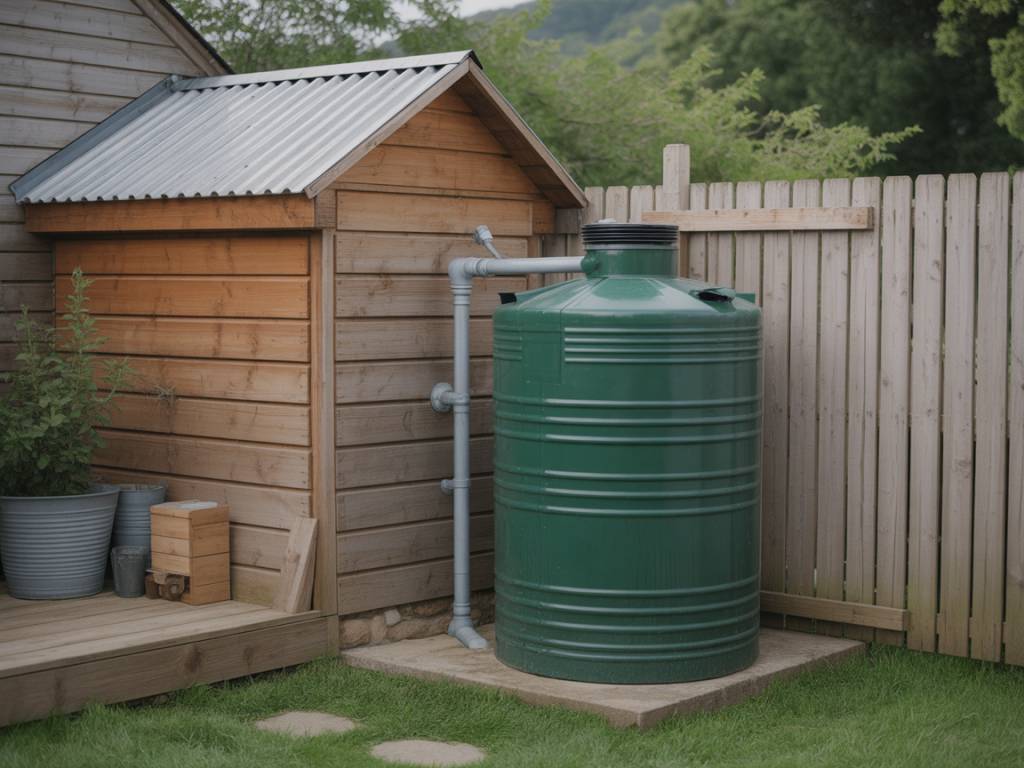
On a wet Tuesday in Yorkshire, I watched a neighbour’s gutter pour a silver waterfall straight into a storm drain. A small river, given away for free. He made a joke about “typical British weather” and went back inside. I remember thinking: we’re standing in the middle of abundance… and treating it like a nuisance.
This is the quiet magic of a rainwater harvesting system: it turns “too much rain” into a silent ally for your home. Whether you live in a Victorian terrace in Manchester, a semi in Surrey, or a stone cottage in the Highlands, capturing the water that already falls on your roof can shrink your bills, ease pressure on the mains, and make your garden far more resilient in those strange, dry spells that now arrive with unnerving regularity.
And you don’t need a grand design budget to start. From a £40 water butt behind the shed to a fully plumbed, underground tank feeding your toilets and washing machine, there is a DIY option for almost every UK homeowner and every wallet.
Why rainwater harvesting makes sense in the UK
Britain’s reputation for drizzle hides a more complex story. Climate models show heavier downpours, longer dry spells, and more strain on older drainage systems. In many towns, a single summer storm can overwhelm victorian sewers and send polluted water into rivers.
Harvesting rainwater at home helps to:
- Reduce mains water use: Even a small system can cover much of your garden watering plus outdoor cleaning.
- Lower water bills: If you’re on a water meter, every litre you don’t draw from the mains counts.
- Ease flood risk: Capturing and slowly releasing rain reduces runoff into already stressed drainage.
- Build resilience: Your own store of water feels surprisingly reassuring in hosepipe-ban season.
There’s also a quieter, almost intimate satisfaction: knowing that the water in your watering can fell on your roof an hour ago, filtered through your own improvised system, and is now feeding the tomatoes you’ll slice for dinner. A small, circular story, written in drops.
The basic anatomy of a DIY rainwater system
Whether you spend £50 or £5,000, almost every rainwater harvesting system in the UK is built from the same key pieces:
- Catching surface – usually your roof.
- Conveyance – gutters and downpipes to move water.
- First filter – to keep out leaves, moss and debris.
- Delivery – taps, gravity, or a pump to move water where you need it.
li>Storage – water butts, IBC tanks, or underground cisterns.
How sophisticated you go with filtration and delivery will depend on your budget and how you want to use the water: garden only, or also toilet flushing, washing machine, even showering (with proper treatment and plumbing).
Budget-friendly options: under £100
Imagine starting with almost nothing: a standard UK house, a downpipe, and the desire to catch more than a puddle. Under £100, your focus is on simple, robust, gravity-fed setups that are easy to install in an afternoon.
Classic water butt on a shoestring
This is the gateway project that quietly converts sceptics.
Typical cost: £40–£90, depending on size and aesthetics.
- What you’ll need:
- 1 x water butt (100–250L) with stand and tap
- 1 x downpipe diverter kit (for round or square downpipes)
- Basic tools: saw for plastic downpipe, spirit level, screwdriver
- How it works: A small diverter cuts into your existing downpipe and sends water into the butt once it starts to rain. When the butt is full, overflow goes safely back into the downpipe, so you don’t flood your wall or patio.
- Best suited for: Garden watering, pot plants, outdoor cleaning (bikes, muddy boots, garden tools).
Set the butt on its stand (or sturdy bricks) so you can slide a watering can under the tap. Keep the lid firmly on to stop light, mosquitoes and curious neighbourhood cats from getting in. In a surprisingly short time, you’ll wonder how you ever watered without it.
Ultra-low-cost: repurposed containers
If money is especially tight, or you enjoy the challenge of making do, you can improvise with reused containers.
Typical cost: £0–£50 (plus your time).
- Ideas to explore:
- Food-grade barrels from local businesses (sometimes free, often £10–£20).
- Old wheelie bins (check they’re structurally sound and clean).
- Stacked builders’ buckets catching smaller roof sections or shed roofs.
- Key considerations:
- Always use food-grade plastic if the water may ever touch edible crops.
- Add a simple mesh on top to keep out leaves and insects.
- Drill a hole near the base and install a cheap threaded tank connector and tap.
This approach has a certain back-garden poetry: misfit containers reimagined as a quiet reservoir, like a patchwork of small ponds that only you know the logic of.
Mid-range systems: £100–£1,000
Once you’ve lived with a simple water butt for a year or two, you may begin to notice its limits. It fills in a single downpour and sits empty after a fortnight of high summer. You might catch yourself thinking: what if I could store more? What if my hose could run from this, not the mains?
In the mid-range, you move from “nice extra” towards a meaningful piece of your home’s water system.
Linked above-ground tanks for serious garden use
Typical cost: £150–£600, depending on capacity and finish.
- What changes compared to a single butt:
- Multiple tanks linked together at the base to act as one large store (400–2,000L+).
- Better pre-filtration so less sludge builds up inside.
- Possibly a small, low-voltage pump to run a hose or drip irrigation.
- Good combinations:
- Two 200L butts linked in series for a small urban terrace.
- A pair of slimline wall tanks along a side passage where space is tight.
- One large 1,000L IBC tank screened with timber cladding for a cottage garden.
IBC tanks (those large square containers inside a metal cage) are a particularly cost-effective option if you’re happy with a more utilitarian aesthetic. Second-hand, food-grade IBCs can often be found for £60–£120 and hold around 1,000L. Add timber battens and a climbing plant, and they disappear into a green wall of leaves.
Add a pump: hose and irrigation freedom
Gravity is loyal but not always energetic. If your garden slopes, or you want to use a hose or sprinklers, a pump changes everything.
Typical cost: £60–£300.
- Options:
- Submersible pump dropped inside your tank, connected to a hose.
- Surface-mounted pump drawing from a tap or outlet at the base of the tank.
- Solar-powered pumps for off-grid or low-energy setups (perfect for remote cabins or allotments).
- What to look for:
- Automatic stop when the tank runs dry, to protect the pump.
- Enough pressure for your intended use (drip irrigation needs less, sprinklers more).
- Noise rating, especially in small, quiet gardens.
On a still August evening in Devon, I watched a friend switch on his tiny pump. A gentle hum, and then a soft, steady stream of harvested rainwater, arcing exactly where the beans needed it. No fighting with a kinked mains hose, no guilt about how much water was disappearing into sandy soil. Just a quiet loop between roof and vegetable patch.
First steps into indoor use (toilets and washing machines)
Using rainwater indoors is more complex, but not out of reach for dedicated DIYers on a mid-range budget, especially during renovations.
Typical cost: £500–£1,000+ for a basic, above-ground system feeding toilets and/or washing machine, excluding major plumbing changes.
- Key components:
- Filtered storage tank (above ground or in a garage/outbuilding).
- Fine filtration and sometimes UV disinfection, depending on intended use.
- Header tank or pressure vessel supplying indoor fixtures.
- Clearly separated pipework from mains supply (to comply with UK water regulations).
- Best timing: During bathroom or utility room refits, or when refurbishing pipework. Retrofitting into finished walls is possible but usually not economical.
For systems that feed anything indoors, it’s wise to involve a qualified plumber familiar with UK backflow prevention requirements. Think of this less as a weekend tinker and more as a small infrastructure project.
Higher-budget and long-term systems: £1,000+
This is the realm of homes that want rainwater harvesting as a central feature rather than an add-on: new builds, major renovations, or off-grid properties where the mains are a distant dream.
Underground tanks: invisible capacity
Typical cost: £2,000–£6,000+, depending on tank size, groundworks, and complexity.
- Why go underground?
- Large capacity (3,000–10,000L+) without dominating the garden.
- Stable water temperature and no light, which reduces algae growth.
- Suitable for whole-house non-potable use (toilets, washing machine, outdoor taps).
- What’s involved:
- Excavation and groundworks, often with machinery.
- Installation of tank, inlet filters, overflow and inspection points.
- Buried pipework to and from the house.
- Control system and pump for consistent pressure.
An underground tank is not a casual DIY Saturday. It’s more like adding a secret, subterranean room to your home’s ecosystem. Many homeowners choose a specialist installer for the structural and regulatory parts, then take over the day-to-day operation and minor maintenance themselves.
Off-grid and near-off-grid living
For those living in remote cottages, narrowboats, tiny houses or off-grid cabins, rainwater is often not just a supplement but the main source.
Typical cost: £1,500–£10,000+, depending on treatment level and storage.
- Key elements:
- Meticulous filtration and treatment if water will be used for drinking: sediment filters, carbon filters, UV sterilisation.
- Redundancy in storage: multiple tanks or cisterns so a single failure doesn’t cut you off entirely.
- Carefully designed gutters and catchment to maximise clean intake (metal or slate roofs are ideal).
- Mindset shift: Every shower, every cup of tea, is linked to the last time the clouds passed overhead. People who live this way often talk about water not as a utility, but as a seasonal companion.
Working with UK regulations and realities
Before grabbing your drill, there are a few practical and legal details worth knowing.
- Planning permission: Most domestic rainwater systems do not require planning permission, especially above-ground tanks. However, very large installations, listed buildings, or changes to the external appearance in conservation areas may need approval, so it’s wise to check with your local authority.
- Water regulations: UK rules strictly forbid any cross-connection between mains drinking water and non-potable supplies. If you’re feeding toilets or appliances, the rainwater system must be completely separate, with correct backflow protection where specified.
- Roof materials: Most UK roofs (tile, slate, metal) are fine for garden and toilet use. For potable use, avoid collection from roofs containing certain bitumen products, lead, or where there is heavy bird activity without extra treatment.
- Overflow management: Always provide a safe overflow route: to soakaways, existing drains, or a raingarden. In a heavy downpour, your system should behave like part of the landscape, not a surprise indoor fountain.
Maintenance: keeping your system a quiet ally
A rainwater harvesting system asks for attention more than effort — the kind of gentle, seasonal check-in that becomes part of the rhythm of home life.
- Gutters and downpipes: Clear leaves and moss at least once a year, ideally in late autumn after the trees have dropped their leaves.
- Pre-filters and diverters: Rinse filters every few months, or more often in heavily wooded areas.
- Tanks: For above-ground butts, an annual rinse or partial emptying to remove settled sediment is usually enough. Larger systems may benefit from professional inspection every few years.
- Pumps: Check inlets for clogging and ensure dry-run protections work. A simple visual check while the pump is running can often catch small issues early.
On a crisp January morning, walking out with a mug of tea to glance at your quietly sleeping tank, there’s a comfort in knowing that it is waiting, as ready as the bulbs under the soil, for the next soft spell of rain.
Choosing the right system for your budget and home
So which path fits your life right now?
- Under £100: Start with a single, well-placed water butt. Learn how fast it fills and empties. Notice how your watering habits shift.
- £100–£1,000: Expand into linked tanks, add a pump, maybe route water into a greenhouse or polytunnel. If you’re renovating, consider pre-plumbing for future indoor use.
- £1,000+: For new builds, major refurbishments or off-grid dreams, design rainwater harvesting into the bones of the house: underground tanks, dedicated pipework, intelligent controls.
Whichever tier you choose, the essence is the same: paying attention to the water that already visits your roof, and offering it a place to stay a little longer. In a country where we love to talk about the weather, there is something quietly radical about finally bringing that conversation home.