
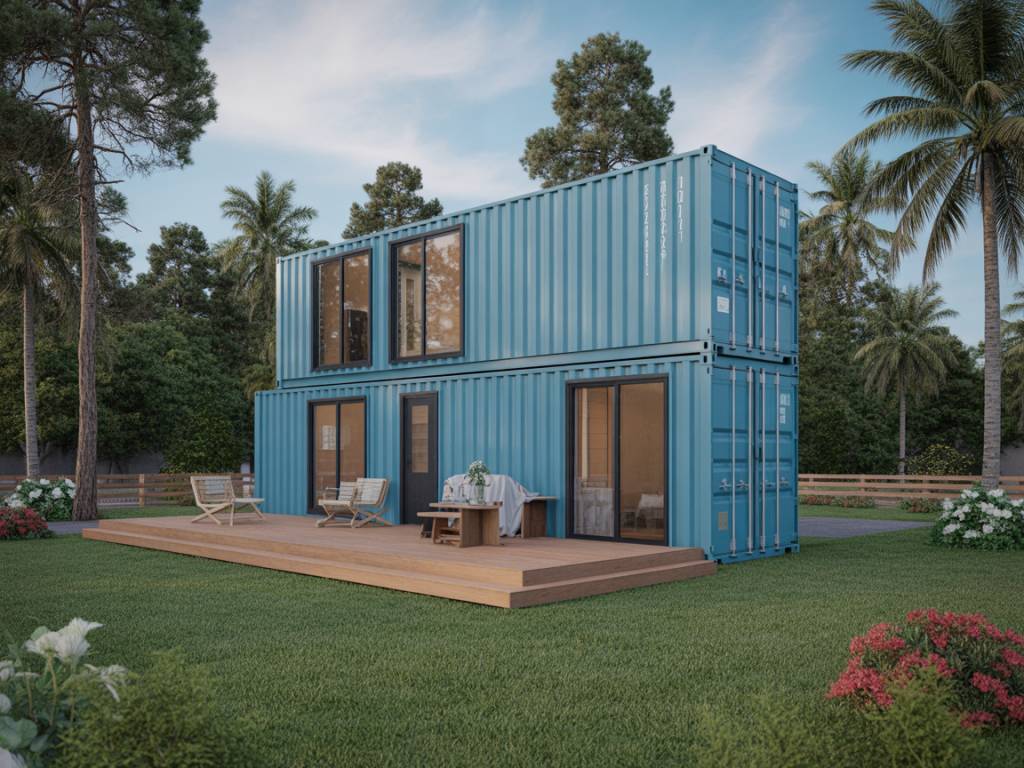
Some homes begin with a sketch on tracing paper. Others begin their lives crossing oceans, stacked like colorful bricks on the deck of a cargo ship. The day a shipping container is retired from the sea and claimed for a new purpose, its story changes direction: from logistics to living room.
If you’re here, you’re probably wondering not just whether a container home is possible, but whether it’s affordable – and what, exactly, makes the price of this steel-box dream climb or fall.
Let’s unpack that.
Typical price ranges for shipping container homes
Like any home, a container build can whisper or shout on your bank account. Broadly, you’ll find three tiers:
- DIY shell or tiny retreat: roughly £15,000–£45,000 (US $20,000–$55,000)
- Modest full-time home (1–2 bedrooms): roughly £60,000–£150,000 (US $75,000–$190,000)
- High-end or multi-container custom build: roughly £160,000–£400,000+ (US $200,000–$500,000+)
These are not hard borders. Think of them as weather patterns rather than railway timetables. Location, regulations, and finishes can nudge you to the lower or upper edges of each range.
To understand where you might land, we need to look at what really drives the cost of a shipping container home up or down – from the price of that very first steel box to the last light switch you flick on your first evening inside.
The container itself: cheap box or pricey building block?
In romantic Instagram posts, the container is free, abandoned in a sunlit yard, just waiting for you. In reality, it’s often your first big line item.
For a standard 20-foot or 40-foot unit, price depends on:
- Condition
“As is” / used: cheapest option, commonly £1,500–£4,000 per container.
These may have dents, surface rust, and a history you’ll never fully know. They’re fine structurally if inspected carefully, but you must assume they’ve carried almost anything – including chemicals – and plan to seal and ventilate thoroughly.“One-trip” containers: almost new, typically £3,000–£7,000 per container. They’ve made a single sea journey and then been sold on. They’re cleaner and straighter, which saves you time and money on repairs and prep.
- Size and type
A 40-foot High Cube (9’6” high) is often the sweet spot for homes: that extra foot of height makes insulation and interior comfort much easier. Expect to pay a premium over standard height models.
Specialized containers – refrigerated “reefers”, open-tops, side-openers – can also cost more, but sometimes with hidden savings: reefers, for example, come with built-in insulation you might adapt if it suits your climate and design.
- Availability and distance
Port cities are usually cheaper. If you live far inland, transport costs can eat up the savings of a cheaper box, especially when heavy cranes or tilt-bed lorries are needed to set them in place.
As a rule of thumb, the container shell (or shells) themselves usually represent 5–15% of the total project cost. Everything you do to tame that steel into a comfortable dwelling is where the real spending begins.
Land, permits, and the hidden price of “where”
It’s easy to fall in love with a container home on Pinterest without noticing the most expensive part of the picture: the ground beneath it.
Your total budget will be shaped dramatically by:
- Land cost
A rural plot with relaxed planning rules might cost less than a city parking space. In some regions, you can still find land under £20,000; in others, you might pay £200,000+ before a single weld is made.
- Planning and zoning
Container homes sit in a curious space in many planning departments: not quite traditional, not quite temporary. Some councils welcome them as part of innovative, sustainable development. Others treat them with suspicion.
Fees for permits, drawings, and surveys can run from £1,000 to £10,000+, depending on complexity. If your site is in a protected area or flood zone, add more time, more paperwork, and more professional help.
- Access to the site
Those cinematic images of containers craned onto remote hilltops come with a cost. Narrow lanes, overhead wires, soft ground – each obstacle adds another zero to the bill for delivery and placement.
In sustainable living circles, we often speak of “light touch” – building gently, with respect for the land. Ironically, the more fragile or remote the site, the more your budget needs to stretch to respect it properly.
Foundations: minimal doesn’t mean trivial
One of the selling points of container homes is that they don’t necessarily need vast concrete slabs. Their steel frame can happily sit on:
- Concrete piers or pads
- Screw piles (helical piles)
- Short stem walls or strip footings
- A well-engineered slab, if soil or design demands it
Costs vary widely with soil conditions, frost depth, and local regulations, but you might expect:
- Simple pier or pad foundation: around £2,000–£8,000 for a small home
- More complex system or slab: £8,000–£25,000+
It’s tempting to economise here. Yet foundations are where frugality can become fragility. Containers are strong, but they’re designed to carry loads at the corners. Poorly aligned or undersized foundations can twist the structure, causing doors and windows to bind and welds to crack.
A good structural engineer is rarely the flashy part of the project, but often the best value.
Cutting steel: windows, doors, and how design affects price
If containers stayed as simple boxes with a single door, they would be wonderfully cheap to build with – and deeply unpleasant to live in. The moment you start cutting into that corrugated skin, the budget changes.
- Openings weaken the structure
Every big window or wide sliding door means reinforcing the surrounding steel. Think of it as framing a new picture: more steel, more welding, more skilled labour.
- Complex shapes add complexity everywhere
Stacking containers, offsetting them, cantilevering them for that dramatic balcony in the trees – all possible, all beautiful, and all more expensive in both engineering and execution.
- Number of containers
Counterintuitively, doubling the number of containers doesn’t just double the price. It can increase costs disproportionately, because you’re adding:
- More structural work where containers join
- More roofing and waterproofing details
- More interior finishes and services to connect
If your budget is tight, the cheapest container homes tend to:
- Use fewer containers (often one or two)
- Keep cuts to a minimum
- Use simple rectangular floor plans
- Stack containers directly rather than offsetting them
Think of it as building jazz: the more improvisation in form, the more practice (and money) it takes to make it sing.
Insulation, interior comfort, and the price of feeling at home
Living inside uninsulated steel is like choosing to live inside a toaster. It works for neither Arctic mornings nor summer heatwaves. So insulation isn’t optional; it’s fundamental.
Your choices here shape both cost and comfort for the lifetime of the home:
- Spray foam insulation
Common for container homes, as it adheres directly to steel and controls condensation.
Pros: great air seal, space efficient.
Cons: can be petrochemical-based, tricky to modify later, quality depends heavily on installer.
Cost: often £3,000–£10,000+ depending on thickness and area. - Natural or eco-friendly insulation (wood fibre, sheep’s wool, recycled cellulose, cork panels)
Pros: lower embodied carbon, good moisture behaviour, pleasant indoor feel.
Cons: usually needs more thickness, so interior space shrinks; requires careful detailing to handle condensation against steel.
Cost: materials often higher than basic foam, but can pay off in long-term comfort and sustainability credentials. - Interior vs exterior insulation
Insulating outside the container (with cladding) protects the steel and preserves interior width, but adds costs for framing, weatherproofing, and finishes. It can start to blur the line between “container home” and “just a house that happens to have steel boxes inside”.
Heating, cooling, and ventilation – from a simple wood stove and cross-ventilation to a high-efficiency heat pump and heat-recovery ventilation system – can add anywhere from £2,000 to £15,000+, depending on how independent and future-proof you want to be.
Fit-out, finishes, and the seduction of the final 20%
The interior is where budgets quietly swell. After the drama of cranes and welding torches, it’s easy to underestimate what it costs to reach the day when you slide a mug into a finished kitchen cabinet and switch on a reading lamp by your bed.
Major cost drivers here include:
- Electrical and plumbing
Even compact homes need circuits, outlets, fixtures, and safe wiring routes through steel. Add in plumbing runs, hot water, and drainage and you’re often looking at £8,000–£25,000+ for a full-time home, depending on complexity and local labour rates.
- Kitchen and bathroom
These rooms are cost-dense. A very basic kitchen and shower room might be squeezed in under £5,000–£7,000 with off-the-shelf units. Throw in custom cabinetry, stone counters, a rainfall shower and high-end fittings and you can easily climb past £20,000+.
- Interior finishes
Flooring, wall linings, paint, built-in storage, interior doors. Opting for simple, durable materials – plywood, oiled timber, polished concrete – can keep both costs and embodied carbon reasonable.
- Windows and doors
Glazing is one of the most expensive line items in many container homes, especially if you prioritise large openings to counteract the narrow footprint. High-performance windows and doors can easily consume £5,000–£25,000+ depending on size and spec.
A useful rule: finishing choices can move your total build cost by 30–50% inside the same overall design. The steel may be industrial, but the interior can be anything from cabin-simple to boutique-hotel luxurious, with the budget to match.
Off-grid ambitions and sustainable upgrades
Container homes are often chosen by people who dream of smaller footprints – not just spatially, but ecologically. The technologies that help you tread more lightly can lift your upfront budget, even as they lower long-term bills.
- Solar PV and batteries
A modest off-grid solar system might start around £6,000–£12,000.
A robust system with good storage, able to comfortably power year-round living, can climb to £15,000–£30,000+. - Rainwater harvesting and filtration
Basic rainwater collection with storage for garden and non-potable use: £1,000–£3,000.
A more complete system with filtration for drinking water: £3,000–£8,000+. - Composting toilets and greywater systems
Composting toilets can range from DIY-friendly units at a few hundred pounds to elegant, fully contained systems over £3,000.
Greywater treatment for reuse adds complexity and cost, but reduces your dependence on mains infrastructure. - High-performance envelope
Better insulation, airtight detailing, and high-quality windows increase initial spend but can cut energy use drastically, making off-grid systems smaller and more affordable to run.
These choices don’t just tweak your budget; they shape how you live with the seasons and with your landscape. For many, that’s the real return on investment.
DIY vs turn-key: where labour meets lifestyle
The question that hovers over every alternative build: how much will you do yourself?
In broad strokes:
- Turn-key container homes
Some companies deliver fully finished units to your site, often including foundations and hookups. Prices often land between £1,800 and £3,500 per square metre (roughly £170–£325 per sq ft), depending on spec and location.
The advantage is predictability: clear pricing, a defined timeline, and fewer unknowns. The trade-off is less customisation and higher costs than a well-managed DIY-heavy build.
- Partial DIY / sweat equity
Perhaps you bring in professionals for structural work, electrics, and plumbing, but handle interior finishes, painting, and some carpentry yourself. This can cut total costs by 15–35% if you’re organised and realistic about your skills and time.
- Full DIY
At the extreme, some people buy a used container, park it on family land, and slowly transform it with recycled materials and weekends of effort. Cash outlay can be remarkably low – sometimes under £20,000–£30,000 – but the “cost” is paid in time, learning curves, and living with an evolving, imperfect work-in-progress.
There’s a quiet pleasure in sanding your own floorboards or screwing in the final light fitting, knowing every surface has passed through your hands. There’s also wisdom in recognising when to pay a professional, especially where safety, structure, and code compliance are concerned.
How to keep your container home budget under control
If you feel your imagined home expanding in your mind – a little more glazing here, another container there – that’s normal. Design is a kind of daydreaming. The challenge is to let the dream deepen without letting the costs escape you.
A few grounded strategies:
- Start with your life, not the container
Before sketching layouts, list how you actually live: work, hobbies, cooking style, guests, storage needs. Design to that, rather than to an arbitrary number of containers or a dramatic photo you saw online.
- Keep the form simple
Each step away from “simple box on sensible foundation” adds cost and complexity. You can create beauty with light, materials, and landscape rather than only with structural gymnastics.
- Decide what matters most
Maybe it’s off-grid capability. Maybe it’s a generous kitchen. Maybe it’s a view-framing window. Choose two or three non-negotiables and let other elements serve those priorities rather than competing with them.
- Plan for future upgrades
You can rough-in for solar but install panels later. You can start with basic finishes and swap in higher-end materials as funds allow. A container home, like any home, can evolve.
- Get multiple quotes and ask awkward questions
When dealing with container home builders or suppliers, ask exactly what is included: foundations, hookups, transport, cranage, insulation levels, certifications. The cheapest quote is not always the least expensive in the long run.
In the end, a shipping container home is a curious meeting of the industrial and the intimate. Steel that once moved goods across the world becomes the quiet frame of your mornings: the first light across a compact kitchen counter, the hollow ring of rain on a metal roof softened by insulation and years of memories.
The price of that transformation isn’t just found in spreadsheets and invoices. It’s in the choices you make about how much space you need, how lightly you want to tread on the land, and how much of yourself you’re ready to pour into the making of a home that began its life at sea.