
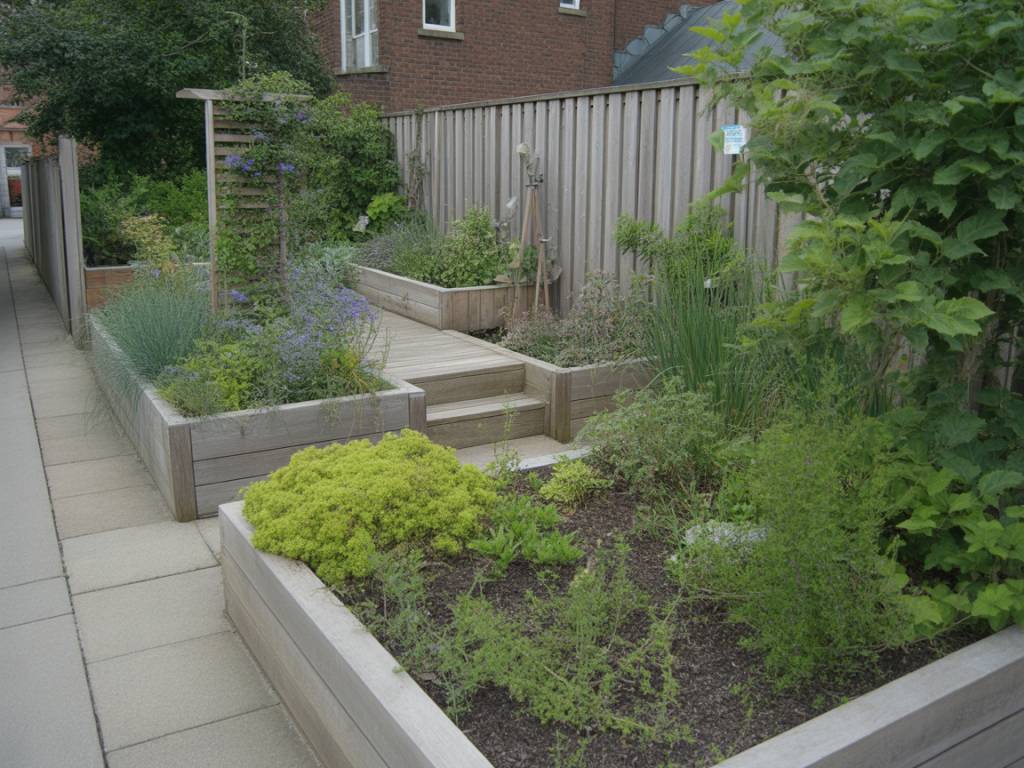
There’s a moment, just before the city wakes up, when the world seems to hold its breath. The buses are still rubbing the sleep from their headlights, the neighbours haven’t yet slammed the first car door, et sur le rebord de votre fenêtre, une mésange hésite, la tête penchée, évaluant ce minuscule territoire vert que vous avez commencé à lui offrir.
That moment – a bird pausing above a few pots, a bee discovering a new flower on a balcony – is where urban biodiversity begins.
You don’t need a sprawling country estate to create a living, breathing ecosystem. A balcony, a courtyard, a small back garden squeezed between brick walls can become a refuge for life, if you design it with intention. Think of it less as “decorating with plants” and more as “hosting the wild”.
Why a tiny city garden matters more than you think
On a satellite image, your small garden is a pixel. But zoom in, and it can be a stepping stone for wildlife trying to navigate an increasingly paved world.
Urbanisation has broken the landscape into fragments. For pollinators, hedgehogs, songbirds and soil organisms, cities are often deserts of tarmac and short-cut lawns. Every patch of habitat we restore – even a micro one – stitches the fabric back together.
Ecologists talk about “habitat corridors”: continuous or semi-continuous routes allowing animals to move safely. In a city, these corridors might be:
- a chain of balconies overflowing with native flowers
- terraced-house back gardens left a little wilder
- green roofs, pocket parks and community planters
Your garden, no matter its size, can become one of these links. And when thousands of people do the same, the cumulative effect is enormous.
There’s also a selfish reason. A biodiverse garden is more alive. Dawn choruses, bees drifting drunkenly between blossoms, the soft rustle of leaves sheltering beetles and spiders you’ll never meet – all of this changes how a home feels. It softens it. It slows time.
Start with the locals: why native plants are your best allies
Imagine arriving jet-lagged in a foreign city where you don’t recognise a single food shop. That’s what many pollinators face in modern gardens full of exotic ornamentals bred more for looks than nourishment.
Native plants – species that evolved in your region – are the familiar corner cafés and markets of the natural world. Local insects, birds and fungi know how to use them. They match in timing, chemistry and structure in ways we’re only beginning to understand.
By planting natives, you’re essentially reopening the neighbourhood restaurant for your wild neighbours.
Practical benefits for you:
- Less maintenance: Native plants are adapted to your climate and soils, so they generally need less watering and fussing.
- More wildlife: They support more caterpillars, more pollinators, more birds – the entire food web.
- More resilience: Native-rich gardens cope better with heatwaves, droughts and extreme rain, which are becoming our new normal.
Start by researching “native garden plants + your country/region”. Many wildlife trusts and local councils publish lists. Focus on:
- Flowering perennials for long-lasting blooms
- Grasses and sedges for structure and nesting material
- Small shrubs or hedging species for shelter and berries
- Climbers to turn walls and fences into green habitat
You don’t need to be a purist. A mix of mostly native plants with a few well-chosen, non-invasive exotics can work beautifully. The key is function: does this plant feed, shelter, or otherwise support life?
Reading your space: sun, shade and the city’s microclimates
Before you rush to the garden centre, spend a few quiet minutes simply watching your garden. Where does the first light fall? What stays in shade all day? Which corner bakes like a pizza oven at noon? Which one stays damp after rain?
Urban spaces have their own microclimates. South-facing walls radiate heat like stored sunlight. Narrow alleys become wind tunnels. Balconies three storeys up may dry out twice as fast as ground-level beds.
Jot down:
- Hours of direct sun in each area
- Wind exposure (gentle, breezy, or hairdryer-on-full?)
- Any existing features: drains, downpipes, sheds, fences, railings
This quiet observation will save you money and heartbreak. A shade-loving woodland plant will never be happy on a sun-baked balcony, however noble your intentions. Match plant to place, and the garden practically grows itself.
Designing for biodiversity: layers, textures and “messiness”
Wildlife doesn’t experience a garden the way we do. Where we see a neat lawn and a border, a bird sees vantage points, hiding spots and potential nesting sites. A bee sees nectar stations and sunny landing pads. A beetle sees highways and tunnels.
Designing for them means thinking in layers:
- Canopy (even in miniature): A small tree in a pot, a columnar fruit tree, or a large shrub provides perches, shade, and vertical interest.
- Shrub layer: Native hedging, bushy herbs, berry-producing shrubs – these create depth and safe nesting havens.
- Herbaceous layer: Flowers, grasses, ferns – where pollinators feast and many insects live their whole lives.
- Ground layer: Leaf litter, low groundcovers, mossy stones – the realm of beetles, fungi, and decomposers.
In a very small space, these layers might be compressed, but they can still exist. A balcony can have:
- a tall pot with a small tree or large shrub
- medium containers with flowering perennials
- low troughs with creeping ground covers or herbs
- a tray or corner where fallen leaves are allowed to accumulate
The guiding principle? Allow some “beautiful mess”. Perfectly clipped lawns, bare soil and hyper-manicured beds offer little to wildlife. A corner where last year’s stems are left standing, a pile of twigs, a section of unmown grass – these are the details that turn a decorative garden into a functioning habitat.
Choosing plants that work hard for wildlife
Think of each plant as offering a service. The more services it provides, the more valuable it is in a small garden.
Look for plants that:
- Flower over long periods or at “hungry gap” times (early spring, late autumn)
- Provide nectar and pollen that insects can actually access (open, single flowers are usually best)
- Offer berries, seeds or hips for birds
- Host caterpillars or other insect larvae (even if that means accepting a few nibbled leaves)
Depending on your region, that might look like:
- a native wildflower mix in a large container instead of standard bedding plants
- salvias, asters, and native daisies for a long flower season
- fruiting shrubs like currants or serviceberry for you and the birds
- climbing honeysuckle or clematis for scent, nectar and nesting cover
Consider the calendar. Can you arrange it so that something is always in bloom from early spring to late autumn? This continuous buffet is a lifeline in urban areas where pickings are often sparse.
Water: the smallest pond can change everything
If there is one feature that reliably transforms a small garden into a wildlife hub, it’s water. A pond, however tiny, is like opening a neighbourhood café and bar overnight.
Even a container no bigger than a washing-up bowl can attract:
- hoverflies, bees and wasps seeking a drink
- dragonflies scouting for egg-laying sites (if the water is still and safe)
- birds bathing and preening
- amphibians, if you’re lucky and connected to other green spaces
You don’t need a formal pond. Fill a large, watertight pot or tub with rainwater, add a few stones and a ramp or sloping side so creatures can climb out, and plant a couple of native aquatic or marginal plants in baskets.
If a pond isn’t possible, a shallow birdbath or even a saucer of water with pebbles (for insects to land on) already helps. Just change the water regularly to keep it fresh.
Micro-habitats: the art of leaving things be
Some of the best “features” for biodiversity are the ones that would never make it into a glossy garden magazine. They’re the modest, overlooked elements that quietly host thousands of tiny dramas.
In a small urban garden, consider:
- A log or branch pile: Place a few pieces of untreated wood in a quiet corner. Over time they’ll host fungi, beetles and other decomposers.
- A leaf pile: Resist the urge to bag every leaf in autumn. Pile some under a shrub or in a tucked-away spot; it becomes winter bedding for insects and small creatures.
- Dead stems: Leave some hollow flower stems standing over winter. Many solitary bees and other insects nest or overwinter in them.
- A small “no-dig” patch: Even a square metre of soil left undisturbed allows ground-dwelling insects and worms to thrive.
Think of it as deliberately curated wildness – not neglect, but generosity.
Habitats in the vertical: walls, fences and balconies
Space is often the limiting factor in cities, but walls and railings are underused real estate for biodiversity.
Turn them into habitat by:
- Training climbers: Native honeysuckle, climbing roses, or even ivy (managed carefully) can provide nectar, berries and nesting spots.
- Vertical planters: Pocket planters, hanging baskets, or upcycled pallets lined and filled with soil can host herbs, trailing natives and small flowers.
- Green screens: A simple wire trellis on a balcony can support climbers that cool your home, dampen noise and feed wildlife.
On a balcony, weight and wind are your main concerns. Choose sturdy containers, secure them well, and opt for plants that can cope with exposure. Once established, a balcony jungle feels surprisingly sheltered – for you and for the wildlife that finds it.
Co-living with the wild: making peace with nibbling and buzzing
Inviting biodiversity in means relinquishing a little control. Leaves will be nibbled. Some flowers will host more aphids than you’d thoughtfully planned for. Spiders will weave their patient geometry across forgotten corners.
This is not failure. It’s the sign that your garden is part of a food web.
Instead of reaching for pesticides, try:
- Patience: Often, predators (ladybirds, hoverflies, birds) arrive a week or two after an outbreak starts.
- Thresholds: Decide what level of damage you can tolerate. A few holes in leaves rarely harm the overall health of a plant.
- Plant diversity: A varied garden is more balanced; no single pest can easily dominate.
Noise is part of the adjustment too. The buzz of bees, the chatter of sparrows, the rustle of nocturnal visitors in dry leaves – these become the soundtrack of a home that is not just for humans.
Working with neighbours and the wider city
Your small garden becomes even more powerful when it’s not alone.
If you share a building or terrace row, could you:
- encourage neighbours to plant at least one native shrub or flower patch
- link back gardens by leaving small gaps or “hedgehog highways” in fences where safe and appropriate
- add window boxes or rail planters to the front of houses to create a floral chain along the street
- join or start a local “bee corridor” or “pollinator pathway” initiative
Many councils and cities now support wildlife gardening through seed giveaways, tree planting schemes or relaxed mowing regimes in parks. Your private space then becomes part of a mosaic of public and semi-public habitats.
Small rituals, large impact
Ultimately, transforming a compact urban garden into a biodiversity haven isn’t a weekend project; it’s a slow, ongoing conversation with place.
It might begin with one pot of native wildflowers on a fire escape. The following season, you add a shallow dish of water and notice the first goldfinch balancing delicately on its rim. A year later, you leave the stems standing over winter and, in spring, you find the neat, drilled openings of solitary bees who quietly moved in.
Each small act nudges the space closer to something wilder, richer, more layered. You may still hear the sirens and the distant rumble of traffic, but beneath it runs a new soundtrack: the hum of pollinators, the wingbeat of visiting birds, the almost-silence of the soil at work.
And one morning, cup of coffee warming your hands, you’ll realise that your garden has changed not just the lives of the creatures it shelters, but your own sense of what “home” can mean in a city – a place not walled off from nature, but woven gently back into it, one square metre at a time.