On a cold morning in January, I discovered that my favourite place in the house wasn’t the living room or the kitchen, but the bathroom at 6:30am. The mirror was still foggy, the tiles cool underfoot, and the only sound was the soft murmur of the shower. It struck me then: if there is a room where comfort feels non‑negotiable, it is this one. And yet, it is also one of the most wasteful spaces in a conventional home.
The tension between long, soothing showers and shrinking water resources, between warm fluffy towels and rising energy bills, can feel almost irreconcilable. But it doesn’t have to be. With a few thoughtful choices, the bathroom can become a small sanctuary that honours both your comfort and the planet.
Rethinking comfort: from abundance to intelligence
Real comfort isn’t about letting water run endlessly or cranking the heating to tropical levels. It’s about feeling well – physically, sensorially, and even morally. There’s a different kind of warmth in knowing that your little oasis isn’t quietly draining rivers or burning through kilowatts.
Before diving into fixtures and fittings, it helps to shift the mindset:
- Comfort as efficiency: A shower that maintains perfect temperature without fluctuations is more pleasant than a high‑flow one that scalds and chills you alternately.
- Luxury as quality, not quantity: A thick organic cotton towel dried on an efficient rail feels more indulgent than two mediocre towels thrown into the tumble dryer every few days.
- Calm as ritual: A space that works harmoniously – good lighting, no leaky taps, everything in its place – often feels more “spa‑like” than one with expensive finishes but poor design.
With that in mind, let’s explore how to save water and energy without feeling like you’ve exiled yourself to a cold, ascetic washroom.
Water-wise fixtures that still feel indulgent
Most of the magic (or waste) in a bathroom happens quietly at the tap and shower head. Swapping a few key elements can dramatically reduce consumption while preserving that sense of “ahhh” when you turn on the water.
Shower: the heart of the ritual
A standard shower head can use 12–18 litres of water per minute. Stand under it for 10 minutes and you’ve poured a small bathtub’s worth down the drain. Modern low‑flow or eco shower heads bring that down to around 6–9 litres per minute, often without you noticing the difference – if you choose wisely.
Look for:
- Air-injection or aerated models: They mix water with air, creating larger, softer droplets that feel surprisingly lush on the skin.
- Laminar-flow models: These use fewer but more defined streams of water, ideal if you dislike the “misty” feeling of some eco heads.
- Flow rate clearly stated: Around 6–7.5 L/min is a sweet spot between efficiency and comfort for most people.
A small anecdote: in a restored farmhouse in the Cotswolds, I stayed in a bathroom where the shower felt like standing under a warm summer rainfall. Only later did I learn it was a 6 L/min head powered by a small, efficient combi boiler. Good design can make restraint feel like abundance.
Smart taps that don’t nag you
Leaking or over‑eager taps are quiet culprits. A simple tap aerator – a small insert you can screw into most faucets – can cut water use by about 50% while maintaining a satisfying flow.
Consider:
- Flow‑restricted mixers: Single‑lever mixers make it easier to find the right temperature fast, so you waste less water fiddling.
- Eco settings: Some taps offer a two‑stage opening, giving you a “gentle” flow by default and more if you intentionally push past the resistance.
- Sensor taps for guest bathrooms: Particularly effective where people tend to leave water running while chatting or distracted.
The goal isn’t to scold you into turning taps off faster, but to make waste physically harder, and comfort naturally easier.
Toilets: quiet efficiency under the seat
Toilets can account for up to a third of indoor water use. Luckily, the technology has improved dramatically.
- Dual-flush cisterns: Choose models in the 3/4.5 or 3/6 litre range. The “small” button is for liquids; the larger for solids.
- Retrofitting: If you can’t replace the whole toilet, inexpensive cistern displacement devices or adjustable flush mechanisms can reduce the volume per flush.
- Wall-hung systems: These are usually more modern and efficient by design, and they make floor cleaning easier – a small but appreciated comfort on a Sunday morning.
For homes considering more radical sustainability – particularly off‑grid cabins or rural retreats – composting toilets are becoming more refined and less “rustic” in both appearance and smell. They require more planning, but in the right context, they drastically cut water use.
Hot water without the guilt: energy-smart strategies
Water is only half the story; heating it is where the energy meter starts spinning. The challenge is clear: how do you step into a perfectly warm shower without a pang of conscience or a painfully high bill?
Temperature control: consistency beats brute force
Ever jumped out of a shower because it suddenly went Arctic? That’s a comfort problem, but it’s also an energy one. When you overshoot the temperature and then correct it with bursts of hotter water, you use more energy than necessary.
- Thermostatic shower mixers: These keep water at a stable temperature, reduce the temptation to crank it up, and minimise waste while you “hunt” for the right setting.
- Pre‑set limits: Many mixers allow you to set a comfortable maximum temperature – safer for children and elder relatives, and gentler on your boiler.
Heating the space, not the ceiling
Bathrooms are small; heating them smartly can feel unexpectedly luxurious.
- Efficient towel radiators: Replace old, inefficient radiators with modern low‑water-content heated towel rails connected to your central heating or powered by efficient electric elements (ideally on a timer).
- Zoned heating controls: Smart thermostats or zone valves let you warm the bathroom just before use, instead of heating the whole house.
- Underfloor heating (well insulated): Combined with good insulation and a low‑temperature system (heat pump‑friendly), it offers sublime barefoot comfort with less energy.
I remember a small guesthouse on a windswept Scottish coast where the bathroom floor, heated gently from below, felt like a quiet rebellion against the weather outside. It wasn’t blasting heat – just a constant, low, embracing warmth that made the whole space feel quietly kind.
Ventilation: dry air, healthy home
Moisture is the invisible enemy of both comfort and sustainability. Poorly ventilated bathrooms mean:
- Mould, which is bad for health and indoor air quality.
- Damaged finishes, leading to frequent renovations and replacements.
- Heat loss if you rely on opening windows in winter to clear steam.
A good humidity‑sensing extractor fan (ideally low‑energy and quiet) that runs only when necessary can prevent problems without constantly venting your hard‑won warm air outdoors.
Materials that feel good – and do good
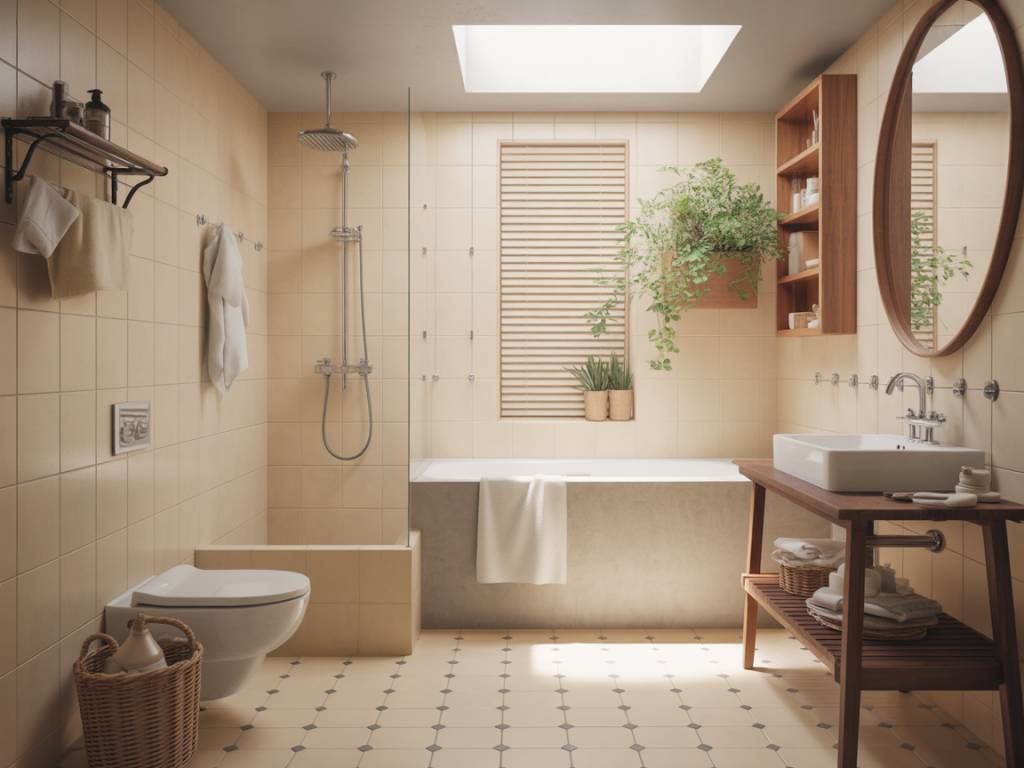
The surfaces you touch in a bathroom are surprisingly intimate: the curve of the basin under your hands, the grain of the wooden stool, the coolness of the tiles beneath bare feet. Choosing wisely can reduce environmental impact while enhancing that daily sensory experience.
Tiles, walls and floors
- Recycled content tiles: Many manufacturers now offer tiles containing high percentages of recycled glass or ceramic, with robust finishes and understated beauty.
- Natural stone – used sparingly: Locally sourced stone or slate can be durable and timeless, but it is energy‑intensive to extract and transport; reserve it for accent areas rather than cladding everything.
- Linoleum or cork (for non‑wet areas): Both are made from renewable resources and feel pleasantly warm underfoot when used outside the direct shower zone.
Under any floor choice, prioritise insulation. A well‑insulated bathroom retains heat and protects against condensation, making every shower feel more cocooned with less energy.
Furniture and fittings
- Certified wood (FSC/PEFC): For vanity units, shelving and stools, opt for sustainably sourced wood with low‑VOC finishes.
- Reclaimed pieces: An old chest converted into a vanity or a salvaged wooden ladder as a towel rail adds character while avoiding the footprint of new production.
- Durable over disposable: Choose solid metal taps with replaceable cartridges, ceramic or stone basins that will age gracefully, and hardware where spare parts are available.
The beauty of these choices is often quiet rather than ostentatious – but over time, that quietness is precisely what feels luxurious.
Lighting: soft on the eyes and the grid
Bathrooms are typically small, window‑poor spaces. Lighting, therefore, becomes crucial for both practicality and atmosphere.
- LED everywhere: Replace halogens and incandescents with warm‑white (2700–3000K) LEDs. They use up to 80% less energy and last far longer.
- Layered light: Combine a soft ceiling light with focused, low‑glare lighting around the mirror. This reduces the urge to over‑illuminate the whole room.
- Motion or occupancy sensors: Particularly useful in guest bathrooms or homes with children who rarely remember to switch lights off.
Whenever possible, tease in natural light: a frosted window, a small rooflight, or even a borrowed light glass panel from an adjacent room. Natural light makes small bathrooms feel generous and reduces daytime electricity use.
Greywater and off‑grid considerations
For those ready to go a step further, the bathroom offers intriguing possibilities to close loops and reduce dependency on mains supplies.
- Greywater systems: Water from showers and basins can be filtered and reused for toilet flushing or garden irrigation. It requires planning, but in water‑stressed areas, the benefits are significant.
- Heat recovery from shower water: A drain‑water heat recovery unit pre‑warms incoming cold water with the heat of the outgoing shower water, cutting energy use without changing your routine.
- Rainwater harvesting for toilets: A storage tank fed from roof runoff, with basic filtration, can supply cisterns – a particularly poetic use of a passing storm.
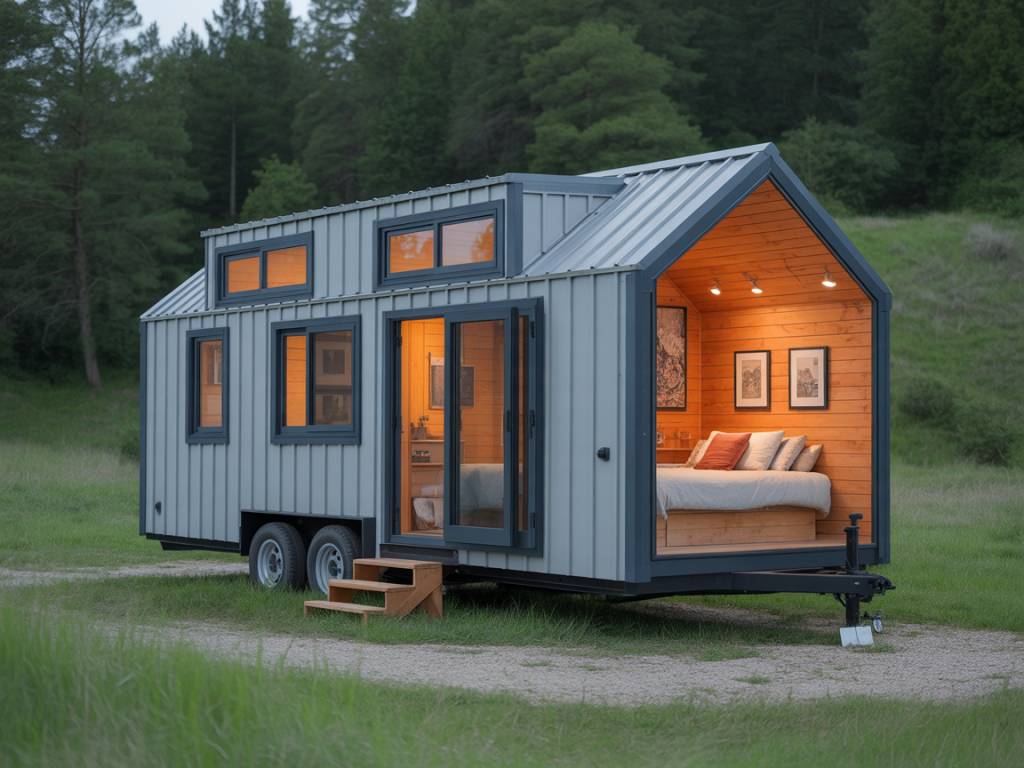
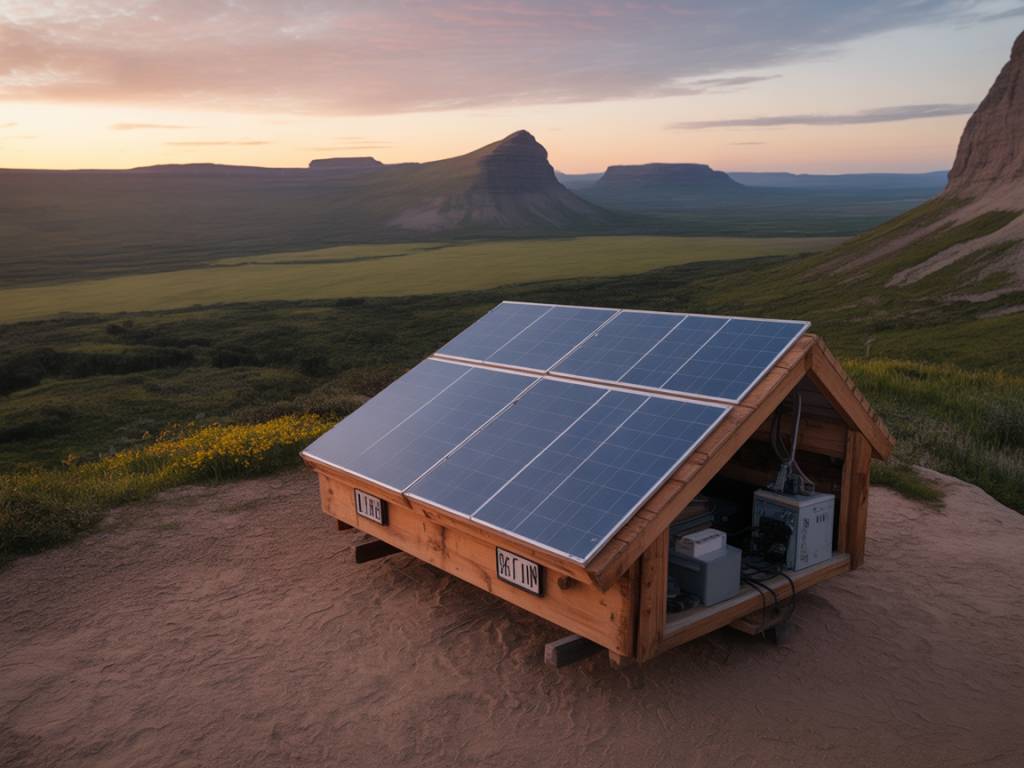
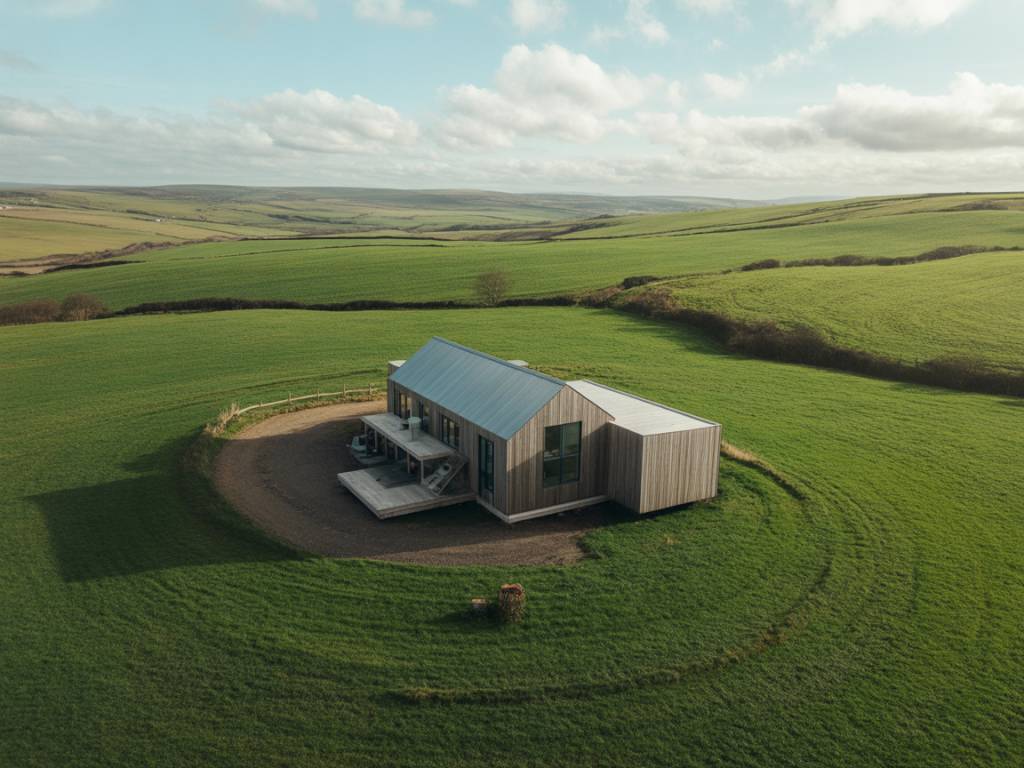
In some off‑grid cabins I’ve visited, a short shower becomes a conscious, almost ceremonial act: you feel the finite nature of the water in the tank and the energy in the batteries. While not everyone will live like this, bringing a touch of that awareness into urban bathrooms can be quietly transformative.
Creating a spa-like feeling with less
Sustainability sometimes gets mistaken for denial – cold showers, bare bulbs, and joyless tiles. Yet the most serene bathrooms I’ve encountered share different traits: simplicity, calm, and an almost monastic attention to small details.
A few gentle upgrades can make an efficient bathroom feel genuinely indulgent:
- Textiles: Organic cotton or linen towels, a bath mat that feels substantial underfoot, and perhaps a simple cotton robe – all line-dried when weather allows.
- Scents and sound: A bar of natural soap with an essential oil you love, or a small diffuser; perhaps a discreet waterproof speaker if music relaxes you.
- Decluttered surfaces: A small number of well‑chosen, refillable bottles rather than an army of plastic containers.
- Greenery: A fern or pothos thriving in the humidity adds life and a touch of forest to your daily routine.
Comfort, here, emerges not from excess, but from an almost Japanese sense of considered simplicity.
A step-by-step path to a more sustainable bathroom
You don’t need to remodel everything at once. In fact, the most sustainable renovation is often the one done slowly and thoughtfully, replacing only what truly needs to be changed.
If you’re wondering where to start, consider this gentle sequence:
- Step 1: Quick wins – Install shower and tap aerators, switch to LED bulbs, fix leaks, and adjust your water heater to a sensible temperature.
- Step 2: Daily rituals – Shorten showers slightly, turn off the tap while brushing teeth, and air the bathroom efficiently with a good fan rather than wide‑open winter windows.
- Step 3: Fabric and finishes – Upgrade towels and bath mats to natural fibres, introduce plants, and declutter plastic packaging in favour of solid soaps and refills.
- Step 4: Hardware upgrades – When the time comes, select dual‑flush toilets, efficient mixers, and a high‑quality low‑flow shower head.
- Step 5: Structural choices – In a deeper renovation, invest in insulation, well‑designed ventilation, and if possible, underfloor heating or a more efficient hot water system.
- Step 6: Advanced systems – Explore greywater reuse, rainwater for toilets, or heat recovery where regulations and budgets allow.
Some changes are almost invisible; others will subtly alter the way you experience your mornings and evenings. Over time, the bathroom becomes more than a functional stop in your day. It becomes a quiet manifesto: that comfort and care for the earth can share the same small, tiled space.
The next time you step into the shower and feel the warm water on your skin, perhaps you’ll also feel, somewhere just beneath the surface, the satisfaction of knowing that behind the ritual, there is intention – and that your sanctuary is not built at the planet’s expense, but in conversation with it.