
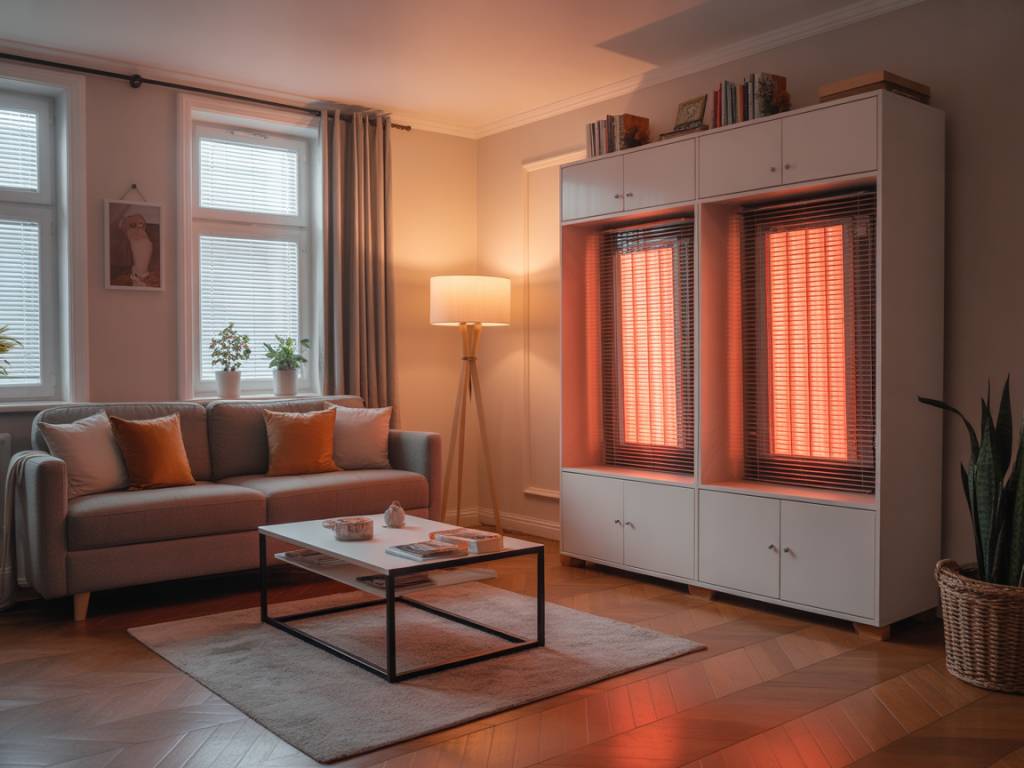
Your thermostat reads 21°C, the radiators are ticking away, and yet your feet are still cold. If that sounds familiar, you’re not alone — and you’re not imagining it. Conventional central heating warms the air, not you. Infrared heater systems take an entirely different approach, and for anyone serious about comfort, lower energy bills, or sustainable living, that difference is worth understanding in full.
Understanding the benefits of infrared heater systems for targeted low-energy warmth
Infrared heating is not new technology — it’s the same physics that makes a sunbeam feel warm on your face or a campfire comfortable even on a cold night. What makes modern infrared heater systems remarkable is how efficiently they translate that natural principle into practical home heating.
Rather than filling a room with hot air that drifts upward and escapes through gaps and walls, infrared panels emit electromagnetic waves in the infrared spectrum. Those waves travel through the air without heating it significantly, and only convert to heat when they strike a solid surface — your skin, the sofa, the timber floor. The result is warmth that feels immediate, even, and deeply natural.
- You feel warm within seconds of switching the heater on, before the room temperature has shifted at all.
- Heat goes where you are, not to empty ceiling space or unoccupied rooms.
- Surfaces absorb and gently re-radiate warmth, creating a more sustained, even comfort.
- Less air movement means fewer draughts, less dust circulation, and quieter operation.
How infrared heating differs from conventional systems
To appreciate what infrared does well, it helps to understand what convection heating does less well. A standard boiler-fed radiator heats the air immediately around it. That warm air rises, cools at the ceiling, falls, and cycles endlessly. In rooms with high ceilings, poor insulation, or frequent door openings, a huge proportion of that heat is simply lost before it ever reaches a person sitting in a chair.
Infrared bypasses that cycle entirely. Because it heats objects and surfaces directly, energy is not squandered on air that will escape through the next crack it finds. In practical terms:
- A far-infrared panel rated at 400W can make a small home office feel genuinely cosy, where a convection heater of similar wattage might barely take the edge off.
- The perceived comfort temperature with radiant heat is typically 2–3°C lower than with convection heating — meaning you may be perfectly comfortable at 18°C air temperature, rather than needing to push to 21°C.
- Every degree you shave from your thermostat setting can reduce heating energy use by around 6–8%, according to energy efficiency estimates widely cited across the UK building sector.
The main types of infrared heater systems for homes
Not every infrared heater suits every situation. Choosing the right type is key to getting genuine energy savings rather than just novelty warmth.
Far-infrared panels
These are the workhorses of domestic infrared heating. Slim, silent, and often only a few centimetres deep, far-infrared panels can be wall- or ceiling-mounted and are well suited to living rooms, bedrooms, and home offices. Many are designed to double as decorative elements — finished in white, black, or even printed as artwork or mirrors.
- Wattage range: typically 250W to 1,000W for domestic panels.
- Best for: Regularly occupied rooms, low to medium ceiling heights.
- Key advantage: Gentle, even warmth; no fan noise; no glow at night.
Medium and short-wave infrared heaters
These emit a more intense heat and usually produce a visible orange glow. They excel outdoors and in draughty or poorly insulated spaces where you need fast, powerful warmth without trying to heat the surrounding air at all.
- Best for: Patios, garages, workshops, glazed extensions.
- Key advantage: Extremely fast response; effective even in a breeze.
- Worth noting: Can feel uncomfortably intense in a small, enclosed room.
Infrared underfloor heating
Certain electric underfloor systems function primarily through radiant heat, turning the entire floor surface into a low-temperature radiator. This is one of the most comfortable heating configurations possible — warmth rising from below, exactly where the body needs it most.
- Best for: Bathrooms, kitchens, stone or tile-floored rooms, new builds and renovations.
- Key advantage: Completely invisible, uniform warmth, no hardware to accommodate in room design.
- Worth noting: Best planned at design or renovation stage; retrofitting under existing floors is more complex.
Targeted heating zones: the real energy advantage
One of the most overlooked benefits of infrared heater systems is the ability to create precise heating zones, heating only the spaces you actually use, when you actually use them.
Think about the typical energy waste in a conventionally heated home on a weekday:
- The spare bedroom is warmed whether or not anyone is staying.
- The hallway reaches a comfortable temperature that serves no one lingering there.
- The entire ground floor is brought to temperature for a single person working at a desk in one corner.
With infrared panels, you can place a 400–500W unit directly above the desk, a panel in the living room zone used most evenings, and leave the rest of the house at a low background temperature — or unheated entirely. Combined with smart thermostatic controls and timers, this zoned approach can deliver meaningful reductions in energy consumption without any sacrifice in personal comfort.
For homes with solar panels, the pairing is particularly effective: infrared panels run on electricity, can be set to operate during daylight generation hours, and add no moving parts or maintenance burden.
Infrared heating, air quality, and health
Beyond energy, there are comfort and health dimensions to infrared that are worth considering seriously, especially in older or damper properties.
- Dust and allergens: Infrared systems create minimal air movement, so dust, pet dander, and pollen are not constantly stirred up and recirculated. This is a genuine quality-of-life improvement for allergy and asthma sufferers.
- Damp and condensation: Warming wall and floor surfaces directly raises their temperature, which reduces the likelihood of moisture condensing on them. In older stone or brick homes — the kind common across the UK — this can meaningfully reduce persistent damp problems.
- Air humidity: Unlike some forced-air systems, infrared does not dry out the air, making the indoor environment feel less harsh on the nose and throat during winter.
It’s also worth noting that infrared warmth is the kind our bodies have adapted to over millennia — from sunlight to open fires. Many people report that radiant warmth simply feels more comfortable and natural at equivalent temperatures, reducing the urge to constantly adjust the thermostat.
Making infrared heating genuinely low-carbon
Infrared panels run on electricity, which means their carbon footprint depends entirely on the source of that electricity. An electric heater drawing from a coal-heavy grid is not inherently green, whatever its efficiency at point of use.
The good news is that the UK electricity grid continues to decarbonise rapidly, and there are practical steps you can take right now to make your infrared system as clean as possible:
- Pair with rooftop solar: Running panels during the day on self-generated solar electricity brings the carbon cost close to zero.
- Choose a green energy tariff: Several UK suppliers now offer 100% renewable electricity backed by genuine certificates.
- Use smart controls: Thermostats, timers, and occupancy sensors ensure the system only runs when genuinely needed, minimising both consumption and cost.
- Improve insulation first: Infrared works best in a well-insulated space. Loft insulation, draught-proofing, and good glazing amplify every efficiency gain the heater offers.
Infrared heater systems are not a silver bullet, but for households already thinking carefully about how they use energy, they represent one of the most practical and elegant heating tools available. Targeted, quiet, low-maintenance, and compatible with renewable electricity, they suit the direction modern homes are heading — smaller carbon footprints, smarter energy use, and spaces designed around the people who actually live in them.