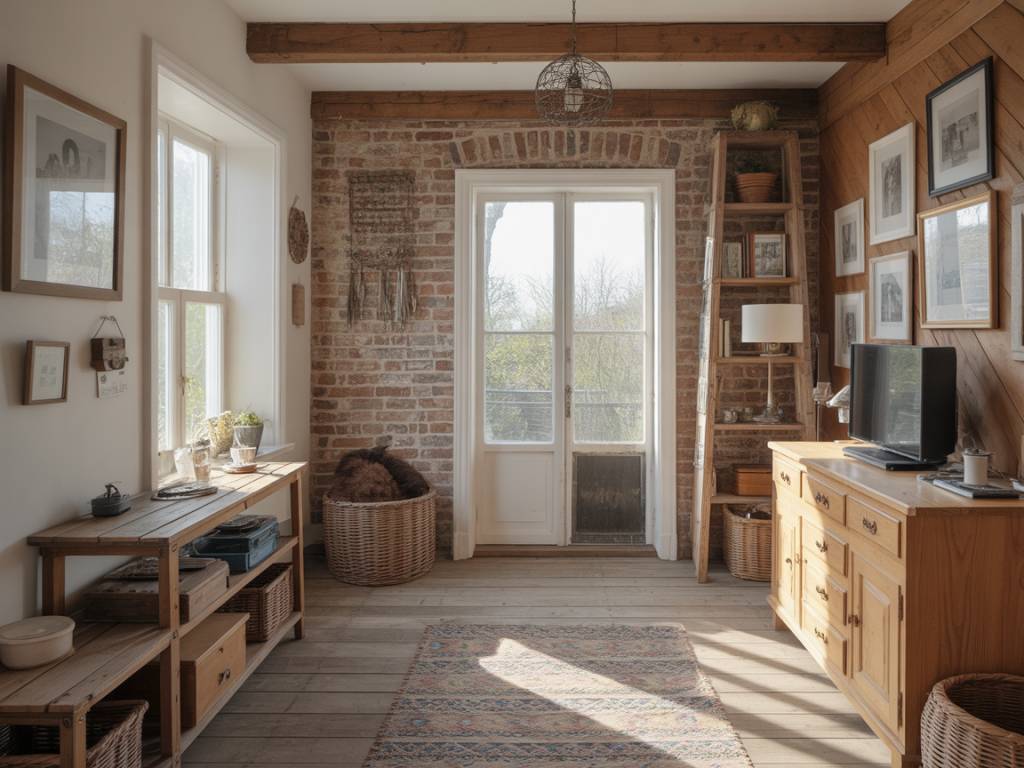
Some homes feel finished; others feel lived in. The difference often lies in the stories stitched into the walls, the tables, the fabric of everyday objects. Upcycling and reclaimed materials don’t just reduce waste — they invite history into your home, and let you add the next chapter.
In a world of flat-packed sameness, there’s a quiet joy in running your hand along a scarred piece of timber and knowing it once formed part of a fishing boat, or a theatre stage, or the doors to an old bakery. These are the details that make an eco-home feel not only sustainable, but soulful.
Why reclaimed materials feel different
Walk into a room furnished with entirely new items and it can feel a little like a hotel: comfortable, polished, but curiously anonymous. Bring in one reclaimed piece — a battered French factory stool, a door with its original hand-forged latch — and suddenly there’s a centre of gravity.
Reclaimed and upcycled materials bring three things that new products rarely offer together:
- Embedded character: Patina, wear, tiny imperfections — these are traces of previous lives, impossible to fake convincingly.
- Lower environmental impact: No new raw materials extracted, less energy used, and one less object heading for landfill.
- Emotional connection: When you know where something came from, you instinctively treat it with more care. It becomes part of your story.
Think of it as interior archaeology: you’re not just decorating; you’re curating fragments of time.
Starting with the bones: reclaimed materials in the structure of the home
If you’re renovating or building, the most impactful place to use reclaimed materials is in the very bones of your home. This is where you can reduce the largest amount of embodied carbon while setting a strong visual and tactile foundation.
Some particularly powerful ways to integrate them:
- Reclaimed timber beams and joists: Old structural timbers, especially oak, are often straighter, denser and more stable than new wood. They carry tool marks, nail holes and sun-faded areas that tell their own quiet stories. Used as visible beams, stair stringers, or mantelpieces, they anchor a space instantly.
- Reclaimed flooring: Salvaged floorboards from schools, mills or barns can be relaid, sanded lightly, and oiled to reveal decades of wear. Each knot and dent becomes a reminder that perfection is overrated.
- Architectural salvage: Old doors, windows, fireplaces, radiators, even cast-iron columns from warehouses can be integrated into modern, energy-efficient designs with some thoughtful planning and insulation upgrades.
Picture a sleek, well-insulated eco-home where the living room ceiling is crossed by age-darkened beams rescued from a demolished farmhouse. The heating is powered by a heat pump, the walls are wrapped in natural insulation, but your eye is drawn up to that timber — a reminder that sustainability often looks backwards as much as forwards.
Furniture with a past: upcycling as storytelling
Not every transformation needs a construction crew. Upcycling furniture is where most of us can start, right now, with a limited budget and a free Saturday afternoon.
The key question to ask yourself is not “How do I make this look new?” but “How do I bring out the best of what’s already here?”
Some ideas that blend practicality and poetry:
- The table that once was a door: An old solid-wood door, stripped of its varnish and lightly oiled, can become a dining table. Leave the keyhole visible and you’ve suddenly got a built-in conversation starter. Who once locked that door? To keep whom in, or out?
- Suitcases as storage and side tables: Stack two or three vintage suitcases, secure them discreetly, and top with a piece of reclaimed glass or timber. You’ve got hidden storage and a subtle nod to all the voyages those cases once made.
- Industrial relics, gentled for home use: Old factory trolleys, wire baskets, machinist stools — sanded, cleaned and sealed — bring a tactile honesty to minimalist interiors. They whisper of work done and lives lived.
Each upcycled piece becomes a small act of resistance against the culture of the disposable. Instead of obscuring scratches and repairs, you might choose to highlight them — a visible brass patch on a tabletop, a contrasting timber in a mended chair leg — as if saying, “Yes, I’ve been through things, and I’m still here.”
Textiles that remember: from discarded fabric to comforting layers
Textiles are often overlooked in sustainable design, yet they frame our daily lives: the curtain that filters the morning light, the throw you pull over your shoulders on a grey afternoon. Upcycled fabrics carry their own, softer sort of memory.
Consider these approaches:
- Vintage linens as bedding or tablecloths: Old sheets and tablecloths, especially those in natural fibres like linen or cotton, can be dyed with plant-based dyes, repaired where needed, and reimagined as duvet covers, napkins, or cushion covers.
- Patchwork from clothing with history: Worn-out shirts, dresses, or children’s clothes can be cut into squares for quilts or throws. It’s a way of keeping memories in use rather than in boxes in the attic.
- Rugs from salvaged fibres: Braided or woven rugs made from old jeans, wool jumpers or leftover upholstery offcuts add texture and warmth while extending the life of materials that would otherwise be discarded.
There’s something unexpectedly moving about curling up under a blanket stitched from fabric that has already lived many lives — a sleeve that once brushed a desk in a quiet office, a dress that danced at a wedding. Your eco-home becomes a gentle archive of personal history.
Walls that whisper: cladding, art and found objects
Walls are often treated as blank backdrops. With reclaimed and upcycled materials, they can become storytellers themselves.
Some ways to use them thoughtfully:
- Reclaimed wood cladding: Offcuts from old floorboards, pallets or barn siding can be cleaned, de-nailed and installed as feature wall cladding. Varying tones and textures avoid the “faux rustic” trap and instead create a genuinely layered, lived-in surface.
- Salvaged tiles and fragments: Mix odd tiles from salvage yards into a backsplash, or frame particularly beautiful single tiles as wall art. A tile that once sat quietly in an Edwardian fireplace can find new purpose above your kitchen sink.
- Found-object galleries: Old keys, tools, handwritten letters, maps — mounted simply in reclaimed frames or shadow boxes — can form a quiet, curated corner that invites closer inspection.
The aim is not to create a museum of clutter, but to edit thoughtfully. Give each piece space to breathe, and your walls begin to speak in a low, nuanced voice rather than shouting.
Balancing story with serenity: avoiding the “junk shop” effect
With upcycling, enthusiasm can be both a blessing and a hazard. It’s easy to fall into the trap where every rescued item must be displayed, until the home feels more like a curiosity shop than a place of rest.
A few guiding principles help keep your interiors calm, even when they’re rich in backstory:
- Choose a restrained palette: Let textures and patina provide interest while colours stay relatively calm. Whites, soft greys, earthy tones and a few deep accent colours allow reclaimed materials to shine without visual chaos.
- Edit continuously: Just because something is saved from landfill doesn’t mean it has to live forever in your living room. Rotate pieces seasonally, donate or resell items that no longer resonate.
- Pair old with clean-lined new: A reclaimed workbench as a kitchen island looks more powerful next to simple, modern cabinets than surrounded by other equally rough pieces. Contrast keeps things intentional.
The most compelling eco-homes tend to feel peaceful, not busy. The upcycled elements are carefully chosen punctuation marks, not exclamation points on every surface.
Sourcing with intention: where to find materials with soul
The romance of upcycling is only as strong as the reality of your sources. A few dependable places to begin the hunt:
- Architectural salvage yards: Ideal for doors, windows, fittings, radiators, timber and tiles. Visit with measurements, photographs of your space, and an open mind — you rarely find exactly what you imagined, but you often find something better.
- Demolition and renovation sites: Local builders may be happy for you to take old floorboards, bricks, or fixtures that would otherwise cost them to dispose of. Safety and permission are non-negotiable, of course.
- Charity shops and reuse centres: Furniture, textiles, lighting and crockery can often be found cheaply. Look at the bones — structure and material — rather than the surface finish, which you can change.
- Online marketplaces and community groups: Freecycle, Facebook Marketplace, local “buy nothing” groups and neighbourhood apps are treasure maps for those willing to check regularly.
As you source, it’s worth keeping a small notebook (or notes app) where you record where each piece came from, when you found it, and any story attached. Years later, when someone asks, “Where did you find this?”, you’ll have more than a vague shrug to offer.
Working with reclaimed materials: practical tips and safety
Beneath the romance lies a practical layer: old materials require a bit of respect and preparation. A few essential guidelines:
- Check for structural integrity: Old timber can be worm-eaten or split; metal can be weakened by rust. Don’t use compromised materials for load-bearing elements without professional advice.
- Test for hazardous finishes: Older paints and varnishes may contain lead or other toxins. If sanding or removing them, follow safety guidelines, wear a mask, and consider professional stripping for large items.
- Clean gently but thoroughly: Start with mild soap and water, soft brushes, and patience. Avoid harsh chemicals where possible. Sometimes a good clean and a light oil or wax is all that’s required.
- Respect old joinery and craftsmanship: Before you take something apart, study how it was built. You may learn a technique worth preserving rather than replacing with screws and modern brackets.
This care is part of the story too. When you invest time and attention in a piece, you deepen your connection to it — and are more likely to maintain it carefully in the years ahead.
Layering in light: how to let stories shine
Upcycled and reclaimed materials have a quiet beauty that reveals itself under the right light. A thoughtfully lit eco-home doesn’t just save energy; it highlights the textures and histories you’ve curated.
Consider:
- Warm, low-energy bulbs: LED bulbs in warm tones (2700–3000K) bring out the richness of aged wood and metal without the harshness of cool white light.
- Upcycled lighting fixtures: Old glass shades, enamel factory lights, even re-wired vintage lamps can be combined with modern, efficient bulbs and wiring for safe, characterful illumination.
- Soft, layered lighting: Mix overhead lights with wall sconces and table lamps so that surfaces can glow rather than glare. A reclaimed timber beam looks entirely different under a single bright ceiling light than under a series of subtle, angled spots.
Light becomes another material, helping the stories in your interiors to unfold slowly, at different times of day.
From “stuff” to heirlooms: designing with legacy in mind
Sustainability is not only about sourcing; it’s also about longevity. The most ecological objects are those that are cherished for decades, maybe generations. Upcycled and reclaimed pieces are already halfway there — they’ve survived this long; your task is to ensure they survive a little longer.
Ask yourself, as you choose and transform each piece:
- Will someone, one day, be glad to inherit this?
- Does it have enough integrity — aesthetically and structurally — to age gracefully?
- Is it easy to repair, refinish, or adapt for new uses?
When the answer is yes, your home slowly fills with future heirlooms rather than future waste. A child growing up in such a place may remember not just the objects themselves, but the stories attached to them: the day you carried the old door up three flights of stairs; the morning sunlight on the uneven glass of a salvaged window; the family evenings spent mending, sanding, painting together.
In the end, an eco-home grounded in upcycling and reclaimed materials is more than an exercise in aesthetics or ethics. It is a quiet manifesto: that what already exists is worthy of our attention; that beauty can emerge from rescue and repair; and that the spaces we inhabit can hold not only our lives, but echoes of lives that came before.
Every scratch, knot, patch and faded edge becomes a line in a shared, unfolding story. And as you move through your rooms — hand brushing the curve of a reclaimed banister, bare feet on old floorboards — you are both reader and author, living gently among the traces of time.