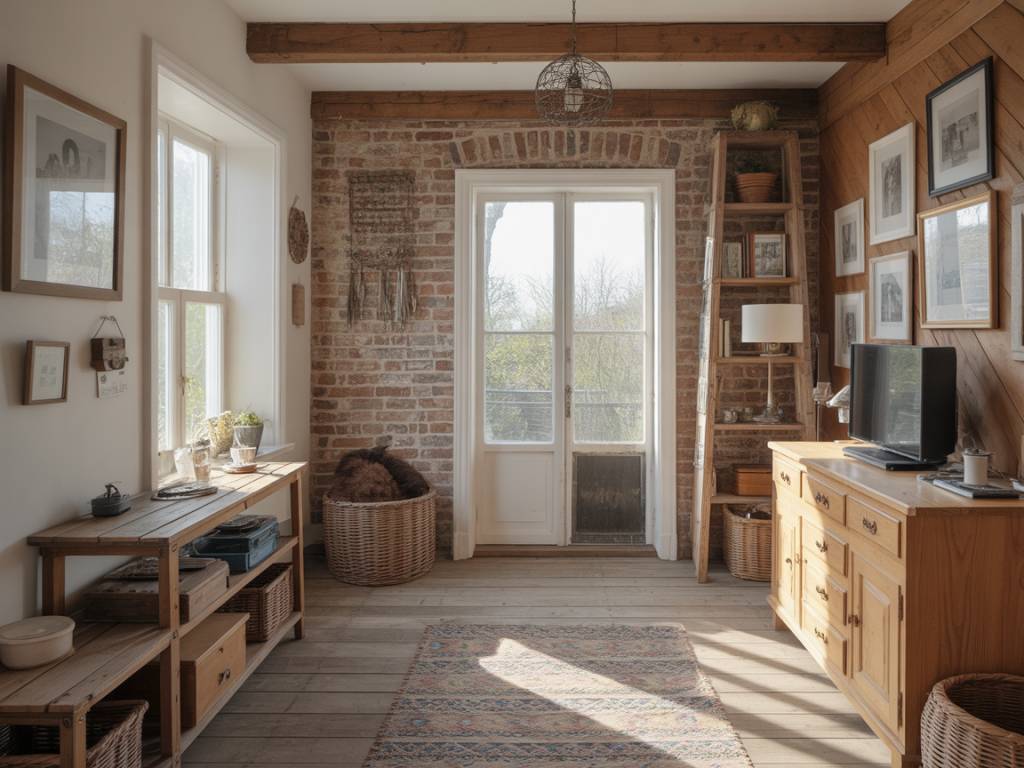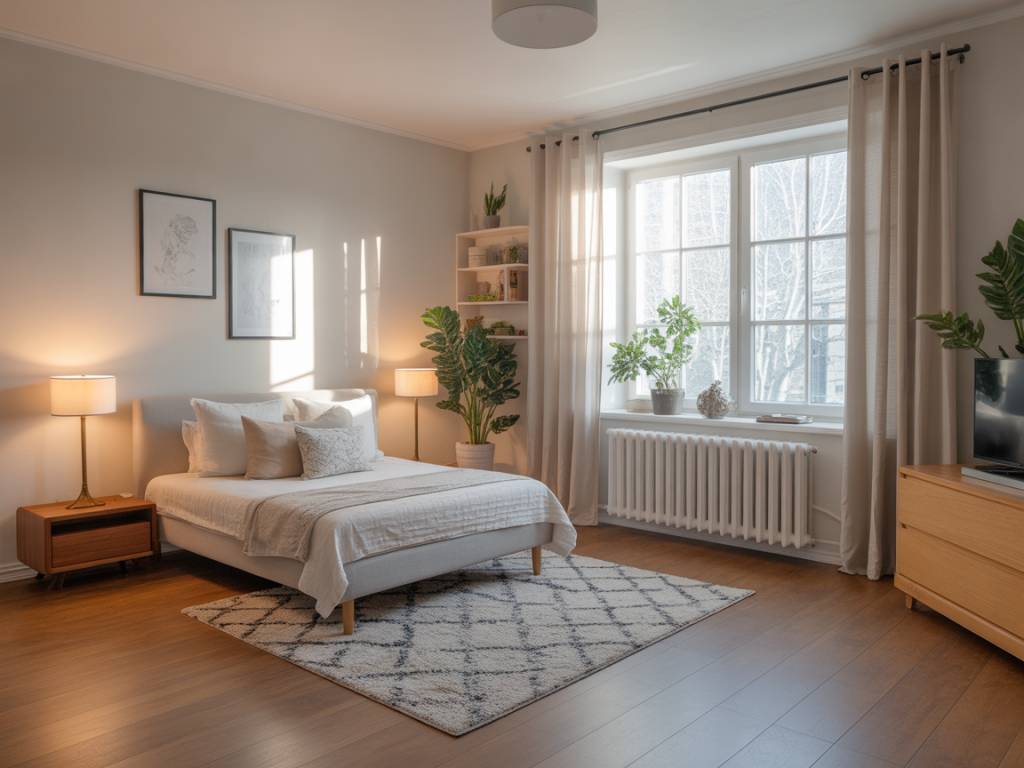
On a still summer night in an old stone cottage in Cornwall, I remember lying awake, listening to the house breathe. The faint whisper of air slipping under the door, the soft draught along the floorboards, the coolness spreading without a single fan or humming machine. The windows were barely open, yet the air felt fresh, light, almost new. That was my first real encounter with passive ventilation – long before I knew the term.
Today, in better sealed, better insulated homes, we don’t always feel our houses breathing quite so easily. We trap smells, moisture, pollutants and, with them, a certain heaviness. And that’s precisely where a passive ventilation system quietly earns its place.
What is a passive ventilation system?
A passive ventilation system is a way of renewing indoor air using natural forces – mainly wind and temperature differences – instead of mechanical fans or energy-hungry machines. In simple terms, it’s a clever arrangement of openings, ducts and materials that lets fresh air in and stale air out, without you pressing a single button.
Rather than relying on motors, passive systems use two principles that have guided builders for centuries:
- Wind-driven ventilation – air pressure differences on different sides of the building push and pull air through openings.
- Stack effect – warm air rises, creating natural upward movement that draws cooler air in from below.
Think of a traditional Mediterranean house with high ceilings, narrow streets channelling a breeze, and small shaded courtyards. Or a Welsh farmhouse with chimney stacks that used to draw smoke up and, in the process, pull fresh air in. These are earlier cousins of what we now call passive ventilation.
How passive ventilation actually works in a modern home
In contemporary buildings, passive ventilation is more precise and far more controllable than simply “cracking a window”. A well-designed system usually combines several elements:
- Air inlets – trickle vents in windows, wall vents, or discreet openings behind radiators that let in controlled amounts of outdoor air.
- Exhaust points – high-level openings, roof vents or shafts that allow warm, stale air to escape.
- Internal pathways – gaps under doors, transom windows above doors, or internal grilles to let air move from room to room.
- Architectural features – atriums, stairwells, lightwells and double-height spaces that act as “lungs” of the building.
When the sun warms the air inside, that air becomes lighter and rises, escaping through higher vents or roof outlets. As it leaves, it creates a slight negative pressure that gently pulls fresh air in through the lower inlets. On breezy days, the wind amplifies this effect, pushing air in on the windward side and drawing it out on the leeward side.
The result, when everything is designed thoughtfully, is a quiet, continuous exchange of air: no buzzing fans, no rattling vents, just a subtle, almost invisible movement.
Why indoor air quality matters more than we think
We tend to associate pollution with traffic-filled streets, factory chimneys, or smoky city skylines. Yet, according to multiple studies, the air inside our homes can be two to five times more polluted than the air outside – even in urban environments.
What builds up indoors?
- Moisture from cooking, showers, drying clothes inside and even breathing.
- Volatile organic compounds (VOCs) from paints, glues, new furniture, cleaning products and air fresheners.
- Fine particles from candles, wood burners, cooking oils and dust.
- Carbon dioxide (CO₂) building up in tightly sealed, well-insulated rooms.
- Allergens such as dust mites, pet dander and pollen that enter but don’t easily leave.
We notice it as a dull headache by mid-afternoon at the desk, a restless night in a stuffy bedroom, condensation beading along the window in winter, or a lingering smell of last night’s dinner at lunchtime the next day. Invisible, but palpable.
Good ventilation is, in essence, the antidote. And passive systems offer a particularly gentle, energy-lean way to achieve it.
How passive ventilation improves indoor air quality
So how does this quiet, low-tech approach translate into cleaner, healthier air? In several interlocking ways.
Reducing humidity and mould
If you’ve ever woken to find your bedroom window crying with condensation, you’ve seen an imbalance between humidity and ventilation. Excess moisture doesn’t just fog up glass; it seeps into walls, saturates fabrics and creates an ideal playground for mould.
A well-designed passive system continuously carries moisture-laden air away from the sources – kitchens, bathrooms, laundry spaces – and replaces it with drier air from outside. Over time, this:
- Reduces condensation on windows and cold surfaces.
- Limits mould growth on walls, ceilings and behind furniture.
- Helps protect timber, plaster and insulation from long-term damage.
In an old terraced house in Bristol I once stayed in, the difference was almost visible. The upstairs bathroom had been renovated with a passive vertical shaft: a tall, insulated duct rising to the roof with a simple cowl on top. No fan, just a cleverly sized opening and the height of the shaft doing the work. Even with hot showers on cold mornings, the mirror cleared quickly and the ceiling stayed defiantly free of black spots.
Diluting indoor pollutants and odours
Many of the substances we worry about indoors don’t need to be “filtered out” by some futuristic gadget; they simply need a steady flow of fresh air to keep their concentration low.
Passive ventilation:
- Removes cooking fumes, especially in homes that rely heavily on frying or gas hobs.
- Helps clear VOCs from new furniture, fresh paint or recently installed flooring.
- Prevents the build-up of cleaning product fumes and synthetic fragrances.
- Reduces persistent odours from pets, damp corners or tightly closed rooms.
Imagine your home as a gentle river instead of a still pond. In a pond, everything lingers: leaves, silt, the faint residue of whatever falls in. In a river, there’s movement; what enters eventually drifts away. Passive ventilation turns stagnant indoor air into that river – slow, perhaps, but always moving, always renewing.
Lowering CO₂ and improving comfort
We sometimes underestimate how much our own breathing shapes the air quality around us. In small, well-sealed bedrooms, CO₂ levels can climb significantly overnight, leading to drowsiness, reduced concentration and a sense of heaviness on waking.
By constantly feeding in fresh, oxygen-rich air and whisking away exhaled air, passive systems:
- Help keep CO₂ levels lower during the night in bedrooms.
- Reduce that mid-day “stuffy office” feeling in home workspaces.
- Create a more stable, comfortable environment for both body and mind.
In an off-grid cabin in the Highlands, where electricity came sparingly from a modest solar array, I experienced this first-hand. The sleeping loft had a small, high-level roof vent and low inlet near the floor. No fan, no hum. Yet I woke each morning without that thick-headed grogginess that so often follows a night in an over-insulated modern room. The house, even in its simplicity, was quietly tending to our breath.
Energy efficiency: fresh air without the penalty
Traditional mechanical ventilation uses fans that run on electricity, and poorly designed systems can also pull out too much warm air in winter or cool air in summer, forcing your heating or cooling to work harder.
Passive systems, by contrast:
- Rely primarily on natural forces, so their energy use is minimal or zero.
- Can be designed with controllable vents that you adjust seasonally or according to weather.
- Work beautifully alongside other sustainable strategies like thick insulation, thermal mass and shading.
This makes them particularly appealing if you’re exploring off-grid living, aiming to reduce your energy bills, or simply trying to lower the carbon footprint of your home without sacrificing comfort.
Key types of passive ventilation you might encounter
Not all passive systems look alike. Depending on your home’s age, layout and climate, you’ll likely find one of these approaches more suitable:
- Cross-ventilation – placing openable windows or vents on opposite sides of a room or building so air can flow straight through.
- Stack ventilation – using vertical shafts, stairwells or high-level openings to draw air upward and out.
- Night purging – in hot climates, using high-level openings to flush out warm air at night, cooling down the structure for the next day.
- Trickle ventilation – small, continuous openings in window frames or walls providing a constant low level of fresh air.
Many well-designed sustainable homes combine several of these strategies, weaving them together into a system that responds to seasons, sun, shade and prevailing winds.
Simple ways to add passive ventilation to an existing home
You don’t need to start from scratch with a new build to enjoy the benefits. There are modest, practical steps you can take in most homes:
- Add trickle vents to replacement windows so small amounts of fresh air can enter even when windows are closed.
- Include high-level vents in kitchens and bathrooms – ideally roof-level – to encourage warm, moist air to escape naturally.
- Keep internal pathways open with undercut doors or discreet transfer grilles, especially between living areas and hallways or stairwells.
- Use existing vertical spaces – a stairwell or landing window can act as a powerful exhaust point if you regularly open it.
- Design shading thoughtfully so you can keep windows open without overheating or excessive glare in summer.
None of these measures has the drama of a gleaming new appliance. But quietly, day after day, they change the way your home breathes.
Balancing airtightness and breathability
Modern sustainable building often celebrates airtightness – and with reason. A well-sealed envelope keeps precious heat inside during winter and the summer heat outside. It’s good for energy bills and for the planet.
But a perfectly sealed jar is no place for a living thing. The art lies in keeping the building fabric airtight while still allowing the indoor air to be changed regularly and gently.
Passive ventilation does exactly that when it’s:
- Planned early in a renovation or build, not added as an afterthought.
- Carefully sized for the volume of the home and the local climate.
- Adjustable so you can respond to weather, seasons and your own comfort.
The walls don’t “breathe” in the poetic sense we often imagine; it’s the spaces within the walls, the openings and channels, that allow the home to exhale and inhale. Airtight where it needs to be, permeable where it matters.
When passive ventilation might not be enough
There are moments – and locations – where relying solely on passive ventilation can be challenging:
- Very dense urban areas with high outdoor pollution levels.
- Regions with long, windless, humid seasons.
- Homes with very complex layouts or internal rooms with no external walls.
In these cases, a hybrid approach can be wise: combining passive strategies with low-energy mechanical assistance (for example, a small, demand-controlled extractor in a bathroom that usually relies on stack effect but can switch on in stubbornly still weather).
The aim is not ideological purity – “passive or nothing” – but a calm, practical balance: enough fresh air, the lowest reasonable energy use, and a home that feels quietly alive rather than hermetically sealed.
Listening to your home’s breath
Perhaps the most powerful shift that comes with thinking about passive ventilation is not technical at all: it’s attentional. You start to notice how air moves through your spaces. The way a door softly swings when a window on the other side of the house opens. The cool air that slips down a stairwell at night. The rapid clearing of steam in one bathroom, and the stubborn fogginess in another.
These sensations become clues. They tell you where your home’s lungs already are, and where they might be helped along – with a vent here, a gap there, a slightly different habit around when you open or close certain windows.
In the end, a passive ventilation system is not just a technical feature to tick off a sustainability checklist. It is an invitation to design a home that participates in the natural movements of air, that exchanges its breath with the landscape outside rather than locking it out.
A home like that rarely feels stuffy or oppressive. Instead, it feels quietly attentive to its inhabitants – a place where you wake up with clear lungs, dry windows and the faint, reassuring sense that the walls around you are not just standing, but gently, constantly, breathing.