There is something strangely comforting about an 1980s kitchen. Maybe it is the memory of laminate worktops catching the morning light, the soft hum of an old extractor fan, or the slightly heroic effort of making a family meal in a space that was never quite designed for calm. These kitchens were practical, often bold, and unapologetically of their time. They were also built in an era when sustainability was rarely part of the conversation.
Today, that same kitchen can become something far more thoughtful: a warm, efficient, low-impact space that keeps the spirit of the original while making peace with modern eco-friendly living. And that is the real opportunity. You do not need to erase the 1980s to improve it. You can work with the bones of the room, keep what still serves you, and update the rest with materials and choices that respect both your home and the planet.
What made 1980s kitchens so distinctive?
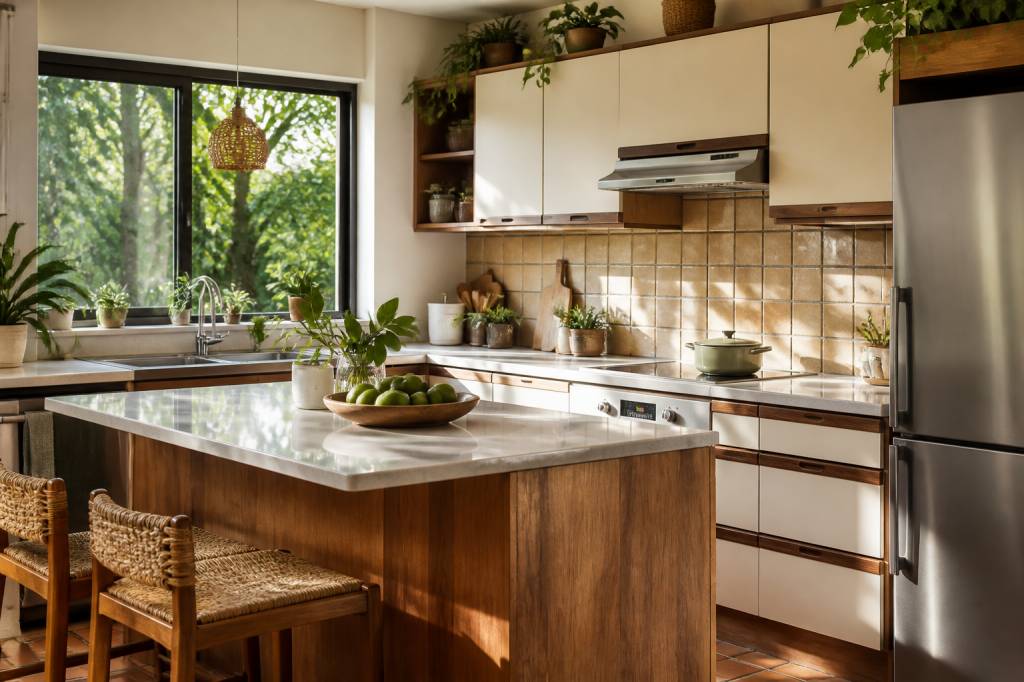
Before you start planning a sustainable makeover, it helps to understand what you are working with. Many 1980s kitchens were defined by fitted cabinetry, glossy finishes, practical layouts, and an enthusiasm for visible design statements. Think oak veneers, tiled splashbacks in earthy tones, patterned flooring, and an almost determined belief that every inch should be filled with cupboards.
That built-in efficiency is not a bad starting point. In fact, one of the most sustainable things you can do is preserve a layout that already works. If the sink, cooker, and fridge are positioned sensibly, you may only need to refine the space rather than gut it. Why throw out a decent structure when it can still earn its keep?
The challenge lies in the materials and systems. Many kitchens from this era used particleboard, plastic-heavy finishes, and appliances that consume far more energy than necessary. Some also have poor insulation, weak lighting, and storage solutions that encourage waste simply because they were designed before recycling and composting became everyday habits.
Start by keeping what is already useful
A sustainable kitchen design begins with restraint. Before ordering anything new, ask a simple question: what can stay?
Cabinet carcasses, if sound, are often worth retaining. Replacing doors, handles, and worktops is usually far less wasteful than ripping out the entire kitchen. A solid cabinet frame from the 1980s can continue serving for decades if it is structurally intact. It may not sound glamorous, but sustainability rarely is. It is usually a little quieter, a little more sensible, and much easier on the budget.
Here are some elements worth preserving where possible:
- Solid cabinet boxes in good condition
- Well-placed plumbing and electrical points
- Functional flooring that can be refinished
- Original features such as timber details or metal hardware
- Appliances that are still efficient and repairable
Refurbishing instead of replacing also keeps demolition waste out of landfill. In a room built for daily use, the smallest decision can have a surprisingly large impact.
Choose materials that feel good and do less harm
When introducing new elements, focus on materials with a lower environmental footprint and a longer lifespan. The best sustainable materials are not just “green” in theory; they also age well, can be repaired, and look better the longer they live in your home.
For cabinetry, consider FSC-certified timber, reclaimed wood, or high-quality recycled-content boards with low-VOC adhesives. If you love the clean lines of a modern kitchen but want to avoid the clinical feel, natural wood veneers or painted timber fronts can soften the room beautifully.
For worktops, there are many practical options:
- Reclaimed wood for warmth and character, especially on an island or breakfast bar
- Recycled glass composite for a durable, contemporary look
- Natural stone sourced responsibly, if longevity is your priority
- Stainless steel for a hardwearing, highly recyclable surface
- Paper composite or other low-impact alternatives for a lighter environmental footprint
For flooring, linoleum is often overlooked. Proper linoleum, made from natural materials like linseed oil, cork dust, and jute, is durable, biodegradable, and full of understated charm. Cork is another excellent choice: warm underfoot, renewable, and a natural insulator. If your 1980s kitchen already has timber flooring, refinishing it may be the most sustainable solution of all.
Walls and splashbacks offer another chance to improve indoor air quality. Low-VOC paints and natural clay finishes help create a healthier environment, especially in a room where heat and humidity fluctuate constantly. Tile is still a strong choice too, particularly if you use locally made or reclaimed options.
Bring the layout up to modern life without unnecessary waste
The 1980s kitchen was often designed around a rigid workflow. Today, we ask more of the space. It is not only a place for cooking, but for homework, coffee, conversation, and the occasional quiet moment with a notebook while the kettle boils. A sustainable redesign should support all of that without requiring a full rebuild.
Think about circulation first. Can you move easily between prep, cooking, and washing areas? Is there room for recycling bins, compost, and dry goods storage without clutter? Sometimes a small reconfiguration, such as widening a walkway or relocating a tall unit, can make the space feel dramatically better.
If your kitchen has the classic 1980s tendency to overfill every wall, consider creating a little breathing room. Open shelving, when used sparingly, can reduce visual heaviness while encouraging you to keep only what you actually use. It also works beautifully for everyday ceramics, glass jars, and a few well-loved cookbooks. Just do not display every mug you have ever owned unless you want your kitchen to resemble a charity shop with a kettle.
Upgrade appliances with energy efficiency in mind
One of the biggest sustainability gains in any kitchen comes from appliances. Older fridges, dishwashers, ovens, and hobs can be astonishingly inefficient, quietly consuming energy for years. Replacing them with A-rated or otherwise high-efficiency models can cut running costs and reduce environmental impact.
If you are prioritising upgrades, start with the appliances you use most often:
- Fridge-freezer: choose an efficient model sized appropriately for your household
- Dishwasher: look for eco modes and water-saving technology
- Oven: consider multi-function options that heat quickly and evenly
- Hob: induction hobs are efficient, responsive, and easier to clean
Induction deserves special mention. It is fast, energy-efficient, and better at directing heat exactly where it is needed. If you are used to older electric or gas cooking, the first adjustment can feel a bit like learning a new dialect, but the performance is hard to beat.
Also look for repairability. A kitchen filled with appliances that can be serviced rather than discarded is far more sustainable than one that chases novelty at the expense of longevity. A good appliance should not be a one-season wonder.
Let lighting work harder and waste less
Lighting in many 1980s kitchens was functional but rarely flattering. A single central fixture, some under-cabinet strips, and perhaps a slightly harsh fluorescent glow were often considered enough. In a modern eco-friendly home, layered lighting is both more efficient and more inviting.
Start with LED bulbs throughout. They use far less energy and last much longer than traditional bulbs. Then consider where task lighting is truly needed. Under-cabinet LEDs are ideal for prep zones, while a pendant over a dining nook can add atmosphere without excess energy use.
If your kitchen receives natural light, make the most of it. Pale, matte surfaces reflect daylight well without the shine of high-gloss laminates. A reflective splashback or light-toned wall can brighten the room naturally, reducing the need for artificial light during the day.
And if your kitchen feels dark because of its 1980s layout, do not immediately assume the answer is more fixtures. Sometimes a better placement of mirrors, a lighter colour palette, or a change in window treatment can do more than another row of bulbs ever could.
Use colour in a way that feels contemporary, not nostalgic for nostalgia’s sake
1980s kitchens were not shy about colour. Teal, peach, avocado, mustard, and cream were all in the mix, sometimes in the same room. There is a certain charm to that confidence, but a modern sustainable kitchen usually benefits from a calmer palette that will age gracefully.
That does not mean you must settle for all-white minimalism. Earth tones, muted greens, clay, warm grey, and soft ochre can create a sophisticated atmosphere while still nodding to the period. These colours also pair beautifully with natural materials like wood, stone, and cork.
If you want to keep a link to the 1980s without turning the room into a time capsule, use colour selectively. Perhaps a painted island, a vintage tile border, or a single statement appliance in a retro-inspired shade. One carefully chosen detail is often stronger than a full themed renovation.
Reduce waste with smarter storage and everyday habits
A truly sustainable kitchen is not only about what you install. It is also about how the room helps you live. Good storage reduces food waste, encourages bulk buying where appropriate, and makes it easier to see what you already have.
Clear containers, labelled jars, pull-out drawers, and deep pantry shelves all help prevent duplicate purchases and forgotten ingredients. If you have ever discovered three half-used bags of rice behind a jar of lentils, you already know how much waste poor storage can create.
Build in space for:
- Recycling and compost separation
- Reusable shopping bags and containers
- Bulk dry goods
- Food preservation tools, such as jars and wraps
- Repairable utensils rather than disposable alternatives
Small routines matter too. Keep a list of pantry staples, rotate older items to the front, and store fresh produce in a way that suits how your household actually cooks. A kitchen that supports daily habits is more likely to remain sustainable over time.
Celebrate the character of the original era
Not every 1980s detail needs to disappear. In fact, some features are worth preserving precisely because they add personality. A timber-framed opening, a well-made glass cabinet, or even a geometric tile pattern can become a lovely contrast against newer sustainable materials.
The trick is editing. Keep one or two references to the decade and let everything else breathe around them. The result can feel layered rather than themed, lived-in rather than staged.
There is also a deeper sustainability lesson here. A home with character is less likely to be redesigned every few years in pursuit of trends. If you create a kitchen that feels grounded, practical, and emotionally connected to the rest of the house, it will have a longer design life. That is sustainability at its most elegant: not just using less, but wanting less because the space already feels right.
A kitchen that honours the past and works for the future
Updating an 1980s kitchen is not about disguising its age. It is about recognising the value already there and making thoughtful changes that improve performance, comfort, and environmental impact. Keep the strong structure if it exists. Replace only what truly needs replacing. Choose materials that last, appliances that save energy, and finishes that support a healthier home.
The beauty of this approach is that it rarely feels forced. A sustainable kitchen does not need to announce itself with slogans and gimmicks. Often, it is simply the room where everything works a little better: the light is softer, the air feels cleaner, the storage is smarter, and the materials feel honest under your hand.
And perhaps that is the best possible transformation for a once-brash 1980s kitchen. Not a dramatic reinvention, but a quieter, wiser life — one cup of tea, one dinner, and one carefully chosen material at a time.