If you have ever carried a peace lily to the window after a long winter and watched its glossy leaves catch the light, you may have wondered the same thing many gardeners do: can a peace lily be planted outside? The short answer is yes, but only in the right place, and only if the climate behaves itself. Peace lilies are generous, elegant plants, yet they are not built for extremes. They thrive where warmth, humidity, and filtered light meet in a gentle balance.
For a blog devoted to thoughtful, sustainable living, this is one of those plant questions that sits neatly between beauty and practicality. A peace lily can absolutely live outdoors in some regions, and it can even become a handsome feature in a shaded garden corner or a sheltered patio. But if you set it out without understanding its needs, it will let you know quickly—usually by drooping in dramatic silence, as if offended by the whole arrangement.
What a peace lily actually needs
Before deciding whether to plant one outside, it helps to understand where a peace lily comes from. Despite its name, the peace lily is not a true lily at all. It belongs to the Spathiphyllum genus, native to tropical rainforests of Central and South America and parts of Southeast Asia. In its natural habitat, it grows under a canopy of trees, where the sun is softened, the air is warm, and moisture hangs in the air like morning mist.
That tells us nearly everything we need to know. Peace lilies like:
When those conditions are available outdoors, the plant can do well. When they are not, it usually struggles. This is why a peace lily that looks serene and polished in a living room can become miserable very quickly in a windy border or a sunbaked garden bed.
Can a peace lily be planted outside in the UK?
If you are gardening in the UK, the answer is usually: only in summer, and only with care. Peace lilies are tender tropical plants and cannot tolerate frost. In most parts of the UK, they are best treated as houseplants that may enjoy a holiday outdoors during the warmer months.
They can be placed outside once night temperatures are reliably above 10°C, and even then they need a protected spot. A shaded courtyard, a covered terrace, or the shelter of a north- or east-facing wall can work well. Full sun is too harsh, and exposed positions can dry them out faster than you might expect.
In milder microclimates, such as sheltered coastal areas or unusually warm gardens, a peace lily may survive outdoors for longer. But “survive” is not the same as “thrive,” and a sudden cold snap can undo weeks of good growth. If the forecast starts hinting at autumn-like evenings, it is time to bring it back inside.
Where to plant it outdoors
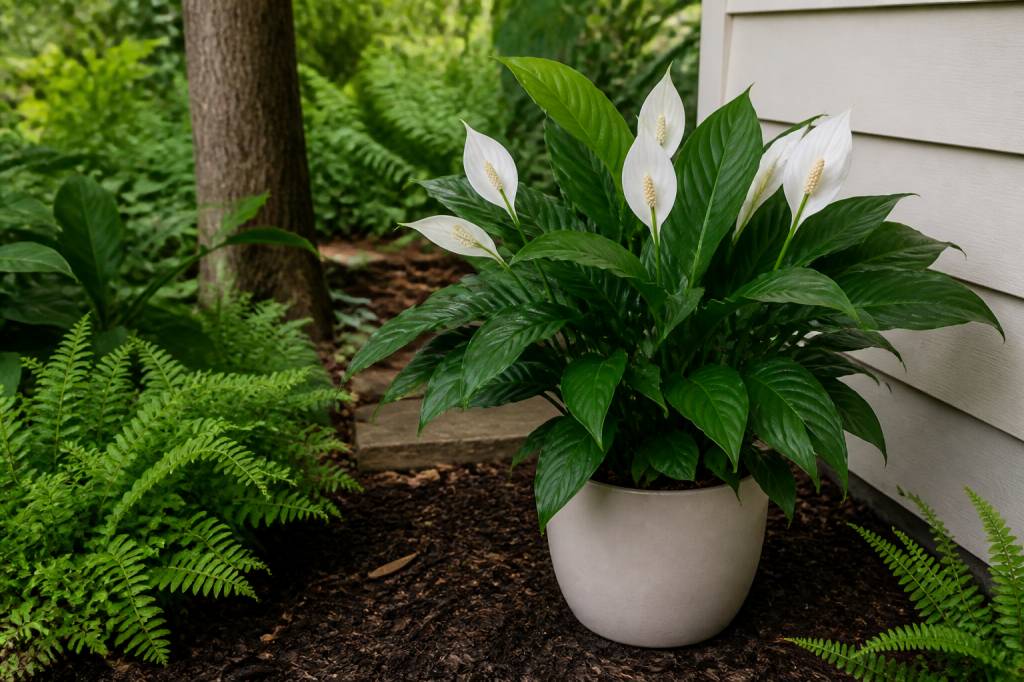
If you want to try planting a peace lily outside, location is everything. Think of the kind of place that would feel cool and calm on a bright afternoon. A peace lily is happiest in dappled shade, beneath taller plants or where a building softens the glare of the sun.
Good outdoor spots include:
Avoid placing it where midday sun hits directly for several hours. Unlike Mediterranean herbs or drought-tolerant perennials, this plant does not enjoy baking. It is more woodland retreat than sun lounge.
Also, avoid exposed corners where the wind whips through. Peace lily leaves are broad and soft, designed to capture filtered light, not to act like tiny sails.
Planting in the ground or keeping it in a pot?
For most gardeners, keeping a peace lily in a pot is the safer and more flexible choice. That way, you can move it in and out depending on temperature, rainfall, and light levels. A container also helps you control drainage, which is essential because peace lilies dislike sitting in soggy soil.
If you live in a frost-free tropical or subtropical climate, planting in the ground is possible. In that case, choose a rich, well-draining soil that holds some moisture but does not become heavy and compacted. Add organic matter such as compost or leaf mould to improve structure and mimic the plant’s natural forest-floor conditions.
For most readers, though, container growing offers the best compromise. It suits both the plant and the realities of changeable weather. It is also easier to shift the plant under cover if a cold night arrives unexpectedly—which, of course, is the sort of thing weather loves to do just when you feel safe.
How to care for a peace lily outdoors
Outdoor care is not difficult, but it does require attention. Peace lilies appreciate a steady rhythm rather than dramatic intervention. If you can provide that, they tend to reward you with lush foliage and their distinctive white spathes, which look almost architectural in the shade.
Here is what matters most:
One practical trick: if you are growing the plant in a container, choose a pot with excellent drainage holes and use a saucer only if you empty it regularly. Standing water is the quickest route to root problems.
Another useful habit is to check the leaves in the morning. Peace lilies often tell you how they feel with remarkable clarity. A slight droop may simply mean they need water. A persistent droop, yellowing leaves, or blackened edges suggests stress from too much sun, poor drainage, or cold exposure.
What happens if it gets too cold?
Cold is the great dividing line for peace lily care outdoors. These plants do not tolerate frost, and temperatures below about 10°C can begin to slow them down. Frost damage can be severe and may kill the foliage or the entire plant.
Signs of cold stress include:
If you notice these signs, move the plant to a warmer, sheltered place immediately. If the roots are still healthy, the plant may recover once conditions improve. But prolonged exposure to cold and wet weather can be fatal.
This is why, in temperate climates, peace lilies are best thought of as seasonal outdoor guests rather than permanent residents. They are not built for the dramatic moods of early spring or the damp chill of autumn evenings.
Can it live outside all year in warmer climates?
Yes, in tropical and subtropical regions, peace lilies can often be grown outdoors year-round. In places where frost is unknown and the air stays warm and humid, they can be planted in shaded gardens and used as understorey plants beneath trees or larger shrubs.
Even then, they still need protection from strong sun and drying winds. A peace lily growing outdoors in a hot climate is not a desert plant; it still wants softness and shelter. Think rainforest edge, not open field.
In warm climates, they can become particularly attractive in mixed plantings with ferns, calatheas, and other shade-loving species. Their white blooms stand out beautifully against deep green foliage, especially in a garden designed with layers and texture in mind.
Common problems to watch for
Outdoor peace lilies can encounter a few familiar issues. Most are easy to manage if you catch them early.
Too much sun: Leaves may turn pale, scorched, or crisp around the edges. Move the plant to deeper shade.
Overwatering: Yellow leaves and soggy soil often mean the roots are sitting in too much moisture. Improve drainage and reduce watering.
Underwatering: Peace lilies are famous for dramatic drooping, but repeated drought stress weakens them. Water more consistently.
Pests: Outdoor plants may attract aphids, mealybugs, or spider mites, especially in warm weather. Check the undersides of leaves regularly and treat early if needed.
Cold damage: Sudden temperature drops can injure the plant quickly. Bring it indoors at the first sign of cold weather.
Is it worth planting one outside?
If you have the right conditions, yes. A peace lily can be a graceful addition to an outdoor living space, especially where you want a calm, lush look without resorting to high-maintenance plants. It works beautifully in containers beside a shaded seating area, where its glossy leaves can soften hard lines and create a more restful atmosphere.
There is also something quietly satisfying about moving a plant between indoors and outdoors with the seasons. It reminds us that not every plant, or every home, is meant to stay fixed in one place. Some things thrive when they are allowed to follow the weather, the light, and the changing rhythms of the year.
If your garden is cool, damp, and frost-prone, keeping your peace lily indoors is usually the wiser choice. If your space offers warmth, shade, and shelter, then yes—you can plant it outside, at least for part of the year, and enjoy how beautifully it settles into its surroundings.
A few practical tips before you move it outdoors
If you are planning to try it, make the transition gradually. Moving a peace lily from a stable indoor environment straight into full outdoor conditions can shock it. Give it time to adapt.
Try this approach:
That slow, attentive approach reflects the best kind of gardening: not forceful, not flashy, but responsive. A peace lily does not ask for much, only a little shelter and consistency. In return, it gives you elegance, vitality, and those clean white blooms that seem to hold a moment of stillness all by themselves.
So, can a peace lily be planted outside? Yes—but only where the climate, light, and shelter suit its tropical nature. Give it a shaded, protected home and it may become one of the most quietly rewarding plants in your outdoor space.