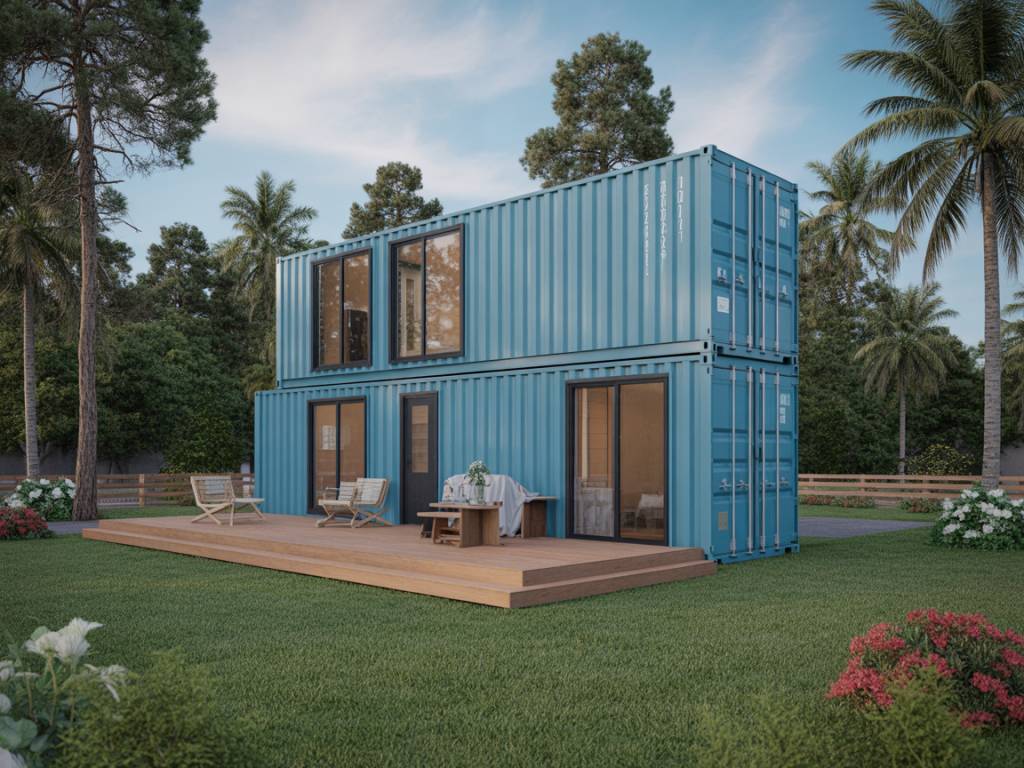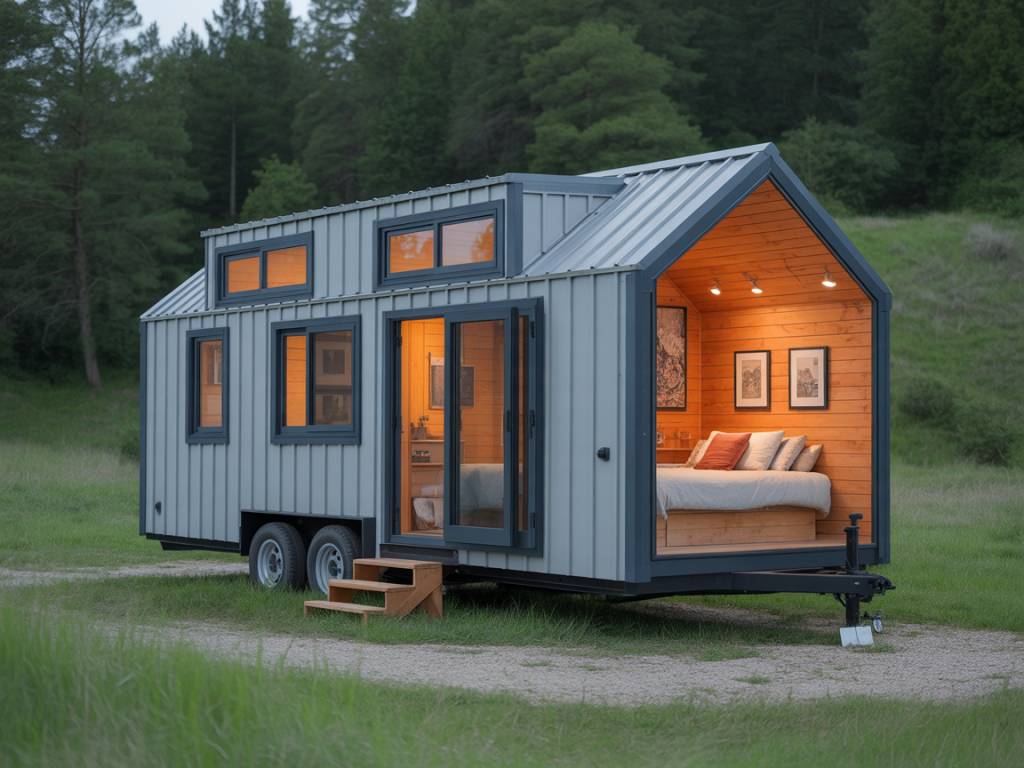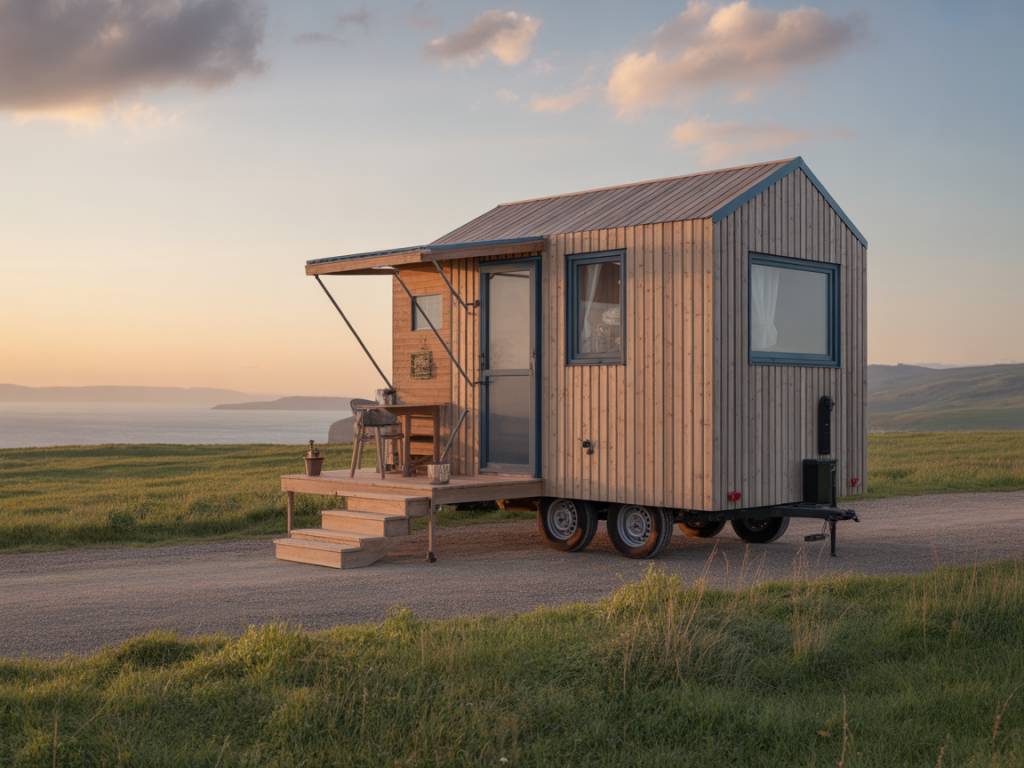
Rain tapping on a curved aluminium roof. Apple trees swaying outside a sleeping loft window. A chicken eyeing your front steps with misplaced optimism. For a growing number of people across the UK, this is not a holiday snapshot — it is Tuesday morning, and it is home. Houses on wheels as a legal and practical route to mobile eco living in the UK have moved well beyond Pinterest fantasy. But making that life work legally, sustainably, and without an enforcement notice ruining your morning tea requires something more than a romantic impulse. It requires a map of the rules.
Why houses on wheels appeal to eco-conscious movers in the UK
The draw is not difficult to understand. UK house prices remain among the highest in Europe, energy bills have spiked sharply since 2021, and a generation of people is questioning whether a 30-year mortgage on a four-bedroom semi is really the only path to security. A tiny house on wheels offers a different set of trade-offs:
- Smaller footprint: Floor areas typically range from 10 to 25 m², which forces intentional design and cuts energy demand dramatically.
- Off-grid potential: Solar PV, rainwater harvesting, composting toilets, and wood-burning stoves all become realistic at this scale.
- Mobility: Follow seasonal work, move closer to family, or simply relocate when land agreements change — without losing your home.
- Lower embodied carbon: Timber-framed tiny houses built with natural insulation (hemp, sheep’s wool, cork) can have a fraction of the embodied carbon of a conventional new-build.
At this scale, every litre of water and every watt of electricity is visible. That intimacy with consumption is one of the most powerful — and least talked-about — ecological benefits of mobile micro-living.
Houses on wheels as a legal and practical route to mobile eco living in the UK: what the law actually says
UK law has no single, tidy category called « tiny house on wheels. » Instead, your home will typically be classified as one of three things, each with its own set of rules:
- A caravan under the Caravan Sites and Control of Development Act 1960 and the Caravan Sites Act 1968
- A mobile home or park home under the Mobile Homes Act 1983 (as amended)
- A vehicle, if it is self-propelled (think converted buses or motorhomes)
Most timber-framed tiny houses built on trailers fall within the legal definition of a caravan, even when they look far more « house » than « van. » The 1960 Act sets out the key size thresholds: up to 20 m long, 6.8 m wide, and 3.05 m internal height for a twin-unit. Single-unit structures must stay within 7 m × 2.55 m to qualify as a standard caravan.
The critical legal distinction is between building something (which triggers planning permission as « development ») and using land in a certain way (which is about land use change). Placing a caravan on land usually constitutes a material change of use, and that change almost always needs planning permission — unless a specific exemption applies.
The main exemptions worth knowing
- The 28-day rule: Land can be used for caravans for up to 28 days per calendar year without planning permission, under Class B of the General Permitted Development Order (GPDO). This suits festivals or short retreats, not full-time living.
- Certified sites: Clubs such as the Caravan and Motorhome Club or the Camping and Caravanning Club can certify small sites (up to 5 pitches) on farms and other rural land, allowing stays without a full site licence.
- Annexe within a dwelling’s curtilage: A caravan placed in a domestic garden and used as an annexe to the main house — not as a fully independent dwelling — may not require separate planning permission, provided the primary use of the land remains residential.
None of these exemptions covers full-time, sole-residence living in a tiny house on wheels. For that, you need a genuine legal pathway — and there are four worth considering seriously.
Four realistic legal routes for mobile eco living on wheels
A tiny house in your garden as an annexe
If you own a property with a reasonable garden, or rent one with the landlord’s written consent, placing a tiny house on wheels in that space can be legally straightforward — as long as it remains genuinely ancillary to the main dwelling. That means no separate utility meters, no independent postal address, and a genuinely shared household life (laundry, meals, common spaces). The moment it becomes self-contained in every practical sense, your local planning authority is likely to classify it as an unlawful change of use.
Ecologically, this is an elegant first step. The main house handles mains connections; the tiny house runs on solar, uses a composting toilet, and dramatically reduces the household’s overall consumption per person. Many people start here before pursuing more autonomous routes.
Seeking planning permission on your own land
More ambitious — and more rewarding if successful. Buying a parcel of land and applying for permission to live in a caravan or tiny house as your primary residence is genuinely achievable, particularly on brownfield sites or as part of a rural enterprise. Councils are more likely to approve applications that include:
- A demonstrated functional need to live on the land (market gardening, smallholding management, conservation work)
- Evidence that no suitable existing dwelling is available nearby at reasonable cost
- A well-designed, low-impact structure with a credible ecological plan (habitat creation, renewable energy, water management)
- A clear temporary or permanent permission tied to the land use
Expect a slow process — typically 8 to 16 weeks for a decision, often longer if the application is contested or requires an environmental report. But a successful outcome gives you something rare: legal, long-term occupation of land you steward yourself, in a home you can move if life changes.
Residential parks and licensed eco-communities
Not every wheel needs to be fully autonomous. Across the UK, licensed residential parks and intentional communities offer a ready-made legal framework for mobile home living. Options range from traditional park home estates — increasingly insulated, attractive, and not exclusively aimed at retirees — to cooperative eco-villages where a cluster of tiny homes shares a workshop, kitchen garden, and laundry block.
Some farms and rural estates have secured planning permission for small numbers of residential units tied to environmental land management, offering plots to individuals who contribute to the project. The legal security rests on the site licence and planning permission held by the landowner or co-op, rather than by you personally — so scrutinise any agreement carefully before committing.
Agricultural and forestry worker permissions
A more niche but well-established route: if you are genuinely employed in agriculture, horticulture, or forestry on a holding that demonstrably requires a worker to live on-site, an Agricultural Occupancy Condition (AOC) permission may be granted. These are tied to the land use, not the individual, and often require independent assessment of the agricultural need. A tiny house on wheels — low-impact, movable, and proportionate — can sit well within this framework, particularly on smaller holdings where a permanent build would be disproportionate.
Practical considerations for building or buying a tiny house on wheels in the UK
Legal status resolved, the practical questions stack up quickly. A few worth working through before you hitch up and go:
- Trailer certification: Your tiny house needs to sit on a road-legal trailer, typically a SPTO (Special Types General Order) or a dedicated tiny house trailer rated to the correct gross weight. Budget from £4,000 to £12,000 for the trailer alone.
- Towing vehicle: A fully fitted tiny house typically weighs between 5,000 and 10,000 kg. You will need a suitably rated vehicle and the correct driving licence category (C1 or C1+E in most cases).
- Insurance: Standard caravan insurance rarely covers a bespoke tiny house at replacement value. Specialist brokers exist — seek out those with experience in custom builds, and insure for rebuild cost, not market value.
- Off-grid systems: A 2 kWp solar array, 5–10 kWh of lithium battery storage, and a 12 V DC system can power lighting, a fridge, charging, and a small induction hob for much of the year in the UK. A wood-burning stove with back boiler or an air-source heat pump sized to the tiny space handles heating.
- Water and waste: IBC tanks for water storage, a quality gravity-fed filter, a composting toilet, and a greywater reed bed or biofilter are the most common combination for off-grid tiny house living.
The honest picture: challenges and how to approach them
Mobile eco living on wheels in the UK is genuinely possible — hundreds of people are doing it legally and well. But it is not without friction. Land is scarce and often expensive. Planning authorities vary enormously in their attitudes to innovative housing. Neighbours and parish councils can mobilise opposition quickly. And the emotional labour of navigating uncertainty — wondering whether a new landowner might end your arrangement — is real and should not be underestimated.
The people who navigate it most successfully tend to share a few traits: they research their local planning authority’s track record before buying land or a trailer; they engage with communities like the UK Cohousing Network, Chapter 7, or low-impact planning specialists early; and they build in flexibility — legally, financially, and emotionally — rather than betting everything on a single site or permission.
Houses on wheels as a legal and practical route to mobile eco living in the UK are not a loophole or a workaround. They are a legitimate, increasingly recognised form of housing — one that demands creativity, patience, and a willingness to understand the rules well enough to work within them. Get that right, and the rain on the roof on a Tuesday morning in Devon sounds less like uncertainty, and more like home.