What plug-in air fresheners are really doing in your home
There is something comforting about walking into a room that smells clean. A hint of linen, a whisper of citrus, maybe that oddly specific “mountain breeze” that promises freshness with no mountain in sight. Plug-in air fresheners have become the quiet background actors of modern homes: small, unassuming, always on. But are they actually safe for your home, your family, and the air you breathe every day?
The short answer is: it depends on the product, how often it’s used, and who is living under your roof. The longer answer is more interesting. Because air fresheners do not simply “freshen” air. They release chemicals into it. And once you look a little closer, the question stops being about scent and starts being about indoor air quality, personal sensitivity, and whether we really need our homes to smell like an artificial orchard at all.
How plug-in air fresheners work
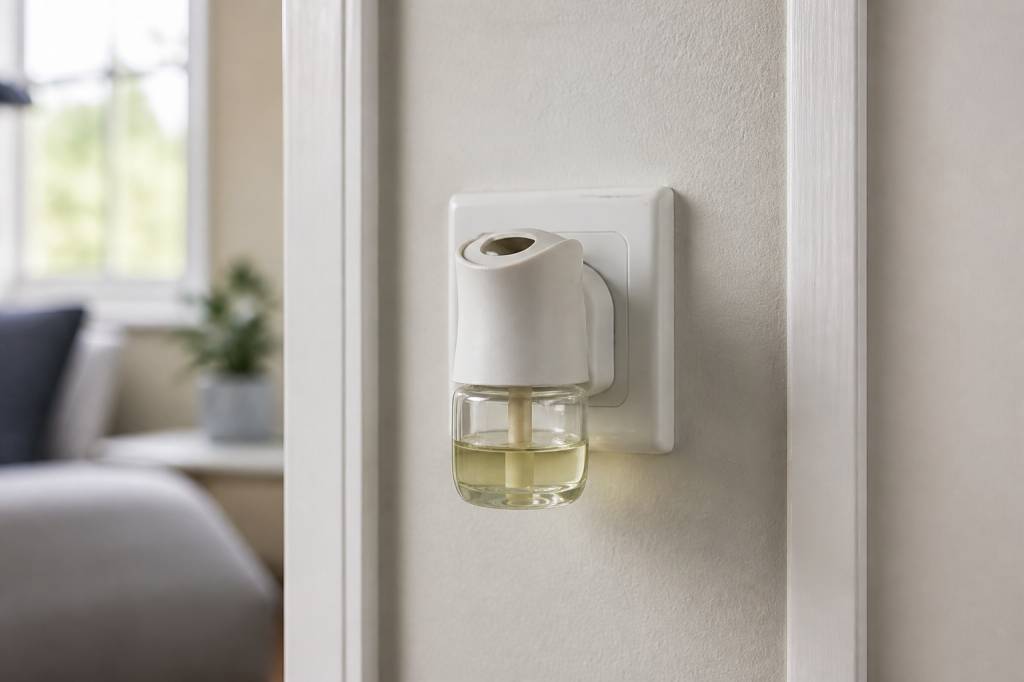
Plug-in air fresheners usually contain a fragrance mixture and a small heating element. The device warms the scented liquid and disperses it into the room over time. That pleasant smell you notice is not a sign that the air is cleaner; it is a sign that fragrance compounds are being released and inhaled.
Some products use synthetic fragrance chemicals, while others may include essential oils or a blend of both. The design is simple, which is part of the appeal. You plug it in and forget it. But “set and forget” can also mean “set and inhale for weeks.”
In a home, especially one that values healthy materials, efficient ventilation, and low-toxicity living, that matters. Indoor air is often more polluted than people expect, and a plug-in device adds another layer to the mix.
What’s inside them?
The ingredient list can vary widely by brand, but plug-in air fresheners commonly contain:
VOC is the term worth remembering. These are chemicals that evaporate easily at room temperature and can affect indoor air quality. Some VOCs are harmless at low levels for most people, while others may irritate the eyes, nose, throat, or lungs. The issue is not one single ingredient in isolation; it is the overall chemical cocktail released over time.
If a scent lingers for days, that does not mean it is “natural.” It often means it is persistent. And persistence, in a closed living space, is not always a virtue.
Are they dangerous?
For many people, occasional use of a reputable plug-in air freshener may not cause noticeable problems. But “safe” is not a yes-or-no label you can apply universally. It depends on the household.
People with asthma, allergies, migraines, chemical sensitivities, or respiratory conditions may be more affected by fragrance exposure. Children and pets can also be more vulnerable because of their size and, in some cases, their habit of spending more time close to floors, vents, or the source of the scent.
Possible concerns include:
It is worth saying plainly: a pleasant smell does not equal a harmless product. A room can smell like alpine freshness and still be full of airborne chemicals. That is the small irony of modern home fragrance.
Why ventilation changes everything
Indoor air quality is not only about what you add to the space, but also about how easily the space can breathe. A well-ventilated home disperses pollutants more effectively. A sealed room, by contrast, can hold fragrance compounds in the air for longer, increasing exposure.
This is especially important in bedrooms, bathrooms, and smaller living spaces. A plug-in freshener in a tiny bathroom may seem innocent enough, but in a poorly ventilated room it can become surprisingly intense. The same is true of open-plan homes with limited airflow on winter evenings, when windows stay shut and every scented note lingers like a houseguest who missed the hint.
If you use fragrance products, ventilation is your ally. Opening windows for even a short time, using extractor fans, and maintaining balanced airflow can reduce build-up of airborne chemicals.
What the research suggests
Studies on air fresheners have linked some products to VOC emissions and possible respiratory irritation. Researchers have also noted that fragranced consumer products can contribute to indoor air pollution. While not every product is equally problematic, the overall pattern is clear: the more fragranced products you use, the more complex your indoor air becomes.
One thing that often surprises people is that air fresheners may also react with ozone indoors, creating secondary pollutants. In simple terms, the chemicals do not always stay as they are once they are in the air. They can change, combine, and form new compounds that you did not ask to have in your home.
This does not mean every plug-in is toxic in the dramatic sense that headline language sometimes suggests. But it does mean that “safe” should be interpreted cautiously, especially if your home already includes other sources of indoor pollution such as synthetic cleaners, poor ventilation, gas appliances, or off-gassing furniture.
Who should be especially cautious?
Some households will want to think twice before using plug-in air fresheners at all. Extra caution is wise if someone in the home is:
It is easy to dismiss scent as a small matter. Yet for sensitive individuals, scent can be the difference between a home that feels restful and one that feels subtly oppressive. A home should not need to fight you for every breath.
Safer ways to keep a home smelling pleasant
The best way to improve a home’s scent is often not to mask anything, but to remove the source of the odour. That may sound less glamorous than a “fresh linen” plug-in, but it is far more effective.
Start with the basics:
Natural scent sources can also help without overwhelming the air. A bowl of citrus peels near the sink, a simmer pot on the stove, or a vase of eucalyptus can add fragrance in a gentler, more seasonal way. If you like essential oils, use them sparingly and remember that “natural” does not automatically mean “safe for everyone.” Essential oils can still irritate or trigger allergies.
For many homes, a simple routine of cleaning, airing, and reducing moisture does more for freshness than any device ever could.
If you still want to use one
Maybe you enjoy plug-in air fresheners and would rather not give them up entirely. That is a fair position. Not every household wants to live like a laboratory of pure restraint. If you choose to use one, a few precautions can lower the risk:
You can also treat fragrance as a seasonal accent rather than a permanent background layer. In other words, let it visit, not move in.
Why this matters in a greener home
For readers interested in sustainable living, the air we breathe indoors is part of the same conversation as the materials we choose, the energy we use, and the way we design our homes. A low-impact home is not just about solar panels, reclaimed wood, or clever insulation. It is also about reducing unnecessary chemical exposure and creating healthier daily habits.
Eco-friendly home design often asks a simple question: does this product solve a real problem, or does it merely cover it up? Plug-in air fresheners usually do the latter. They may provide short-term comfort, but they rarely improve the conditions causing the smell in the first place.
That is why many homeowners are moving toward cleaner alternatives: better airflow, moisture control, low-VOC paints, fragrance-free cleaning products, and materials that do not off-gas heavily. A home that smells naturally neutral is often a sign that it is well cared for.
Better alternatives for a healthier home
If you want your home to feel fresh without relying on plug-ins, these options are usually gentler:
None of these solutions will turn a house into a perfume counter. That is precisely the point. A healthy home does not need to announce itself with synthetic fragrance every time you open the door.
The practical answer
So, are plug-in air fresheners safe for your home? For some homes and some people, they may be used without obvious immediate harm. But they are not the clean, harmless convenience they are often marketed as. They can release VOCs, irritate sensitive individuals, and contribute to indoor air pollution, especially in enclosed spaces.
If your household includes children, pets, asthma, allergies, or fragrance sensitivity, it is wise to be cautious or avoid them altogether. If you use them, keep the dosage low, the space ventilated, and the use occasional rather than constant.
In the end, the question is not whether your home can smell “fresh” enough. It is whether the air inside it supports the people and creatures who live there. And that, more than any artificial scent, is what makes a house feel truly welcoming.